
Before Dolly Parton became a global country music icon, she carried a small promise made in the Smoky Mountains.
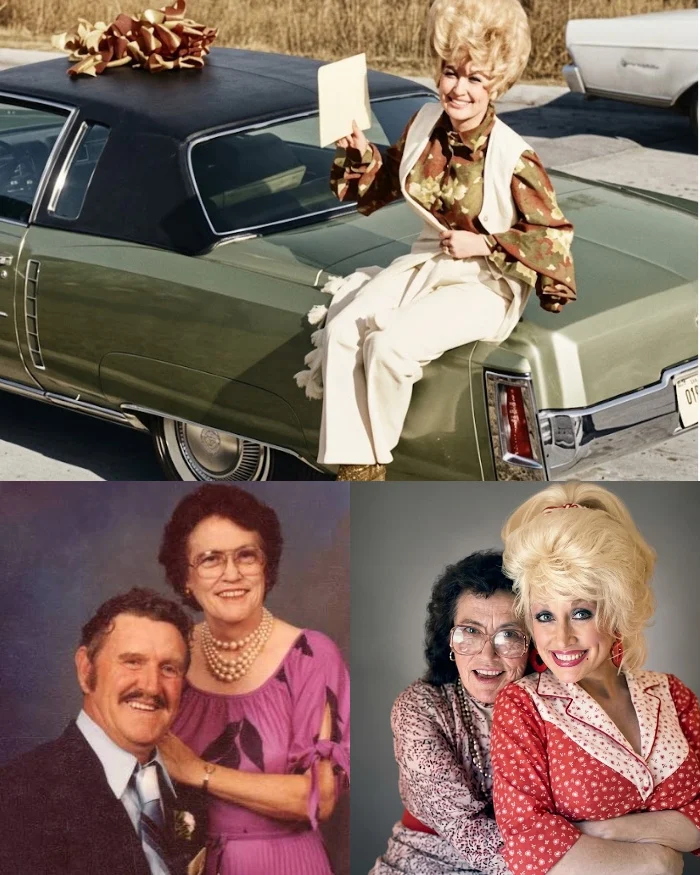
Avie Lee Parton raised twelve children in a cramped cabin in Sevier County, Tennessee. She married at fifteen and had twelve children by thirty five. The family lived in extreme poverty. Catalog pages served as wallpaper. Meager resources had to stretch just to keep the children fed and clothed.
Avie Lee maintained quiet dignity. She occasionally said she wanted to sit inside one of the luxury cars that passed along their dirt road. That passing wish stayed with Dolly. It became part of the motivation behind her early drive to succeed in Nashville.
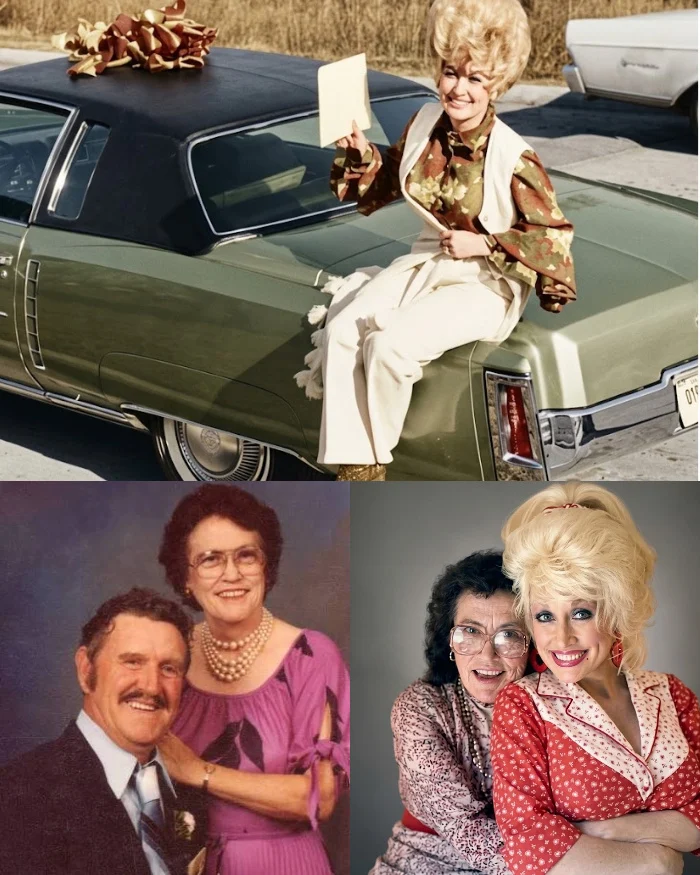
When her career began bringing real financial reward in the early 1970s, Dolly planned a specific Christmas delivery. She bought a heavy duty truck for her father, Lee, and a brand new Cadillac for her mother.
She did not let a dealership drop off the car. Dolly drove the gleaming Cadillac herself through winding rural roads. She parked it in the family’s familiar unpaved yard and handed her mother the keys.
Avie Lee broke down crying and pulled her daughter into a long embrace.
For a woman who had spent a lifetime watching the world go by from the edge of a mountain, the moment meant she was finally stepping into a luxury vehicle of her own.
The miles Avie Lee put on that Cadillac revealed her character. She did not use it to leave the mountains or chase cross country road trips. She drove it on familiar local routes. She took it to church on Sunday mornings, into town for groceries, and across the county to visit relatives.
For someone whose world had been limited by poverty, driving to the local store in comfort was a quiet daily victory.
The car was only the material reward. The deeper tribute Dolly built for Avie Lee lived in the music. Avie Lee was the original source of the Parton family’s musicality. She often sang old Appalachian, Irish, and English folk ballads to her children as she worked.
Her faith and her ability to find dignity in destitution shaped Dolly’s most enduring songwriting.
The 1971 classic Coat of Many Colors documented a literal event from Dolly’s childhood. Avie Lee took a box of donated rags and stitched them into a winter coat for her daughter. As she sewed, she told the biblical story of Joseph. She turned a symbol of poverty into a garment of love.
When Dolly put that memory into song, she preserved her mother’s specific grace for millions of listeners.
Avie Lee’s resilience also influenced tracks like In the Good Old Days When Times Were Bad. Dolly refused to romanticize the brutal realities of mountain life. She chose instead to honor the survival of her parents.
Every time Dolly stood on stage and sang those lyrics, she broadcast the lessons she learned watching her mother work by the light of a kerosene lamp.
Avie Lee passed away in 2003, long after that first Cadillac arrived in the yard. By then, her daughter had become one of the most successful artists in American history and had generated wealth the family could never have imagined during their years in Sevier County.
The cars gave her parents late in life comfort they deeply deserved. The music ensured that the woman who raised twelve children in a Tennessee cabin would be remembered far beyond the edge of the mountains.