
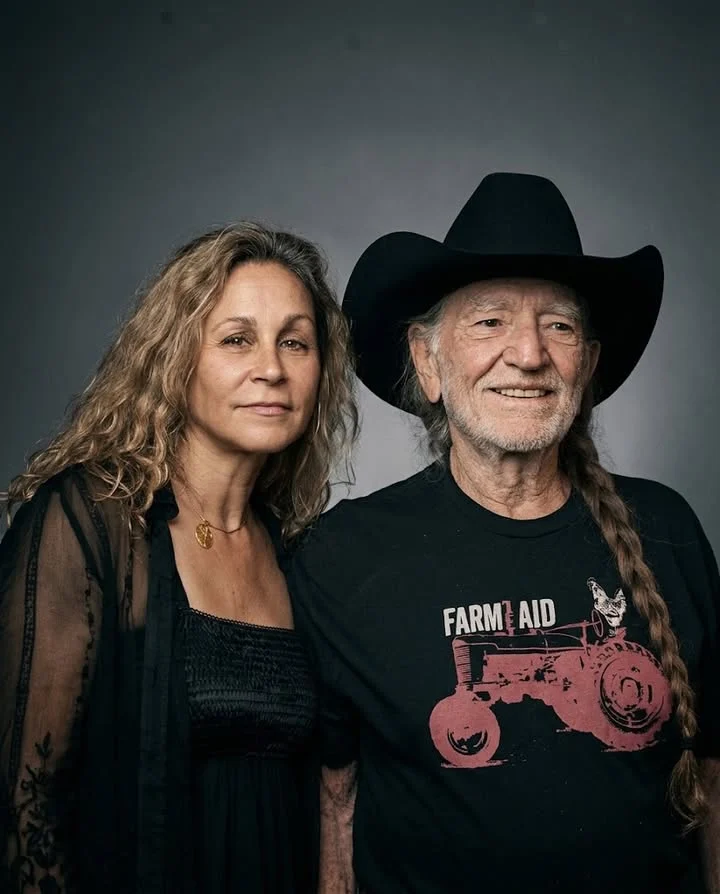
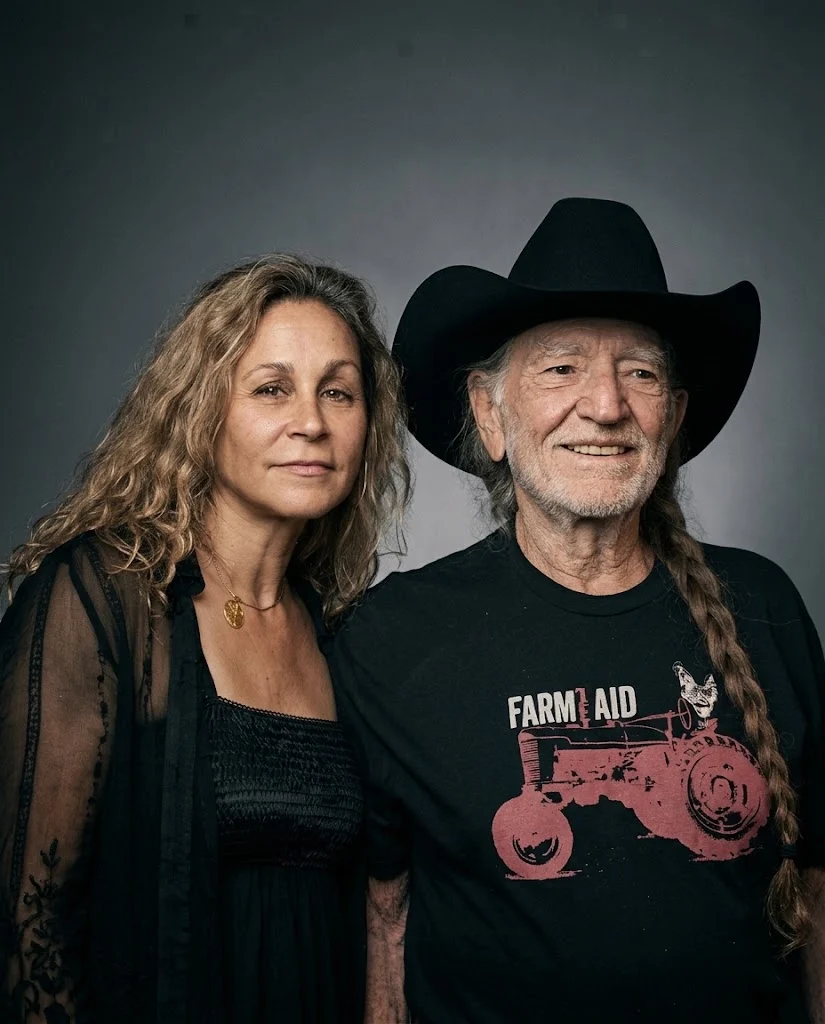
The most frightening moment did not arrive in a hospital corridor. It came in the pre-dawn hours at Luck Ranch outside Austin, Texas, where Annie D’Angelo watched Willie Nelson struggle to breathe and wondered whether the outlaw legend would survive another sunrise. Her husband was eighty-nine years old. His lungs had carried decades of smoke, stage dust, emphysema, pneumonia, and relentless touring. A positive coronavirus test in May 2022 had already stopped his spring shows. The usual path would have led to a hospital bed. D’Angelo chose a different path.
She refused to surrender him to an unfamiliar room. Instead she turned their home into a working medical unit. She arranged monoclonal antibody treatments. She secured Paxlovid. She kept nebulizers, oxygen monitors, and steroids moving through a tight routine. She stepped away from her normal life and became a round-the-clock caregiver. She tracked his oxygen levels. She listened to each breath. She guarded the quiet hours when a voice that shaped country music could have faded.
She later admitted there were moments when she genuinely was unsure if he was going to pull through
The danger had begun during a tense forty-eight-hour window. Nelson woke struggling to breathe before a scheduled Tennessee show. D’Angelo started emergency respiratory treatments on the tour bus. She did not send him to a local hospital. She ordered the driver to take them back to Luck Ranch. The ride home carried more than a patient. It carried the weight of a family, a band, and a country audience that had not yet learned how close the music had come to stopping.
For days the ranch sounded nothing like a music venue. The familiar rhythm of Trigger, Nelson’s battered acoustic guitar, gave way to the soft mechanical hum of nebulizers and monitors. D’Angelo held the line. She kept him surrounded by the comforts of home while fighting a virus that threatened his lungs. The treatment worked. His breathing stabilized. His strength returned. He eventually climbed back onto his tour bus.
Over Memorial Day weekend he made a triumphant return at the Whitewater Amphitheater in New Braunfels, Texas. The crowd roared. The stage lights burned again. Few in the audience knew how much of that night had been decided in a quiet home, with one woman watching every breath.
The story is not only about survival. It is about devotion. D’Angelo did not simply nurse a husband back to health. She protected a defining voice of the outlaw movement. Willie Nelson’s return to the road proved that his endurance did not come only from fans. It came from the person willing to hold the line when the stage lights had to go dark.