
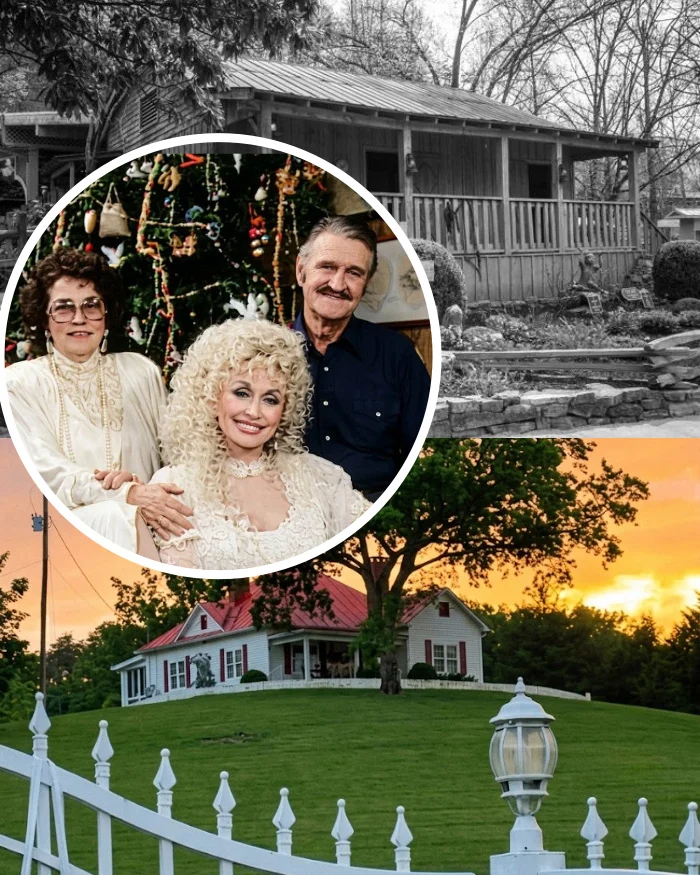
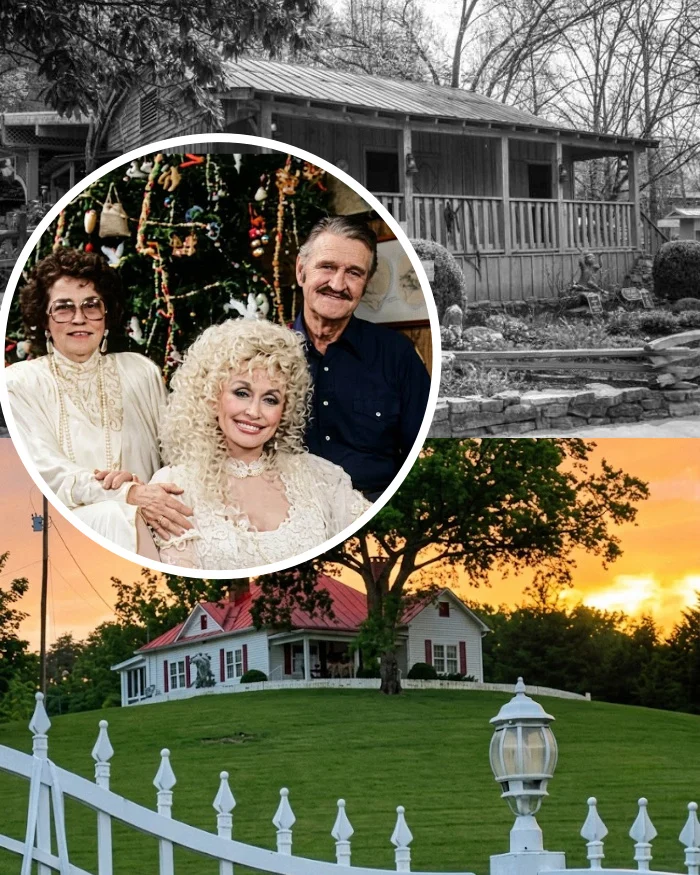
When Dolly Parton steps through the security gate of Red Top Farm in Sevierville, Tennessee, the world outside fades to a whisper. Inside that home, she is not a rhinestone-studded icon or a business empire. She is simply a daughter coming home for dinner.
She did not take her parents out of the mountains. She simply made the mountains a gentler place for them to live.
That gentleness began with a childhood promise made in a cramped one-room cabin on Locust Ridge, where Dolly grew up with eleven siblings. She swore that if she ever escaped the crushing poverty that defined her early years, she would give Robert Lee and Avie Lee Parton a life free from struggle.
Her father worked the unforgiving East Tennessee tobacco fields as a sharecropper, laboring from before sunrise until dark just to keep his family alive. Her mother married at fifteen and spent her youth raising a dozen children, stretching meager rations and mending hand-me-down clothes.
Dolly turned that promise into reality during a pivotal financial shift in the late 1960s. Her weekly television appearances alongside Porter Wagoner provided national visibility and a steady paycheck, but it was her fierce dedication to retaining her own publishing rights that built true wealth. The royalties from relentless songwriting and early solo chart entries gave her the exact financial leverage she needed to buy the land.
She purchased a quiet 62-acre piece of land in Sevierville and named it Red Top Farm. There, she built a home equipped with all the modern comforts Avie Lee had lived without for decades. The mother of twelve no longer worried about where the next meal would come from or how to keep the winter wind out of the walls.
A heavy security fence surrounded the property, a necessary barrier shielding the aging couple from the intense glare of their daughter’s rapidly expanding fame. Yet the location was deeply intentional. When Robert Lee and Avie Lee sat on their new porch, they did not look out at a foreign celebrity neighborhood. They looked right back at the same familiar mountain ridges they had known their entire lives.
The estate completely changed the nature of her father’s daily routine. A man who had worked his hands to the bone for sheer survival did not suddenly stop working. Instead, he was finally allowed to farm for joy. He spent his mornings gathering eggs and tending to the animals, moving at his own pace rather than racing against the threat of a bad crop or an unpaid debt.
Dolly’s voice eventually carried her far beyond Sevierville, reshaping American music in the process. But the wealth that voice generated found its truest purpose right where she started. She did not lift her parents out of their homeland. She simply transformed their mountains into a sanctuary where they could finally rest.