
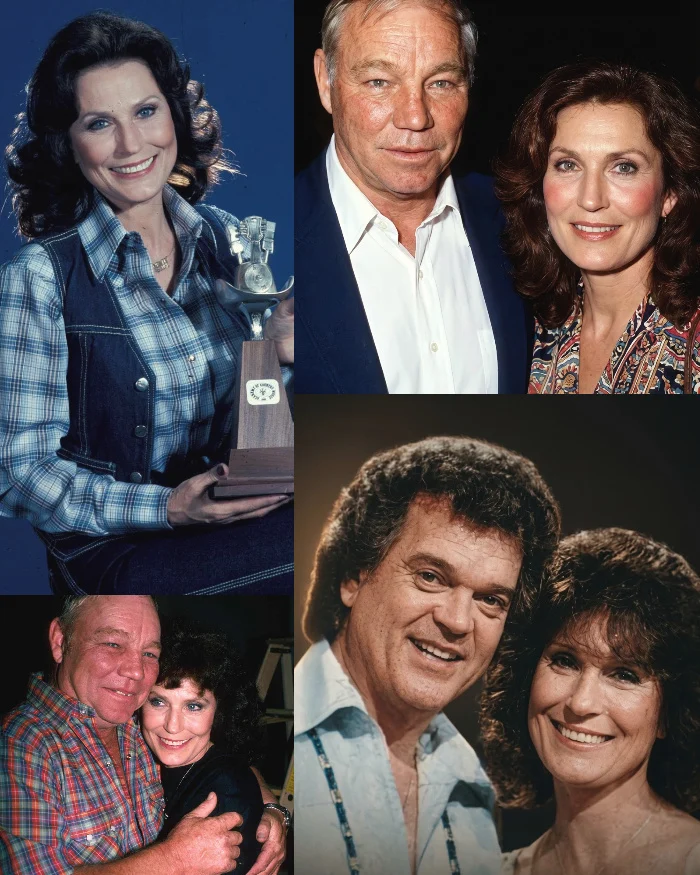
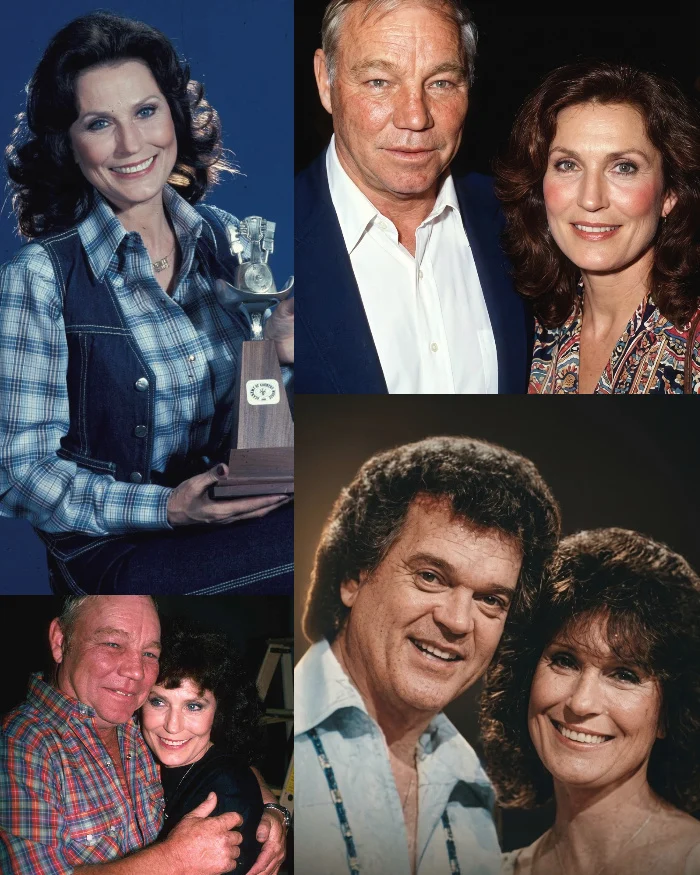
The most beloved duet in country music nearly died before it began. In late 1970, Decca Records executives and producer Owen Bradley pushed hard against pairing Loretta Lynn with Conway Twitty. They feared a duet would blunt two of Nashville’s most profitable solo voices.
Behind the charts sat a more delicate worry. Country radio in the early 1970s followed unwritten rules about married stars. Label officials feared romantic rumors could wound public trust and upset real homes. Twitty also hesitated. He did not want his voice tangled with trouble in Lynn’s marriage.
The unexpected door opened through Oliver “Doolittle” Lynn. The husband of Loretta Lynn had a fierce temper and a jealous reputation. Yet he carried an instinct for voices that could move listeners. He heard Loretta’s sharp Appalachian bite needing the warm Mississippi gravity of Twitty. Doolittle did not hide behind suspicion. He sought Conway out and gave his blessing.
With Doolittle standing behind the idea, Bradley softened and booked time at Bradley’s Barn, his converted studio in Mount Juliet, Tennessee. In early 1971, the sessions brought together Nashville A Team stalwarts such as steel guitarist Pete Drake, bassist Bob Moore, and pianist Hargus “Pig” Robbins.
Bradley did not sand away the difference between the two singers. He placed them on equal footing and captured the friction between Lynn’s piercing mountain delivery and Twitty’s controlled bluesy resonance. The centerpiece was “After the Fire Is Gone,” a stark L.E. White song about broken vows. It carried the weary honesty of adults, not the sweet novelty of earlier male and female pairings.
The gamble landed fast. “After the Fire Is Gone” went to number one on the Billboard country chart, crossed into pop radio, and won a Grammy Award for Best Country Performance by a Duo or Group. The team returned to Mount Juliet to build the debut LP “We Only Make Believe.” Tracks such as “Lead Me On,” written by Leon Copeland, deepened the chemistry with unflinching portraits of temptation.
Bradley and the session band treated Lynn and Twitty as a distinct creative unit. They set acoustic guitars and crying steel licks tight against their dual phrasing, giving the duo a mood and tension that felt new.
From 1972 to 1975, the Country Music Association named Lynn and Twitty Vocal Duo of the Year four consecutive times. Their run rewrote the standard for male and female collaborations in Nashville. Offstage rumors followed them, yet the boundaries formed before the first take held firm.
Doolittle Lynn chose respect for his wife’s craft over personal jealousy, and country music gained its defining duet.
Lynn often credited Doolittle’s intervention for giving her freedom to sing beside Twitty without guilt or suspicion. His rough edges could make their marriage turbulent. His one brave blessing turned industry fear into a partnership that still echoes through country music.