
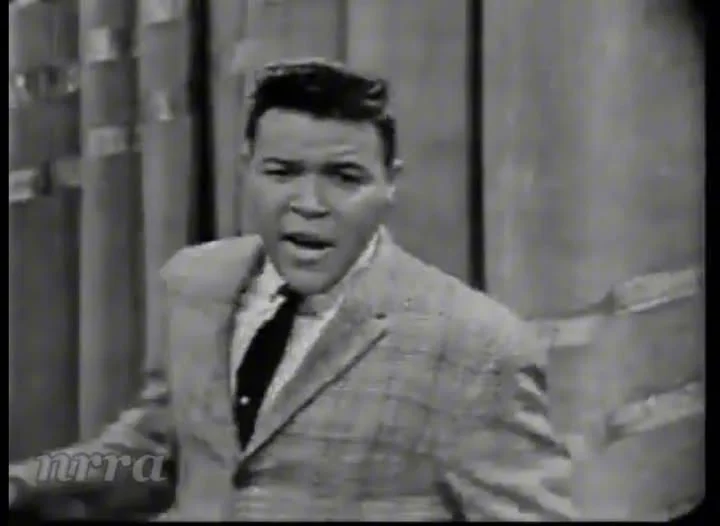
There’s a moment in almost every celebration—a wedding, a basement party, a reunion—when the DJ drops a needle on a record that has somehow never gathered dust. The room shifts. Shoulders loosen. Somebody’s uncle is suddenly the most agile person in the building. That record, more often than not, is Chubby Checker’s “The Twist,” a song that has spent over six decades proving that the simplest invitation to move can outlast every trend that ever tried to replace it.
It’s difficult to overstate what happened when that track first hit the airwaves. Before TikTok dances and streaming playlists, there was a single two-and-a-half-minute song that taught an entire generation—and their parents—how to let go. No partner required. No choreography to memorize. Just a beat, a swivel, and the feeling that you were already doing it right. But behind that effortless appeal sits something far more deliberate: a record engineered with precision, tied to an album that knew exactly what it was selling, and anchored by a performance that understood its audience better than most artists ever will.
The album as a social instrument
When Parkway Records released “The Twist” as a single in 1960, the label moved quickly to fold the phenomenon into a full-length experience. Twist With Chubby Checker arrived later that year, and it remains one of the earliest and most effective examples of what we’d now call a thematic playlist. This wasn’t an album built around a narrative arc or a singer-songwriter’s confession. It was a toolkit—a collection of twist-ready cuts, instrumentals, and covers all sequenced to maintain a single, unbroken pocket of rhythm.
In many ways, the record functions like a live DJ set pressed into vinyl. Each track hands off to the next with the same tempo and the same thumping backbeat, creating an atmosphere where stopping feels like breaking a spell. The production team—led by the Cameo-Parkway architects Kal Mann and Dave Appell—made a strategic choice to keep things clean and functional. The vocals sit dry and intelligible, the drums hit upfront, and every arrangement choice serves one master: keeping bodies in motion.
This wasn’t an album that aimed for harmonic adventure or studio wizardry. It aimed for function—and that functional clarity became its own aesthetic.
Dissecting the groove: what makes it move
On paper, “The Twist” is almost embarrassingly simple. The harmonic language lives in the I–IV–V territory shared by blues, early R&B, and the hillbilly boogie that echoed through rural radio stations. But that simplicity is the point. By stripping away harmonic clutter, the record forces every other element to carry the weight—and those elements respond beautifully.
The drum part deserves special attention. It stays locked in a firm 4/4, with the snare cracking cleanly on two and four. That crisp, clipped backbeat is what invites the knee to bend and the hips to follow. The hi-hat rides in tight eighths, adding energy without ever stealing focus, while the bass walks in big, buoyant steps that nudge the chord changes forward like a friendly hand at your back. It’s the kind of foundation that feels like it could loop forever—and that endlessness is precisely what makes it so easy to surrender to.
Then there’s the guitar, which does something remarkable: it becomes a second snare drum. Percussive bar-chord chucks land on the offbeats, keeping time with a palm-muted discipline that never reaches for showy bends or surfy theatrics. The piano tucks into the midrange, comping with dotted-eighth nudges and occasional triplet flourishes that tip their hat to boogie-woogie without ever turning the track into a honky-tonk throwback. Every instrument is playing small—and in their sum, they create something enormous.
The horns arrive in short, staccato stabs, punctuating the chorus with a rasp-toned energy that feels less like a virtuoso statement and more like a party trick. Handclaps layer in with a communal gloss that makes you feel like you’ve walked into a television studio where everyone already knows the steps and is delighted to teach you.
A voice that invites rather than commands
Checker’s vocal delivery is the final piece of the puzzle. He doesn’t growl or shout or reach for gospel melisma. Instead, he enunciates every syllable of “Come on baby, let’s do the Twist” with the encouraging tone of a coach who genuinely believes you can do this. What he’s selling isn’t ecstasy—it’s inclusivity. The record doesn’t ask you to be cooler than you are; it meets you exactly where you stand and gently pulls you into the rhythm.
It’s worth remembering that this wasn’t the original version. Hank Ballard & The Midnighters cut the first “The Twist” in 1958, and their take carried more R&B grit and a looser pocket. Checker’s cover tightens the tempo and brightens the articulation, a shift that proved decisive. When Dick Clark’s American Bandstand put the track in front of a national audience, it became something rare: a cross-generational hit. Teenagers heard permission to move. Their parents saw a dance that lacked the pelvic threat of Elvis or the raw shout of Little Richard. That’s a cultural alchemy that doesn’t happen by accident—it happens through smart merchandising, television exposure, and a track designed to be irresistible on any radio that could carry it.
The recording’s quiet sophistication
Listen closely on a quality system—or even through a solid pair of headphones—and you’ll notice the production is more refined than its reputation suggests. The vocal carries a natural room echo, not the heavy plate reverb that would dominate later decades. The guitars were mic’d to capture pick attack rather than amplifier bloom, preserving that percussive chug that keeps the dance upright. The horns have just enough ambience to avoid honk, yet stay dry enough to pop through AM radio speakers. Tape saturation rounds the transients, softening the edges and making the track fatigue-free even after repeated spins at a house party.
The mastering choices favor midrange presence—that’s where the human voice, saxophone, and snare all live, and it’s also where the small radios of the era performed best. For modern listeners, streaming services offer several transfers and remasters. Some brighten the top end; others preserve more low-end warmth. If you audition a few versions back-to-back, you’ll find that the feel shifts dramatically with equalization and compression choices. The right version is simply the one that makes your shoulders turn without conscious effort.
Seeing the song through different musical lenses
Viewed from a country perspective, “The Twist” shares obvious DNA with the two-step and the easy swing of western dance halls. Strip away the saxophones, add a touch of Telecaster twang, and you’d have a track that wouldn’t offend a Texas dance floor. The very simplicity that some critics dismiss is, for country and hillbilly boogie, a cherished feature—it’s what allows the room to breathe and conversations to continue between steps.
A classical ear might recognize something else entirely: the power of minimalism. Like Ravel’s Boléro, which builds through orchestration rather than melody, “The Twist” escalates energy through arrangement alone. Each chorus accretes weight through reiteration—a little more sax, a more insistent snare, a call-and-response shout—until the whole thing feels larger than the sum of its modest parts. It’s the paradox at the heart of the track: the content repeats, but the experience intensifies.
A moment-by-moment guide to listening
For those who want to hear more deeply, the record rewards attention at every stage. The intro locks in immediately—no vamp, no prelude, just guitar and rhythm section opening the door like a host welcoming you inside. The first verse establishes Checker’s imperative mood, and the bass is especially buoyant here; lean in and you’ll catch the slight slides into certain notes that add human shape to the groove.
When the handclaps enter at the first chorus, they’re mixed so that you feel them more than hear them—like a tap on your shoulder signaling that you’re invited to join. The break features a horn riff that doesn’t try to outshine the vocal; it functions as a dance-floor cheer. You’re not meant to admire it; you’re meant to move.
Finally, the song opts for a gentle fade-out rather than a towering ending. This is a social cue, a quiet acknowledgment that the dance can continue even after the record stops. It anticipates the logic of the DJ years before the discotheque era arrived—a small structural choice that speaks to a deep understanding of how people actually use music.
The LP’s legacy in Checker’s career
Twist With Chubby Checker never pretended to reveal a new songwriter or push studio boundaries. Its ambition was more modest and more profound: to codify a feeling. In doing so, it established Checker as a dance ambassador, a role he embraced with follow-ups like “Let’s Twist Again” and “Slow Twistin’.” Those later hits confirmed the viability of single-driven albums in the early ’60s—you build around the hit, curate the surrounding tracks for the same purpose, and deliver a uniform, utilitarian listening experience that doubles as social technology.
Beyond jukebox glow and wedding-reception ubiquity, “The Twist” is an instruction manual for pop efficiency. It proves that access is an artistic virtue.
Why it still matters
The song’s endurance isn’t about nostalgia, though nostalgia certainly plays a part. It’s about what the track proves about pop craft: that access is a virtue, and that making something feel easy is itself a sophisticated act of design. The arrangement says to the casual listener that there’s nothing to “get” before you can participate. At the same time, it rewards the attentive ear with small pleasures—the hi-hat’s tightness, the horn voicings’ economy, the guitarist’s palm-mute discipline. This dual address, to the body first and the brain second, is why the record continues to appear on lists of enduring chart phenomena.
Who will love it today? If your taste runs toward roots music, you’ll recognize your priorities here: time feel over texture, groove over gloss. If you’re a classical listener allergic to bombast, you might be surprised by how elegantly proportioned the form is—introduction, exposition, minimal development, recapitulation, coda by fade. And if you’re an audio hobbyist, you’ll delight in the track’s mono punch and how different playback systems change the dancer it invites you to become. Shoulders tune in through earbuds; hips awaken on speakers.
Perfect pairings for the twist
If “The Twist” lights up your room, a few historically adjacent cuts will keep the energy alive. Hank Ballard’s original offers an earthier vocal and a looser pocket—a great study in how arrangement shapes destiny. Chubby Checker’s “Let’s Twist Again” refines the formula with a touch more bounce. Joey Dee & The Starliters’ “Peppermint Twist” brings a clubby sheen and a brisker pace. For raw, call-and-response energy, The Isley Brothers’ “Twist and Shout” pushes the form toward soul fervor. Dee Dee Sharp’s “Mashed Potato Time” arrives from the same Philly orbit, sunny and sharp. And for something slightly sloppier in the best way, Gary U.S. Bonds’ “Quarter to Three” is pure party-in-the-tape-machine energy.
Final reflections
Pop history loves to celebrate complexity—virtuoso solos, studio innovations, harmonic breakthroughs. “The Twist” argues for the opposite: a disciplined simplicity that understands how people actually use music. It transforms the space you’re standing in. It democratizes the dance floor. It compresses the promises of early-’60s America—youthful optimism, televised community, regional styles turning national—into two minutes and forty seconds that refuse to age.
For musicians, the lessons are plentiful. Watch how the drummer’s quiet consistency lets the rest of the arrangement speak. Notice how the bass carries momentum without busywork. Observe how a guitarist can be a metronome with strings, and how horns decorate rather than dominate. This is the practical craft behind the cultural flash—the work that makes the magic feel effortless.
So cue it up, push back the furniture, and try not to analyze the groove for a minute. Just twist. Then, if you must, come back to the details. That’s the enduring magic here: an old record that still teaches you something—about arranging, about audiences, about joyful design—every time it gets your feet moving.