
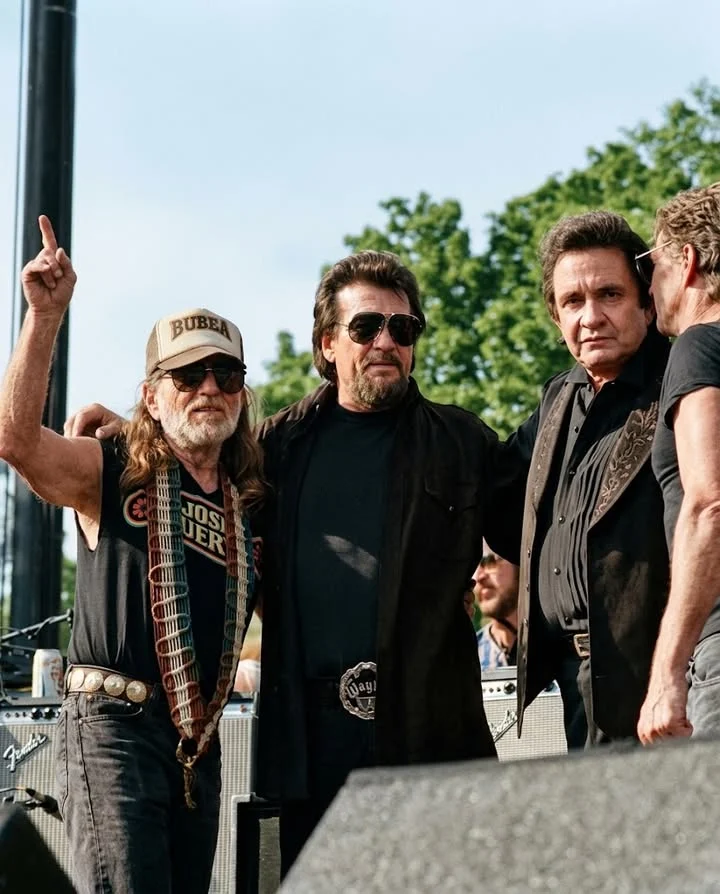
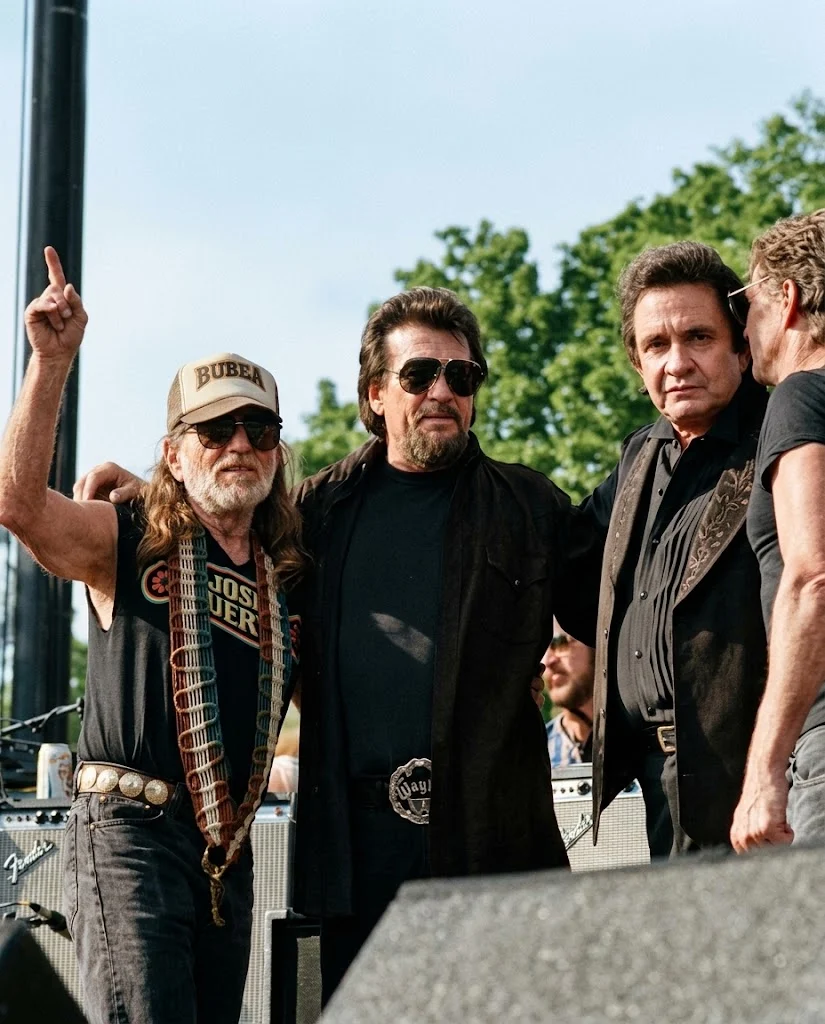
When the Texas Stadium sun baked the grass and Iowa’s Cyclone Stadium roared with worry, four gray-haired giants walked on stage with acoustic guitars and a message sharper than any radio hit.
Johnny Cash, Waylon Jennings, Willie Nelson, and Kris Kristofferson had already become legends, yet the most powerful thing they did in the early nineties was not a record, a costume, or a chart climb.
They turned their fame into a shield for struggling family farms.
In 1992 at Texas Stadium and again in 1993 at Cyclone Stadium in Iowa, the Highwaymen answered the urgent call of Farm Aid, the benefit organization Nelson had co-founded in 1985 to fight the wave of farm foreclosures sweeping rural America.
These were not ordinary concerts.
The crowds were filled with weathered faces, tired hands, and families watching auction signs threaten the land their grandparents had worked.
Under that heartland sun, Cash, Jennings, Nelson, and Kristofferson sang to the very people their songs had always honored.
“They did not perform at farmers, they stood with farmers.”
As Outlaw Country pioneers, they had spent decades resisting Nashville’s polished control, but here their rebellion found a deeper purpose.
They were not simply defending artistic freedom, they were defending the dignity of rural workers against industrial agriculture and corporate buyouts.
Their setlists carried that weight.
Instead of a generic greatest hits parade, they leaned into songs of survival and stubborn endurance, including “Highwayman” and “Folsom Prison Blues,” while audiences recognized the fight in every line.
The quiet moments behind the stage mattered just as much.
In holding areas and press tents, the four legends sat with farmers and listened to stories about debt, drought, family history, and the fear of losing everything.
Those conversations revealed a simple truth.
The stars understood the soil.
Cash had grown up picking cotton in a New Deal farming colony in Dyess, Arkansas.
Nelson and Jennings came from dust-choked Texas towns during the Great Depression.
They knew the ache of hard labor and the pride of people who refused to quit.
When Cash’s deep baritone, Nelson’s jazz-inflected phrasing, Jennings’ driving growl, and Kristofferson’s rugged storytelling blended together, the stadium felt less like a commercial show and more like a communal vow.
The line between global superstars and everyday rural workers vanished.
Outlaw country was never only leather, hair, or rebellion for sale.
It was a lifelong promise to stand beside the underdog when power tried to erase them.
The Highwaymen eventually rode on, and the music world moved forward, but those Farm Aid afternoons remain a defining chapter of their legacy.
They did not just sing about the American working class.
They stood beside them in the dirt, with guitars in hand and voices full of defiance.