
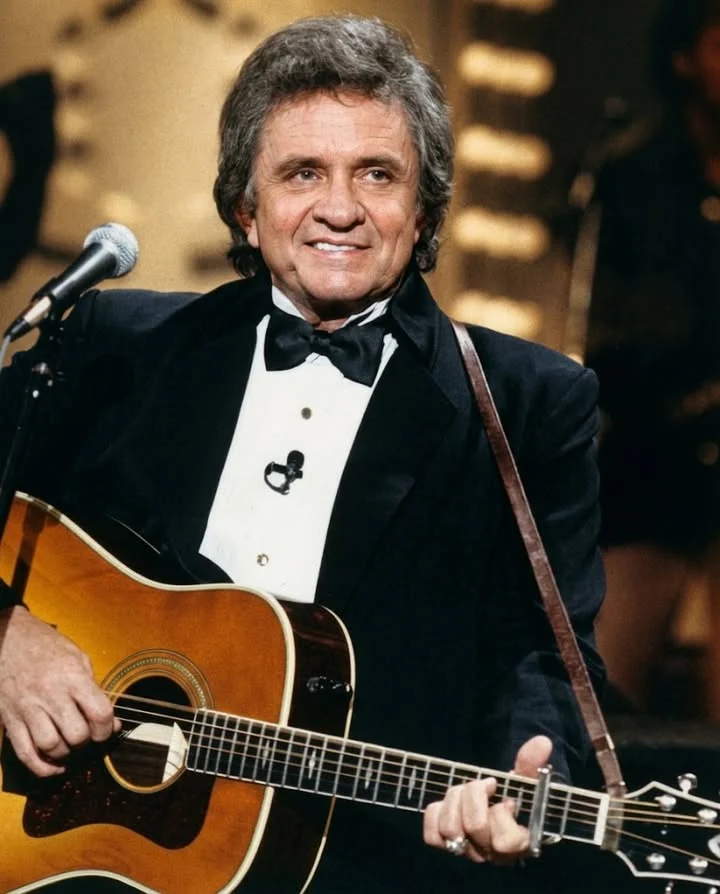
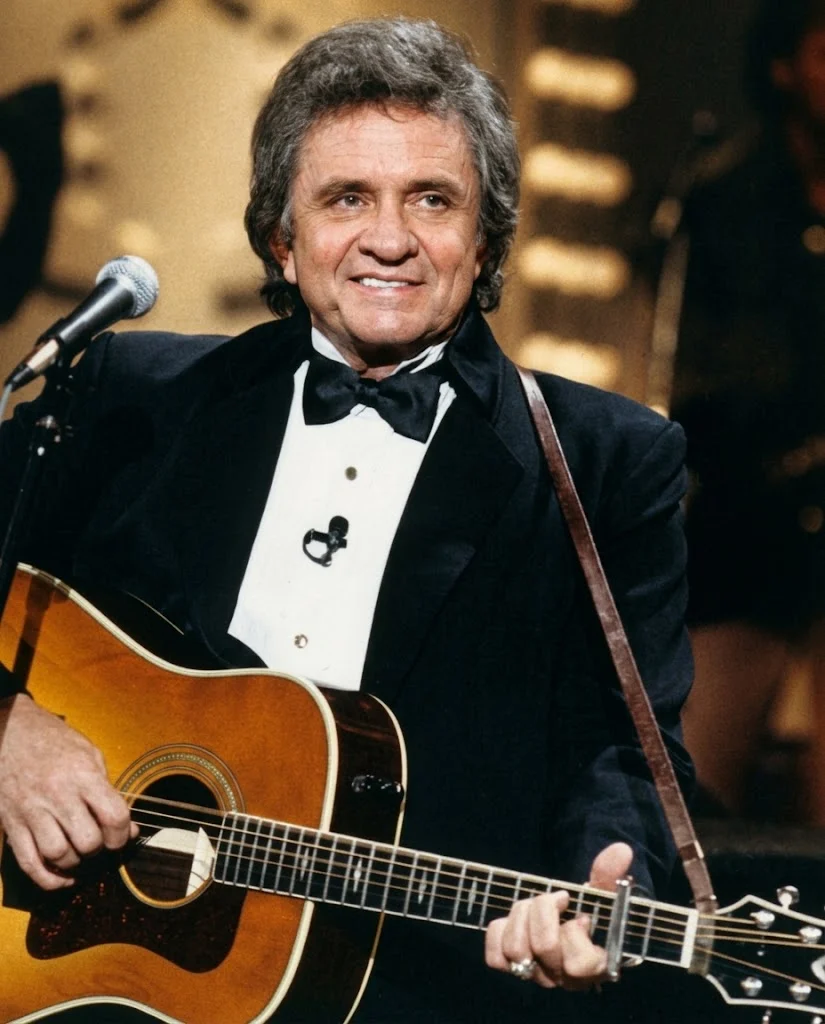
The camera found Johnny Cash at the exact moment a quiet man had to choose between a corporate order and a songwriter’s pain. He chose the pain. He looked straight into the lens and kept the word that executives wanted erased.
In 1970, The Johnny Cash Show had made the historic Ryman Auditorium its weekly home, and the American Broadcasting Company delivered it on a massive, unprecedented platform to millions of families across America.
When Cash selected Kris Kristofferson’s Sunday Morning Coming Down, network executives issued a strict directive. They wanted him to alter a line in the chorus.
“wishing, Lord, that I was stoned”
They feared the phrase was too harsh for a national family television audience. The pressure fell squarely on the Man in Black, who was being asked to sanitize a brutal portrait of loneliness.
Kristofferson sat in the Ryman balcony as the cameras prepared to roll, anxious and exposed. He was a former army captain who had famously landed a National Guard helicopter in Cash’s yard just to hand him a demo tape. He had also swept floors as a studio janitor, hoping for a breakthrough. Now he watched the network try to edit his life’s work.
When the music started, the control room watched closely. The song moved toward the contested chorus. Cash stepped to the microphone. He did not look away. He did not alter the line. He stared straight into the camera lens and delivered the word with a subtle, defiant smile.
He did not shout. He did not break a guitar. His rebellion was a quiet, deliberate refusal to compromise the grit of the marginalized for a broadcast standard.
That Ryman stage had already become a rare sanctuary during a deeply divided era. Cash used his national platform to blur the lines of genre and culture. He invited folk icons like Joni Mitchell and Bob Dylan, alongside jazz and soul legends like Louis Armstrong and Ray Charles, into the traditional heart of country music.
Yet this single lyric defined his unwavering loyalty to the outcasts. He risked his own television standing to shield a struggling songwriter and ensure that pain remained intact on a public broadcast.
His refusal was a quiet declaration that country music belonged to the broken, not the executives in the control room.
Country music belonged to the broken, not the men in the control room.
That televised moment immediately altered the trajectory of Kristofferson’s career. Later that same year, Sunday Morning Coming Down won the Country Music Association’s Song of the Year award. It was a monumental validation for a writer who had been kept on the fringes.
The conservative Nashville establishment had initially kept its distance from Kristofferson’s counterculture aesthetic and starkly honest writing. Cash’s public endorsement swung the heavy doors of Music Row wide open and helped turn Kristofferson from an industry outsider into the defining voice of an emerging, unpolished era.
It was the quiet beginning of the Outlaw movement. Cash did not just protect a word. He handed the genre to a new generation of storytellers who wrote about life exactly as they lived it.
The network cameras captured the defiance, but history captured the shift. A song about a lonely Sunday morning became a defining chapter in the history of the Ryman.