
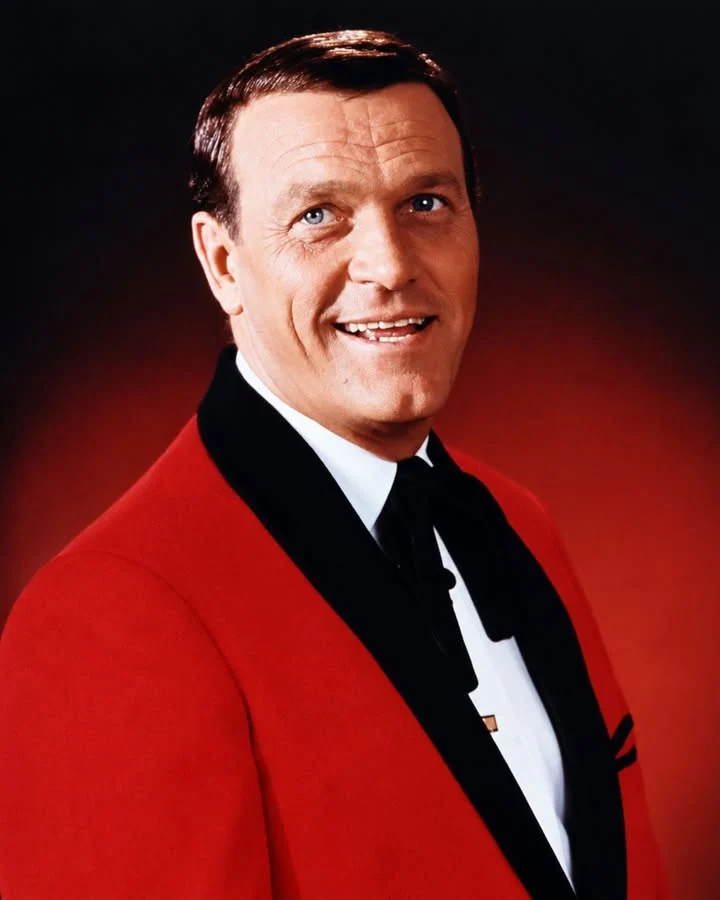
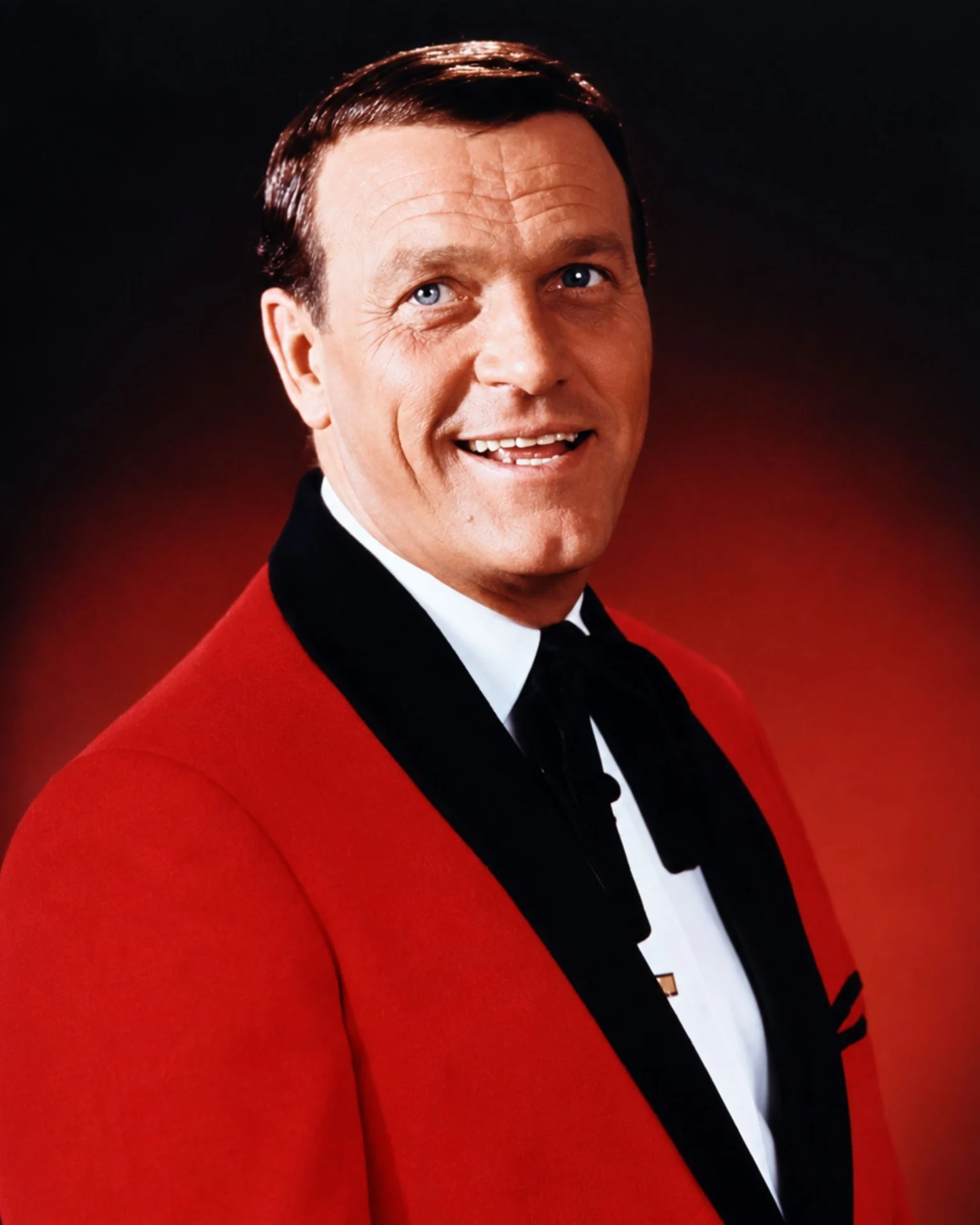
In the late 1950s, Eddy Arnold was on the verge of walking away from music. His sales had collapsed and his audience was disappearing. The man who had once dominated country radio was seriously considering retirement. But instead of fading into silence, Arnold made a bold choice. He took off the “Tennessee Plowboy” image that had made him famous and stepped into a tuxedo.
Arnold had been one of the biggest stars of the late 1940s. Hits like “I’ll Hold You in My Heart,” “Anytime,” and “Bouquet of Roses” made him a household name. His smooth voice and clean phrasing connected with rural audiences across America. He was a face of country music’s postwar boom.
Then rock and roll arrived. By the late 1950s, country music was struggling. Younger listeners were drawn to faster, louder sounds. Arnold’s record sales dropped and his live shows drew smaller crowds. The decline was serious enough that he thought about leaving the business entirely.
Instead of quitting, Arnold began to reinvent himself. He stripped away the elements that had defined his sound. The steel guitar was pushed back. Background singers and orchestral arrangements came forward. His vocals softened even more. The cowboy clothes disappeared. By the mid-1960s, he was performing in tuxedos with orchestras.
It was a risky move. Traditionalists might have seen it as a betrayal. But Arnold understood that the musical world had changed. He wanted to find a place in the new landscape.
In 1965, “What’s He Doing in My World” returned him to number one. Later that year, he recorded Hank Cochran’s “Make the World Go Away.” The song was built from regret and longing. In Arnold’s voice, it became a massive hit. It topped the country chart and crossed into the pop market. A singer who had nearly quit was suddenly reaching a broader audience than ever before.
More number one records followed. In 1966, he was inducted into the Country Music Hall of Fame. The next year, he won the CMA Entertainer of the Year award. By 1970, RCA honored him for selling sixty million records.
The reinvention was complete. The man once marketed as the “Tennessee Plowboy” had become a polished entertainer for television studios and supper clubs. He did not recover his old career. He built a second one on top of it.
He did not recover his old career. He built a second one on top of it.
Eddy Arnold’s story is a testament to the power of reinvention. He proved that sometimes the bravest thing an old star can do is not cling to the image that made him famous, but take it off, step into a new room, and trust that the voice underneath still knows how to reach people.