
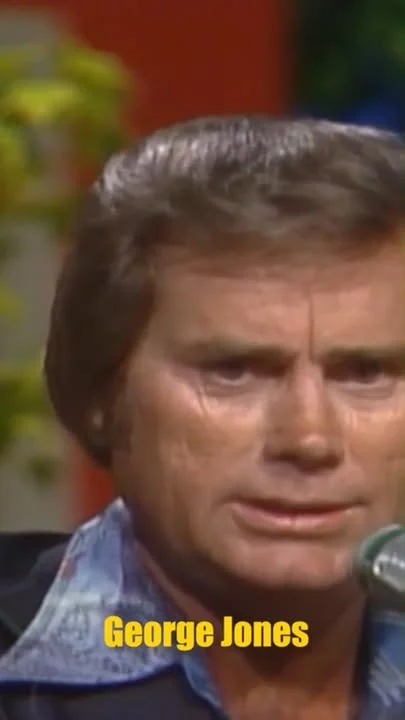
George Jones possessed a voice that could shatter a heart with a single cracked note, and no song better captured that raw, aching vulnerability than the 1962 ballad “She Thinks I Still Care”. Decades later, the track still haunts listeners with its portrait of a man whose every action betrays the lie he tells himself.
Penned by Dickey Lee Lipscomb and Steve Duffy, the song arrived as the lead single from Jones’s album The New Favorites of George Jones. It soared to number one on the Billboard Hot Country Singles chart, crossed over to pop audiences at No. 14 on the Hot 100, and earned a Grammy nomination for Best Country Vocal Performance, Male. In 1999, the Recording Academy inducted it into the Grammy Hall of Fame, cementing its place among country music’s most enduring treasures.
Yet the song’s power lies not in its accolades but in its emotional truth. Jones delivers each line as though he is living the heartbreak in real time. When he sings about asking a friend about an ex-lover, speaking her name, or dialing her number by mistake, his voice trembles with a mixture of denial and longing. The climactic lines capture the irony perfectly:
“But if she’s happy thinkin’ I still need her / Then let that silly notion bring her cheer / But how could she ever be so foolish / Oh where would she get such an idea.”
The man protests too much, and Jones makes sure we feel the weight of every syllable.
Over the years, giants of the genre have paid tribute: Hank Williams Jr., Merle Haggard, and Willie Nelson all recorded their own versions. None, however, have matched the aching authenticity of Jones’s original. It remains a masterclass in storytelling, a simple country ballad that refuses to let go of the listener long after the final note fades. “She Thinks I Still Care” is not just a song about lost love; it is the sound of a man unable to convince even himself that he has moved on.