
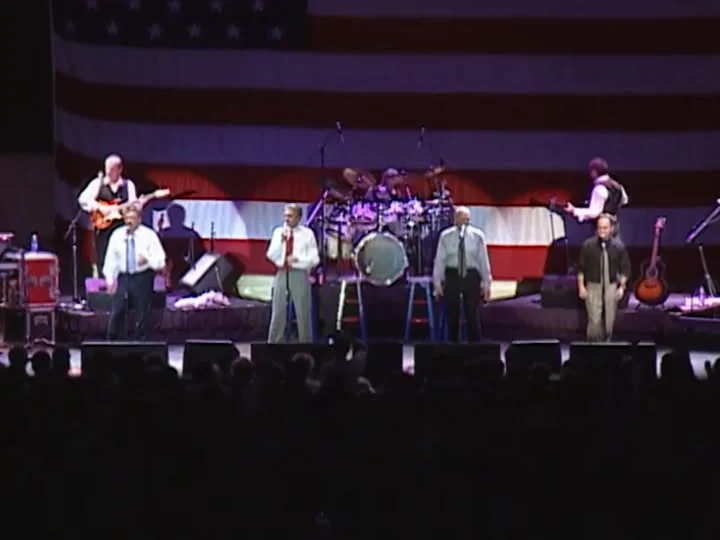
The final sustained note of Thank You World fades into silence, leaving behind not emptiness but a profound stillness. It is the sound of a benediction offered and received, a quiet moment of grace that lingers long after the music stops. This gentle yet profound piece from The Statler Brothers captures the very essence of gratitude, a rare commodity in a decade defined by musical excess.
Released in 1974 on Mercury Records, this title track from the album Thank You World represents a high point in the quartet’s countrypolitan period. Produced by the legendary Jerry Kennedy with engineer Tom Sparkman, the track showcases the group’s ability to blend gospel sincerity with polished orchestration. The album peaked respectably on the Country Albums chart, continuing their streak of consistent, heartfelt releases after shifting from Columbia’s folk-inflected country into the richer sound of the 1970s.
The Statler Brothers were never a band to shout from the rooftops. Don Reid’s gentle baritone leads the way, but the real magic lies in the blend with Harold Reid’s booming bass, Phil Balsley’s baritone, and Lew DeWitt’s tenor. Their harmonies form a seamless cushion that elevates the simple words of gratitude into something transcendent. The way the voices resolve on the first chorus is a moment of pure, uplifting sonic catharsis, a signature of their decades-long craft often overlooked in favor of their novelty hits.
I want to thank you world for lettin’ me belong
I’m just one fourth of one small group that sings your songs
The arrangement is a study in restraint. A stately piano introduces the song with chords that radiate emotional sincerity. A clean fingerpicked acoustic guitar keeps time, while a steel guitar sighs in the background, adding a touch of melancholic beauty without devolving into saccharine schmaltz. The rhythm section is steady but never aggressive. Strings swell subtly near the final verse, providing warmth and lifting the message of thanks. It is a masterclass in controlled dynamics, an inviting acoustic landscape that feels both accessible and sophisticated.
Lyrically, the song is an open letter of humble benediction, written by Don Reid and Lew DeWitt. It rejects the swaggering ego of superstardom, offering instead a deeply rooted acknowledgment that success is borrowed. The second verse pivots to honor others who have served in bigger ways, landing on the integrity of the group’s own contribution: all they can do is sing the world’s music all their days. One listener, a father, wrote a letter decades ago describing this song as the perfect encapsulation of his own life’s philosophy. Tucked into the liner notes of a used copy of the album, it read:
Work hard, be thankful, and never think you’re bigger than the applause.
That small micro-story illustrates how the Statler Brothers consistently translated simple, powerful truths into universally resonant country music. They carved out a niche as the thinking person’s country quartet, injecting intelligent humor and deep pathos into their narratives. Thank You World synthesizes the spiritual depth of gospel, the smooth sheen of pop, and the lyrical focus of country into something uniquely their own. It is a moment of sincerity that cuts through the manufactured polish of the era, a genuine hand extended to the listener.
Listening Recommendations
The Statler Brothers – The Class of ’57 For a similar blend of nostalgia, melancholy, and vocal harmony from the same Mercury era.
Charlie Rich – Behind Closed Doors An adjacent example of sophisticated, smooth countrypolitan production and intimate lyricism.
Tom T. Hall – A Week in a Country Jail A comparable focus on narrative-driven, conversational country storytelling that values humility.
Jim Reeves – Welcome to My World The original baritone-led country ballad with lush orchestration and a grand, inviting scope.
Eddy Arnold – Make the World Go Away A classic example of the Nashville Sound, smooth and orchestrated with deep emotional resonance.