
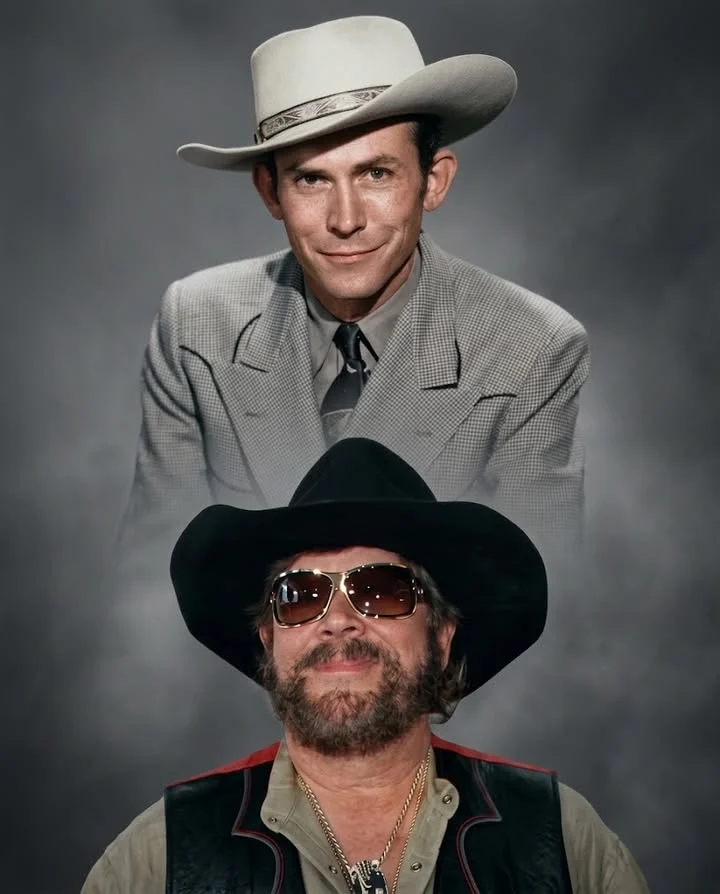
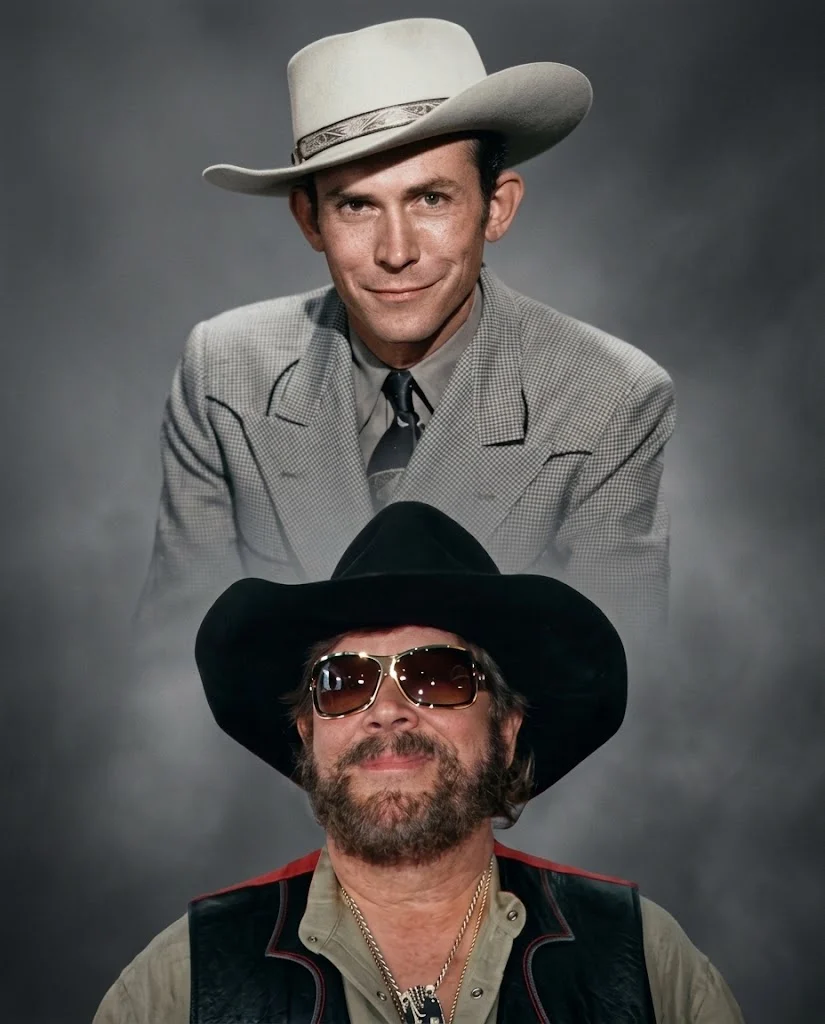
At eight years old, Hank Williams Jr. stood on a bandstand in a miniature suit and sang someone else into the room. He was not a boy discovering music. He was a living memorial dressed in borrowed cloth.
When his father, Hank Williams Sr., died on New Year’s Day in 1953, Randall Hank Williams was only three years old. Nashville turned that child into an heir apparent and demanded that the ghost return through every note.
For nearly two decades, his mother Audrey Williams guided him toward the stage. Promoters wanted the yodel, the guitar pose, and the smooth face that reminded audiences of the man they had lost. Hank Williams Jr. became a tribute act before he could choose his own life.
He did not get applause for being himself. He got applause for haunting the audience with someone else.
That script broke on August 8, 1975, high on Ajax Mountain in southwestern Montana. While hiking with a friend, the twenty-six-year-old slipped and fell nearly five hundred feet across rock, snow, and gravel. The impact fractured his skull and crushed his face. He lay trapped on the slope for hours before rescue helicopters reached him.
The mountain took the polished image and left a man with a changed face, broken bones, and a body that had to be rebuilt. Nine major reconstructive surgeries followed, along with cranial repairs, months of hospital care in Missoula, and years of painful physical therapy.
In that quiet recovery, the old Nashville mirror no longer reflected a usable copy. He had to find a new voice while still learning how to breathe through pain and medication.
Friends came with tapes and legal pads. Dickey Betts of the Allman Brothers Band and Waylon Jennings sat with him and urged him to write without commercial compromise. From a hospital bed, he sang into a portable recorder and shaped rough melodies about trauma, painkiller fog, and restless anger.
The raw hospital tapes captured a man shedding two decades of borrowed identity and reaching for something heavier, darker, and finally his own.
When he returned to the public, the transformation was total. He grew a thick beard to hide surgical scars. He wore dark sunglasses to shield nerve damage. He pulled a low cowboy hat down over his brow and picked up an electric guitar.
He abandoned the polite string sections and traditional fiddle arrangements that had framed his early career. With the Muscle Shoals Sound Studio rhythm section, he drove the songs with distorted guitars and pounding drums, blending country grit with southern rock fire and swamp blues shadow.
In 1979, he released the title track Family Tradition and met the questions about his rowdy life without apology. The single became a top-ten country hit and an anthem for the outlaw movement.
He honored his father’s bloodline not by repeating a ghost, but by claiming his own voice with reckless honesty.
Hank Williams Jr. spent twenty years performing in his father’s shadow. A Montana mountainside stripped that shadow away, and a battered man rose with a beard, sunglasses, and a guitar that sounded like survival.