
One trembling finger touched the edge of the black glasses, and the fortress cracked.
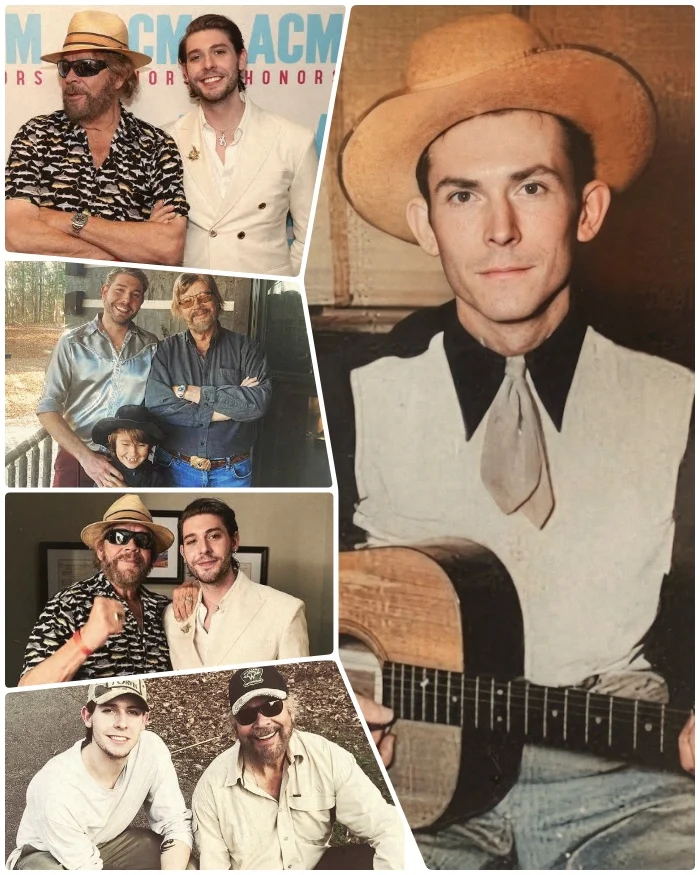
For one shivering second at the Grand Ole Opry, Hank Williams Jr. was not the outlaw king of stadium anthems. He was a son carrying an old absence, and a father watching his child shoulder a name that never arrives quietly.
At seventy-six, Hank Jr. remains a fortress of steel and highway miles. He has survived physical falls, industry battles, and the suffocating weight of being the son of a ghost. For decades, he hid his soul behind dark, impenetrable sunglasses. He gave Nashville the roar, the defiance, and the clenched-jaw promise of Family Tradition. He rarely let anyone see him bleed.
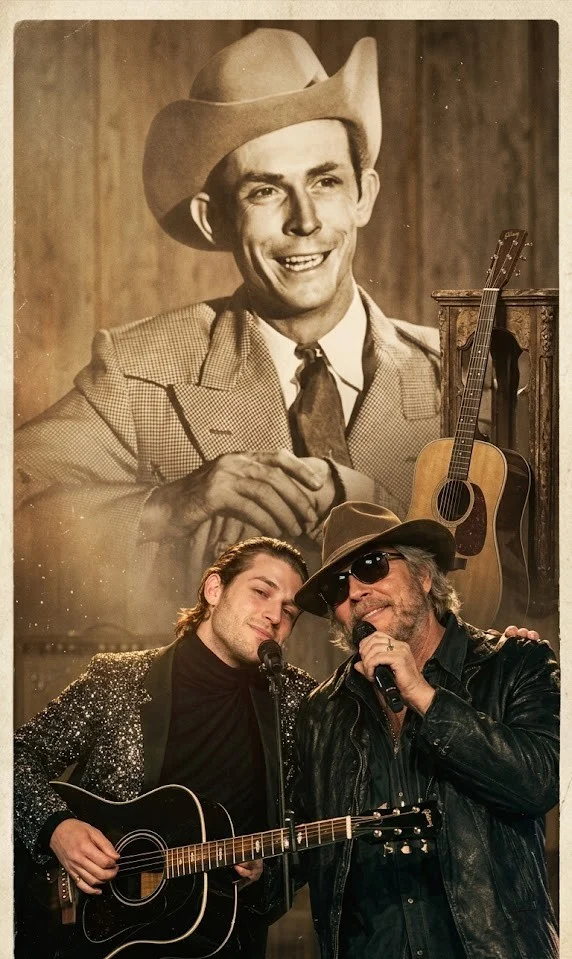
But the shadows grew long and heavy behind him. A towering black and white image of his father, Hank Sr., loomed over the stage like a restless memory from a life that ended too soon. Then Sam Williams stepped to the center microphone.
The room went quiet. As the first lonesome notes pierced the air, the seven-decade gap since the legend’s death simply vanished. This was not a copy of Hank Sr.’s thunder or Hank Jr.’s grit. Sam sang with a quiet, terrifying honesty. It was a high, lonesome sound that had not breathed in that room since 1953. It felt like eavesdropping on a private prayer.
Back in the wings, the Bocephus persona slipped away. Hank Jr. watched the past and the future meet in his son’s voice. He watched the boy carry memory, grief, and myth without flinching.
When the final weeping chord drifted toward the rafters, the cameras caught the impossible. Hank Jr. reached up, his fingers trembling at the edge of those famous black shades. He wiped away a single tear.
The armor finally failed.
In that brief second, he was not the keeper of a dynasty. He was a son who had spent a lifetime carrying a profound absence. He was a father realizing his child could handle the weight.
True legacy does not live in a museum case or a polished trophy. It lives in the grace of letting someone else carry the rhythm of an old, familiar ache. Some bloodlines are not meant to be conquered.
They simply have to be survived.
The Williams story did not end in the back of a Cadillac on a cold New Year’s morning. It did not end with stadium tours, gold records, or fame that can feel like a cage. It continues in the courage to let the music be enough.
The man in the glasses stood still as the light faded. He was a father watching his son turn a heavy inherited memory into a beautiful piece of living art. The ghost was finally at peace, and the survivor was finally free.
As the last note echoed into the dark, the silence that followed felt like mercy.