
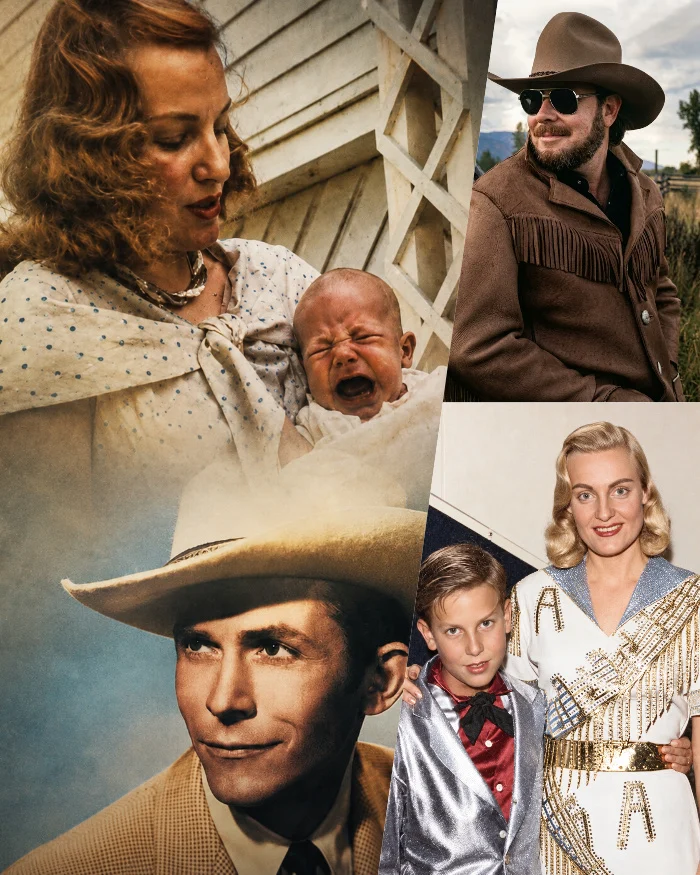
May 1948 seemed like the end for Hank Williams Sr. and Audrey Sheppard. Their marriage had cracked under fame, alcohol, and exhaustion, and the divorce papers made that pain official.
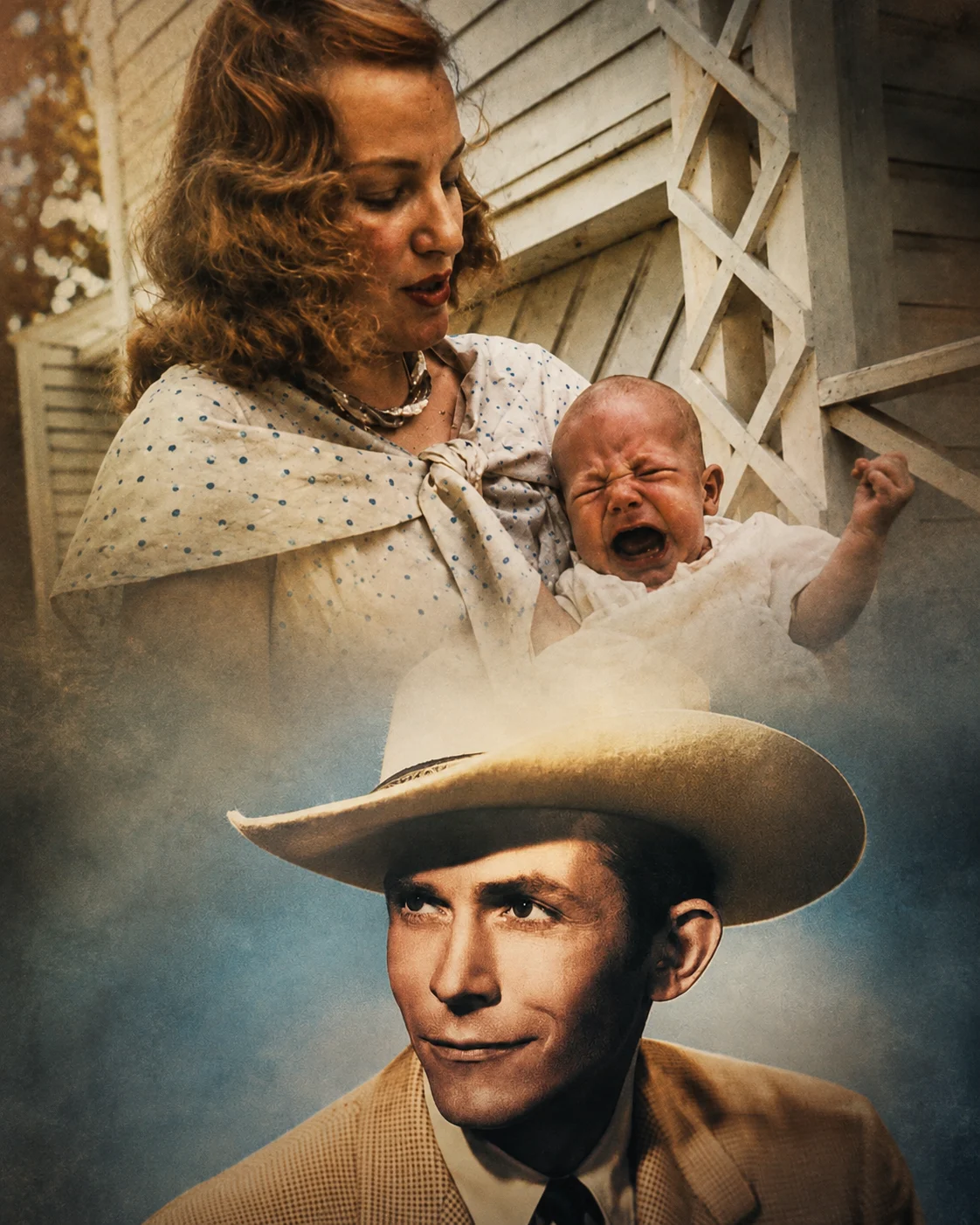
Yet one year later, a newborn boy changed everything. On May 26, 1949, Audrey gave birth to Randall Hank Williams, and country music history tilted toward a second act.
Hank had almost lost himself in Shreveport. A chance to perform on the Louisiana Hayride gave him a reason to fight for sobriety. Audrey chose forgiveness. They rebuilt their home against the odds.
Then came the stage that made Hank a national superstar. Less than a month after holding his newborn son, he stepped onto the Grand Ole Opry at the Ryman Auditorium. He sang Lovesick Blues, earned six encores, and became impossible to ignore.
The baby, nicknamed Bocephus, became more than a timeline milestone. For a man wrestling with demons, he was an anchor. He was proof that love could return and build something new.
But that anchor lasted only three and a half years. Hank Sr. died on New Year’s Day in 1953, at age 29. The boy inherited a name that felt like a ghost.
Audrey managed the young performer fiercely. Hank Jr. appeared on stage at eight, dressed in tailored Nudie suits, singing Your Cheatin’ Heart for crowds who missed the man they had lost.
He was expected to preserve a legacy, not create one. The pressure to be a living replica pushed him toward the same destructive habits that had claimed his father.
He had to sever the strings to survive
In the mid-1970s, Hank Jr. broke away from Nashville. He moved to Alabama, befriended Southern rock pioneers, and recorded Hank Williams Jr. and Friends in 1975.
He stopped chasing his father’s high, lonesome sound. He chose a grittier outlaw country voice, fierce and unapologetic.
A near-fatal fall down a Montana mountain left him with severe facial fractures. He emerged with dark sunglasses and a thick beard, a visual identity that looked nothing like the clean-shaven Opry icon.
That transformation made him his own force. He became a stadium-filling star, not a museum piece.
The boy born from a repaired marriage carried the biggest ghost in country music. He did not simply protect his father’s legend. He stood his ground and built his own.