
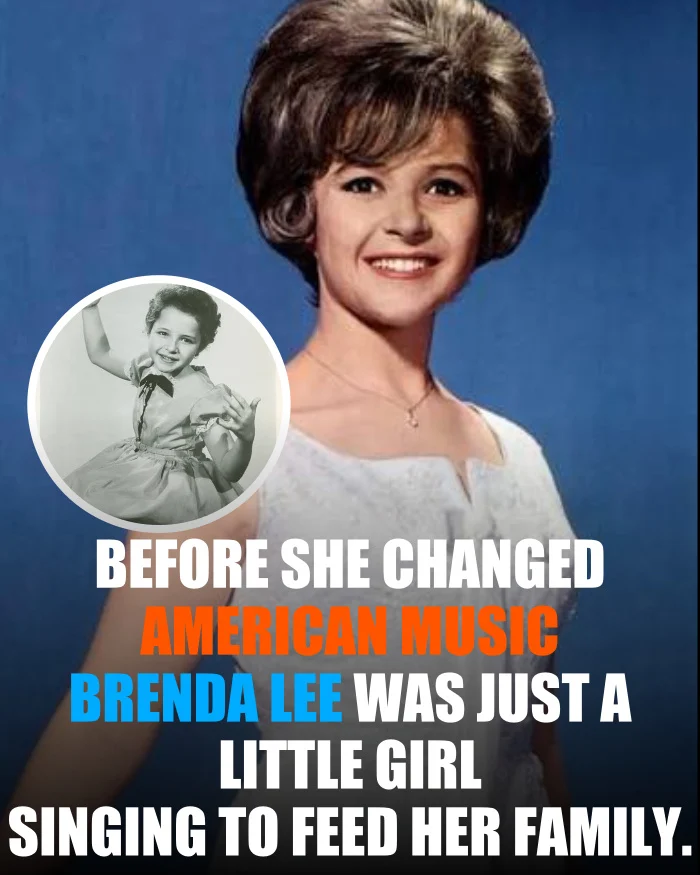
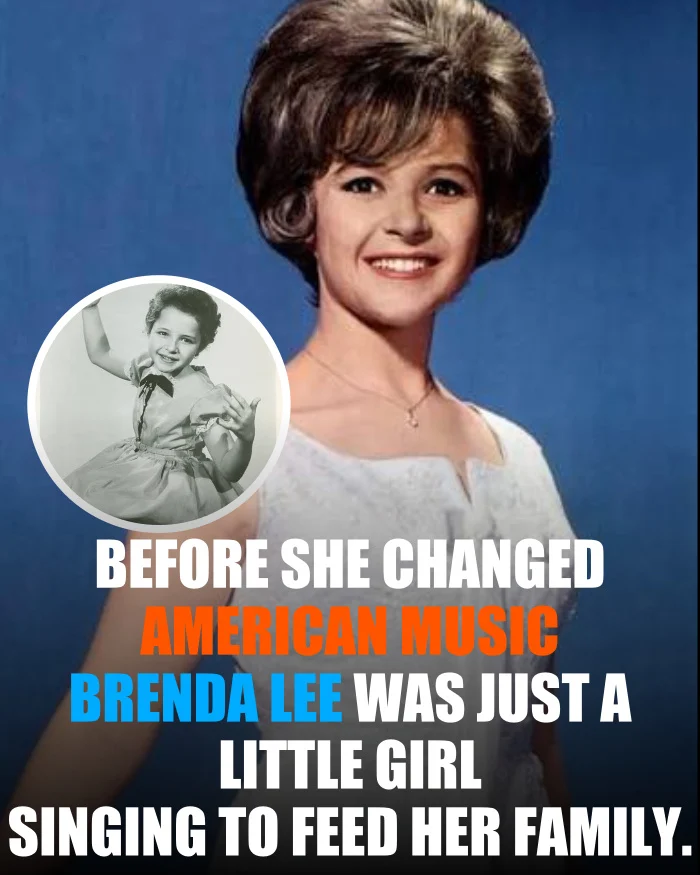
A tiny girl climbed onto wooden apple crates so she could reach a microphone and the voice that came out sounded like grief far older than her years.
Reuben Lee died in a construction accident in 1953 and his family was left in crushing poverty. His daughter Brenda Lee was still playing with dolls when she became the primary breadwinner for her widowed mother and siblings.
She traveled across the Atlanta area and sang at schools local gatherings and radio stations for whatever small paychecks she could bring home.
Her voice was raspy powerful and deeply mature. It carried the sudden loss of the father who had first encouraged her to sing.
Her appearances on the local TV Ranch program steadily built her reputation and pulled her toward larger audiences.
She was not chasing fame and she was fighting to keep her family housed and fed.
The turning point arrived in 1956 when country star Red Foley visited Augusta Georgia and heard the 11 year old singer.
Foley invited her to perform on his national ABC broadcast Ozark Jubilee originating from Springfield Missouri.
The producers did not hand her a children’s novelty tune and she did not have a formal rehearsal with the band.
She stepped to the microphone on live television and delivered a booming uninhibited rendition of Hank Williams’s Jambalaya.
The studio audience erupted. Foley later admitted he stood frozen on stage and was stunned that a child could project the raw power and phrasing of a seasoned honky tonk veteran.
That single national television appearance broke her entirely out of the local circuits.
Less than two months later on May 21 1956 Decca Records officially signed the young vocalist to a recording contract and moved her operation to Nashville.
Her early years at Decca placed her squarely at the center of the Nashville music machine. The label paired her with visionary producer Owen Bradley who brought her into his famous Quonset Hut studio.
Bradley made a crucial decision early on. He did not treat her like a child novelty act.
He surrounded her with Nashville’s legendary A Team of session musicians. Players like guitarist Hank Garland bassist Bob Moore and pianist Floyd Cramer backed her with the same professional intensity they gave to established adult country stars.
Under Bradley’s direction her early Decca sessions yielded tracks like One Step at a Time which charted in both the pop and country fields in 1957.
Later that same year she recorded the track Dynamite earning her the lifelong nickname Little Miss Dynamite and proving her voice could handle the aggressive energy of early rockabilly.
She was blending country phrasing with rock and roll rhythms and creating a crossover sound that defied easy categorization.
As the decade progressed her manager Dub Allbritten convinced Decca to let her tackle emotionally complex material and refused to let her age dictate her song choices.
That push led to her recording adult ballads like I’m Sorry and the blues driven Sweet Nothin’s.
The gamble worked and fully transitioned her from a child prodigy into a global pop and country phenomenon by 1960.
The voice that had saved a family in 1953 eventually made Brenda Lee one of the top charting female artists of the entire 1960s and she was surpassed only by acts like The Beatles and Elvis Presley.
The Decca contract did more than pull the Lee family out of crushing poverty. It introduced American music to a vocalist who built a permanent bridge between traditional country and rock turning a childhood of necessity into a lasting musical institution.