
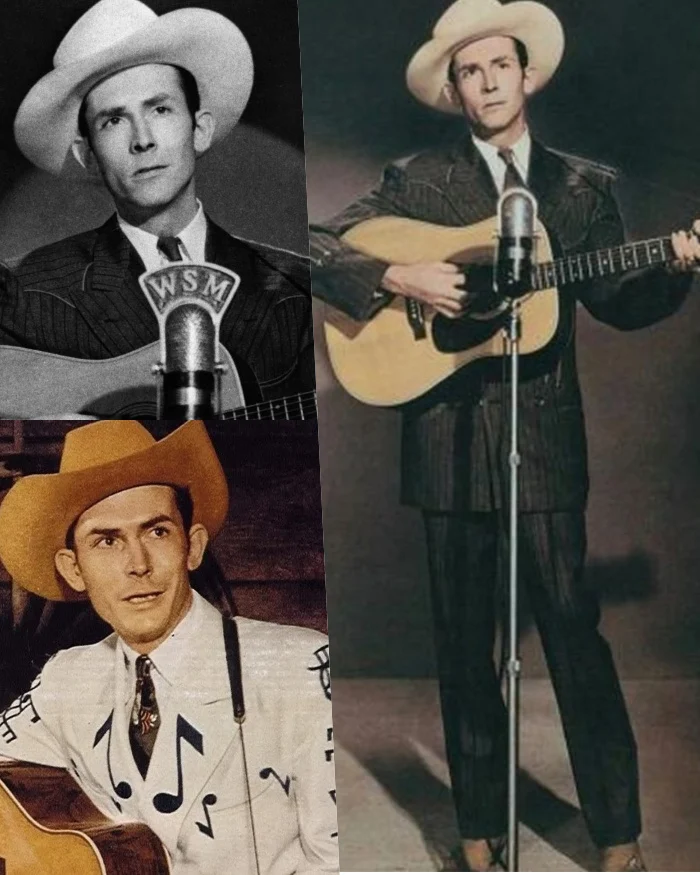
A frail Alabama singer walked into Castle Studio and turned two fading hours into four immortal songs.
Hank Williams had once ruled American country music with a voice that made crowds feel seen. By September 1952 he was only twenty-nine yet he moved like a man worn down by decades. The Grand Ole Opry had closed its doors against him. His marriage lay in bitter ashes. Painkillers and whiskey had tightened their grip on his body and spirit.
People in Nashville believed his story was nearly finished. Booking agents hesitated. Friends whispered. The brilliant and troubled star seemed to be slipping away before the public could say goodbye.
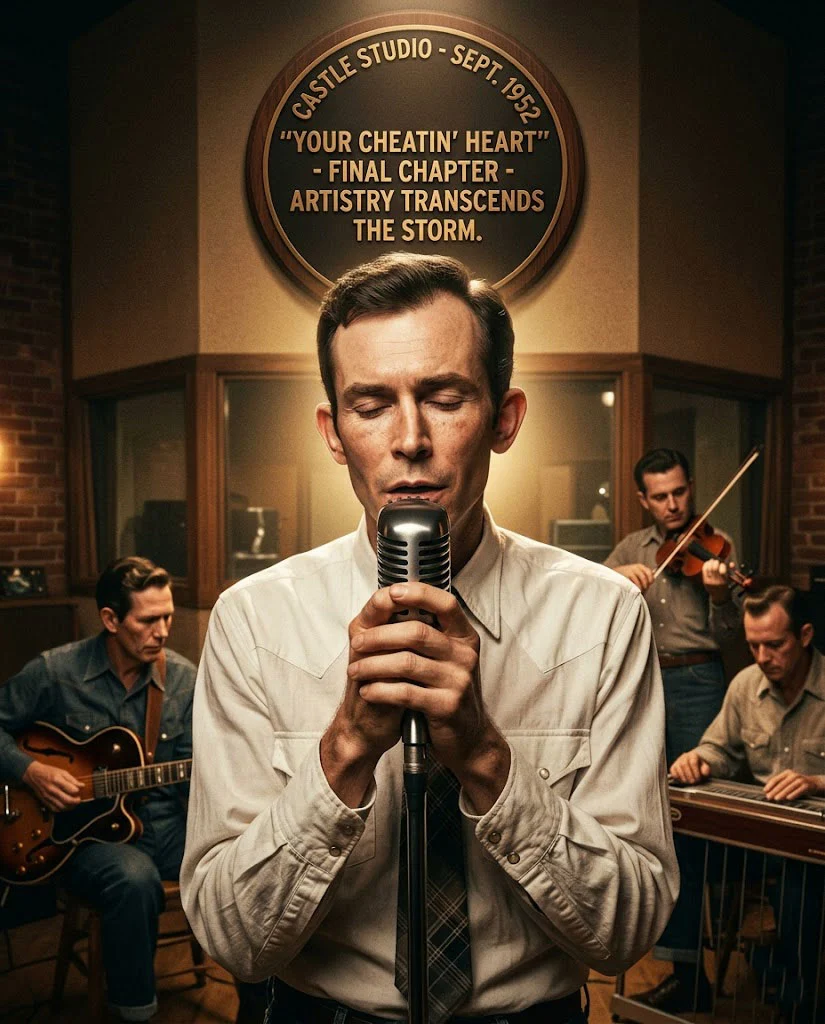
Then on a quiet Tuesday afternoon he pushed open the heavy wooden door of Castle Studio and stepped into a different world. The door clicked shut behind him. Outside the chaos still waited. Inside the air felt hushed and almost holy. A fiddle and an electric guitar hummed with quiet tuning. Seasoned players watched him with worry while he stood bare and unguarded at the center of the floor.
His clothes hung loose on a gaunt frame. His hands trembled around the cold microphone stand. He did not ask for pity. He did not hide his weakness. He closed his sunken eyes and waited for the red recording light to glow.
For one hundred and twenty minutes the broken man disappeared and the master remained. He poured his ruined life into four final tracks with no glittering mask and no polished performance. He sang “Kaw-Liga” with a lonely ache that seemed to speak for every heart left waiting. He recorded “Take These Chains From My Heart” as a desperate plea for release he knew might never come.
Then he delivered “Your Cheatin’ Heart.” His voice carried bitterness and fragility and a startling honesty. It was not merely a song for a contract. It was a mirror held up to his own failures and a permanent confession carved from heartbreak.
When the studio door opened again he walked back into the harsh Nashville daylight. Less than four months later he was gone. The darkness found him in the cold backseat of a Cadillac on a lonely highway. Time has claimed every man who stood in that room that afternoon.
Greatness did not require perfect strength. It required the courage to leave broken pieces on the floor before walking away.
He did not try to escape his end during those two hours. He gave his own farewell a melody and let the tape keep spinning long after the silence closed in.