
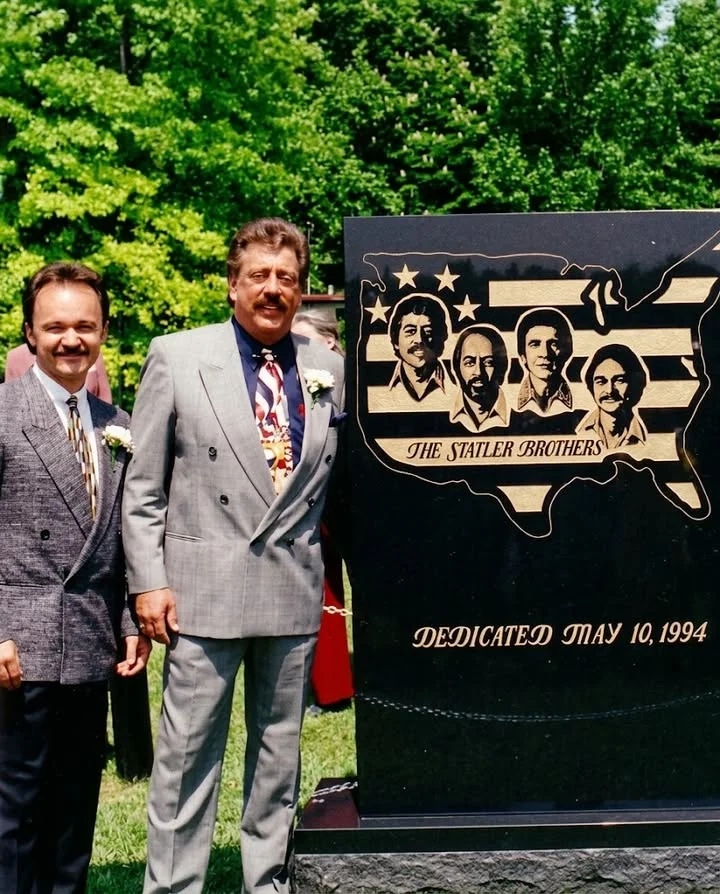
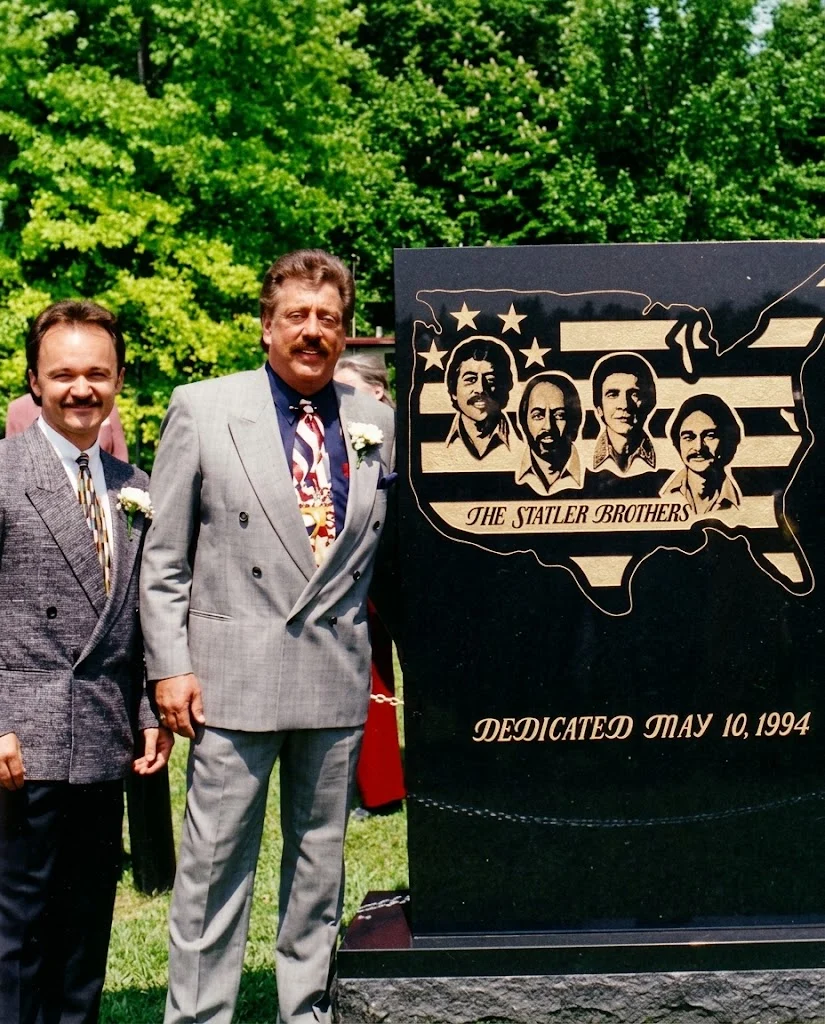
Harold Reid died with arenas far behind him and a porch in Staunton Virginia ahead of him.
That quiet final image held the whole story of a man who gave country music some of its most recognizable bass notes and gave his family a father who kept showing up.
He became a Grammy winner and a touring star beside Johnny Cash, yet he never made the industry’s most common bargain.
When managers and executives said Nashville was the only road to a lasting career, Harold and his wife Brenda stayed in Staunton Virginia.
They turned a small town into the center of a marriage that lasted nearly six decades.
Harold had learned to sing in church pews during the 1950s with his younger brother Don, Phil Balsley, and Lew DeWitt.
Their four part harmony grew from a gospel quartet into one of the most decorated groups in country music history.
Everything changed in 1964 when Johnny Cash heard them and invited the Statler Brothers to join his touring roadshow.
The partnership lasted eight and a half years and carried four young men from the Shenandoah Valley to Madison Square Garden, network broadcasts, and concert halls around the world.
Harold’s deep bass anchored recordings such as Flowers on the Wall and Class of ’57.
His wit also helped The Statler Brothers Show become one of the most popular programs on TNN during the 1990s.
Behind three Grammy Awards and nine Country Music Association Vocal Group of the Year trophies sat a man who measured success by presence.
He married Brenda in 1961 and raised five children away from industry parties.
While other stars bought Tennessee mansions, Harold slept on cramped tour buses so he could get home for breakfast, school events, and Sunday services.
He brought the biggest stages to his community instead of leaving it.
For twenty five years from 1970 to 1994, Harold and the band hosted the Happy Birthday USA festival at Staunton’s Gypsy Hill Park.
The free Fourth of July concerts drew as many as one hundred thousand fans and major country artists.
He traded the roar of arenas for the quiet of his front porch.
When the group stopped touring in 2002, they did it on their own terms.
Their farewell tour ended on October 26 2002 at the Salem Civic Center in Virginia, where Harold sang his final touring bass notes for neighbors and lifelong listeners.
Retirement gave him the ordinary life he had protected for decades.
People saw him in grocery aisles, over coffee with neighbors, and on his porch with children and grandchildren.
To millions he was a Hall of Fame voice from a golden era of vocal harmony.
To Augusta County he was the humble man who always waved back and never let fame change him.
Harold passed away in April 2020 at age eighty.
Tributes praised his musical gift and comedy, but the deepest gratitude came from the valley that never had to give him up.
His records still spin on backroad radios and family stereos, carrying the steady bass that held the songs together.
He conquered the world with Johnny Cash, yet his greatest legacy was built by staying home.