
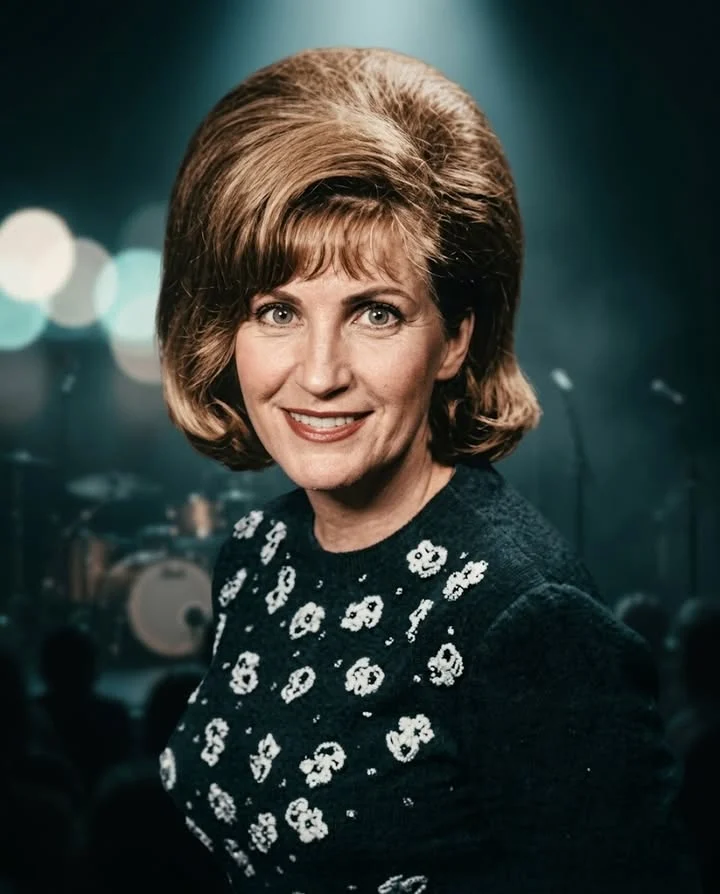
She sang the most famous song about a broken heart and made it feel like a private wound opened in public.
Skeeter Davis did not learn heartbreak from a lyric sheet. She learned it on a highway in 1953 when the world stopped turning for her and her best friend Betty Jack Davis.
Born Mary Frances Penick in Dry Ridge, Kentucky, she grew up as the first of seven children and found comfort in music. Her grandfather called her Skeeter because of her restless energy, yet she carried a quiet strength that would guide her from the hills of Kentucky to the studios of Nashville.
As a teenager, she formed The Davis Sisters with Betty Jack. Their voices blended so closely that the country music industry noticed. In the summer of 1953, they scored a number-one country hit and stood on the edge of a much larger career.
Then the accident came. Betty Jack died, and Skeeter survived with severe injuries. The friendship that had shaped her sound and her future was gone.
She survived the crash, but she also had to survive the silence.
When she returned to the studio as a solo artist, the missing harmony was almost physical. Producer Chet Atkins sometimes double-tracked her vocals at RCA so the familiar two-voice feeling could return for a few moments.
She rebuilt her career through the late 1950s while carrying the memory of Betty Jack into every performance. Then Arthur Kent and Sylvia Dee created the song that would change her life.
Dee wrote the lyrics after the death of her father. The song captured the strange cruelty of grief. The world keeps shining, birds keep singing, and a person can feel completely destroyed while life moves on.
Released in late 1962, The End of the World crossed boundaries few country records had crossed. It reached the top five on the country, pop, rhythm and blues, and easy listening charts.
Davis sang with delicate clarity and open vulnerability. She did not force the emotion. She simply let it come from the place inside her that had known loss since 1953.
Halfway through the song, the music changes and she steps closer to the microphone for a spoken-word bridge. The voice becomes intimate, almost whispered, as if the pain is standing in the same room with the listener.
She turned a hit record into a confession.
The song made her a crossover star and a trailblazer for female country singers who wanted to move beyond one narrow sound. She had become a dedicated member of the Grand Ole Opry in 1959, and for decades she carried that stage, that voice, and that story around the world.
In 2004, with her health failing, she appeared one final time at the Opry. She sang The End of the World again, with the same quiet dignity she had carried since her Kentucky childhood.
She died shortly after that performance. The song remained as a testament to survival. It proved that a woman who lost her best friend, her early harmony, and much of her youth could still give America one of its most enduring records about a broken heart.