
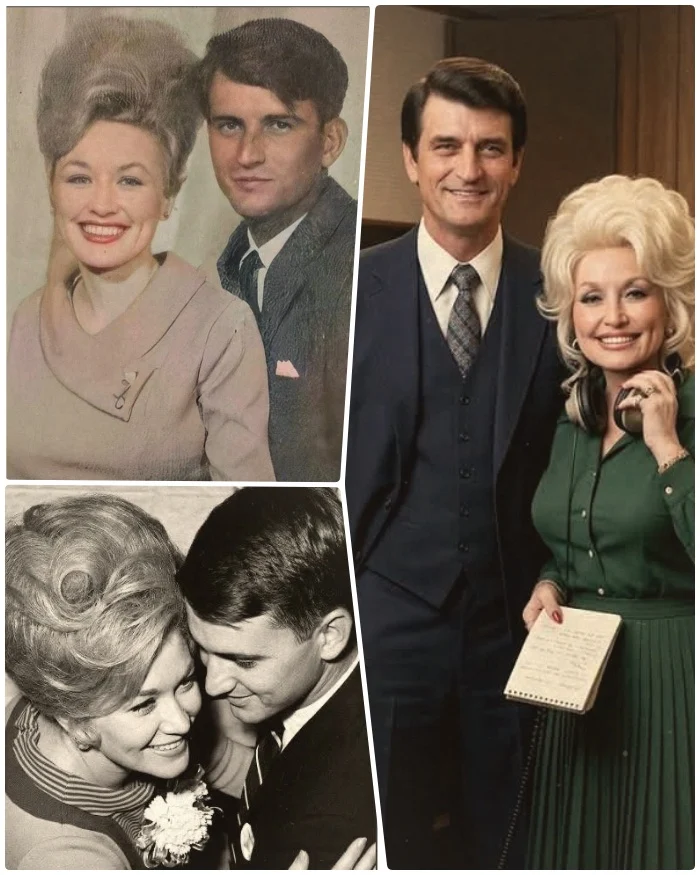
After the last note faded in a stadium packed with adoring fans, Dolly Parton could drive home to a man who did not need an encore. Carl Dean was not waiting with her records playing or her lyrics memorized. He was waiting with something rarer, a life where she did not have to be a legend at all.
For almost sixty years, Dolly has shaped American country music with songs the whole world knows by heart. Yet the husband who has shared her life for more than half a century has never been a country music devotee. His heart beats faster for hard rock, especially Led Zeppelin, and for the honest sound of traditional bluegrass. Her albums do not fill his car radio, and her choruses are not words he carries around in his head.
What he cherished was never the glitter. It was the girl herself.
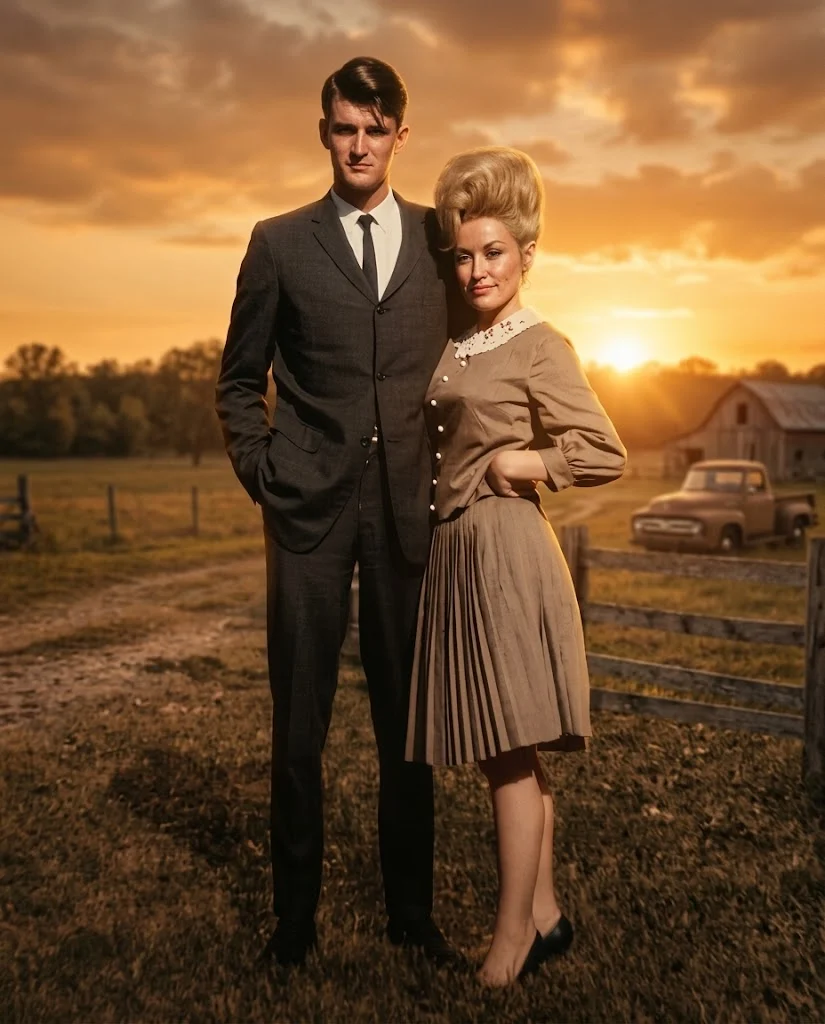
Back in 1964, Carl pulled up in his white Chevy pickup truck outside the Wishy Washy laundromat in Nashville. Inside that ordinary place stood an eighteen-year-old newcomer fresh from the Smoky Mountains, holding two paper bags of dirty clothes. Fame had not found her yet, and fortune had not changed her yet. He fell for her in that unguarded moment, long before the towering wigs, the rhinestone gowns, and the global empire arrived.
The test of that love came early, in the spring of 1966, just as Dolly was beginning to gain traction. Executives at Monument Records warned her plainly that a young and available female singer was far more marketable. In their view, marriage would ruin her appeal and destroy her career before it had truly started.
Instead of accepting that ultimatum or battling the Nashville establishment in public, Dolly and Carl made a quiet and definitive choice. On May 30, 1966, they slipped across the state line to Ringgold, Georgia, a town far enough away that Tennessee newspapers would not publish their marriage license. With only Dolly’s mother as a witness, they married in a small Baptist church, protecting both her dreams and the ordinary life he always wanted.
Shortly after her breakthrough, Carl joined her for a BMI industry dinner where she won an award for writing the hit Put It Off Until Tomorrow. The overwhelming crowds, the flashing cameras, and the relentless noise of the music business were enough. He drew a permanent line that night.
I want you to have everything you have ever dreamed of, but please never ask me to go to another industry event again.
Dolly agreed, and Carl stepped entirely out of the frame. While she traveled the globe playing to millions, he stayed in Nashville, running his asphalt paving business and caring for the sprawling farm they called home. He did not walk red carpets, he did not sit in the front row at the Grand Ole Opry, and he famously stayed away from her live shows.
That distance was not coldness. It was her anchor. When Dolly returned home from exhausting cross-country tours and stepped straight out of a media storm, she did not have to perform. She could take off the makeup, leave the larger-than-life persona at the gate, and simply be a wife.
Their anniversaries were not spent at extravagant Hollywood galas. They were spent driving around in their RV, pulling into fast-food drive-thrus, and camping in the quiet Tennessee hills. Carl never asked for reassurance about her massive success, and he never felt threatened by the millions of people who adored her. He carried the rare confidence of a man who knew exactly who he was, and exactly who he had married.
By refusing to worship her music, Carl gave Dolly the absolute freedom to belong to the world. Their marriage survived the crushing weight of fame precisely because he built a fortress where the spotlight was never allowed to enter.