
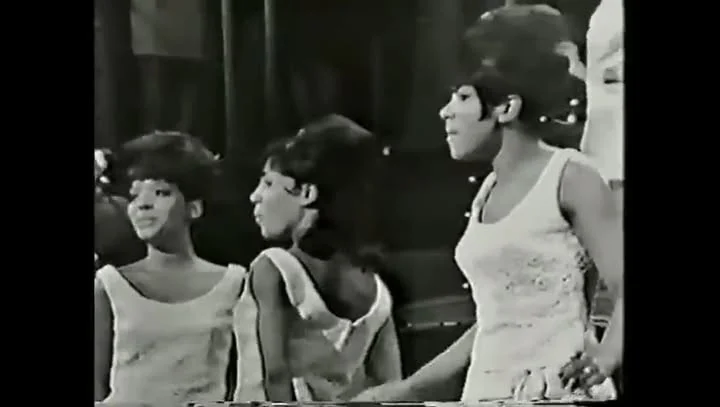
The rebel in this story is not the boy. It is the girl who stands beside him. In 1962, Darlene Love stepped into the vocal booth at Gold Star Studios and delivered a performance that redefined pop authority. “He’s a Rebel,” released under the banner of The Crystals, does not ask for understanding. It demands allegiance. The record brings its own weather.
Love’s voice does not plead. It does not negotiate. She sings as if she has already won the argument hours before the song starts. The phrasing is a masterclass in pop authority. Short lines sit forward in the pocket. Bursts of air color the leading consonants. Vibrato appears like a signature rather than a decoration. The famous Gold Star echo chamber gives every syllable a tail that brushes the next beat. It is not nostalgia. It is architecture.
Phil Spector produced the track. He released it on his Philles Records label in 1962. Gene Pitney wrote it. Pitney worried the song might not suit his own voice. In a twist of pop destiny, it suited Love perfectly. Darlene Love recorded the lead with her group the Blossoms. The label issued it under The Crystals name. This choice became a legendary piece of pop history. The single later anchored an LP of the same name in 1963. It sits at a hinge in the group arc. The track follows “Uptown” and precedes the radiant one-two of “Da Doo Ron Ron” and “Then He Kissed Me.” It is a reminder that 1960s credit lines could be as fluid as the echo in the studio chambers. It is a feat of pop alchemy.
Jack Nitzsche arranged the music. He packed a small orchestra into a tight frame. The Wall of Sound is a dense physical experience here. Drums are doubled and tripled. Bass lines trace the same contours with upright and electric. Pianos hammer chords that bloom into reverb. Strings rise, impatient and bright. Saxophones add grit at the edges. Castanets and handclaps peek through the mix like sparks. No instrument seeks solitude. Everything leans into everything else.
America was ready for this message in 1962. The “bad boy” narrative had lived in doo-wop and early rock and roll for years. This record flipped the angle. It is not about romantic fascination. It is about allegiance. The singer stakes a public claim. She dares anyone to challenge her choice. The young woman’s voice is not a petition. It is a declaration. The lyric sketches the rebel but the record’s true rebel is the narrator. She is calm. She is defiant. She is already done explaining.
Listen to how the rhythm works. The snare speaks in exclamation points. It pushes the vocal forward. The tambourine behaves like a steady but restless pulse. A rhythm guitar locks in tight. A piano elbows through the middle register, percussive and decisive. The dynamics come from density shifts. The band thickens in the chorus. It thins just enough in the verses to let the vocal posture. Intensity is not just volume. It is how many elements decide to crowd the same breath.
Picture the first listeners. Kids with their hands on a dial. A friend in a borrowed sedan at dusk tapping the dashboard. You think about the person who makes your parents frown. The radio is defending your case. In a small apartment, the bed unmade, a cup of tea cooling. You have just ended something sensible. The record drops. The room grows bolder. You breathe differently when it ends. Decades later on a dance floor, veterans and twenty-somethings find the same downbeat. The record keeps living in rooms it was never designed to see.
The song dramatizes a choice without apologizing for it.
Pop works best when it sounds like a private certainty overheard in public.
Girl-group records often framed longing as a gentle ache. This one frames it as a verdict.
The instrumental arrangement is a study in layers. The guitar does not solo. It scaffolds. It pushes eighth-note figures that keep the chorus taut. The piano carries weight, thickening the middle. Strings flash and recede. Saxophones scuff the texture. The mix is a sculpture of pressure and release. The drums punch, pull back, and return with more urgency. The low end is a speaking voice, not a thunderclap. The reverb tail is short enough for articulation but long enough to widen the frame.
The record rose to the top of the charts. The culture was ready to cheer for a love that did not ask permission. Today, the song feels remarkably modern. Slide it into a playlist between contemporary anthems. It holds its own. It is not louder. It just knows exactly what it wants to say. For younger listeners, it is a postcard from the pre-Beatles moment. It is also a blueprint. The heart of the record survives translation across formats because it rests on performance, not sheen.
Simplicity meets orchestral sweep. Restraint meets catharsis. Something durable is forged. The track clears its own air. Put it on in a dim cafe. Put it on in a car headed nowhere. Put it on in a living room with the chairs pushed back. The room squares its shoulders. The present gets a little bolder. Play it once more. Not to chase nostalgia. To hear confidence learning how to sing.
Listening Recommendations
The Ronettes “Be My Baby” is another Gold Star epic where drums and echo wrap a fearless lead in cinematic light.
The Crystals “Then He Kissed Me” offers a more romantic, gliding take from the same era, trading swagger for star-swept promise.
Darlene Love “Today I Met the Boy I’m Gonna Marry” features Love on the label with the same poised conviction in the vocal.
The Shangri-Las “Leader of the Pack” provides motorcycle-drama mythmaking with similar rebel energy and a darker narrative arc.
The Chiffons “He’s So Fine” is breezier and brighter, keyed to harmony hooks that stick like summer.
The Shirelles “Will You Love Me Tomorrow” is earlier and more reflective, its strings and tempo balancing intimacy and poise.
Video