
The hole in Trigger is no flaw. It is a diary of every song Willie Nelson refused to fake.
For more than fifty years, Willie Nelson has moved through a music business that kept changing its clothes. He did not change his. While peers chased pristine studio sound, glittering wardrobes and polished images, Willie held on to his red bandana, his long braids and the weathered voice of a nylon string guitar.
That guitar is Trigger, a 1969 Martin N-20 classical model that has stayed at his side for decades. He played it with such force and devotion that his pick wore a gaping hole through the wood. He never patched the wound or traded the instrument for a newer model. He let the scar show.
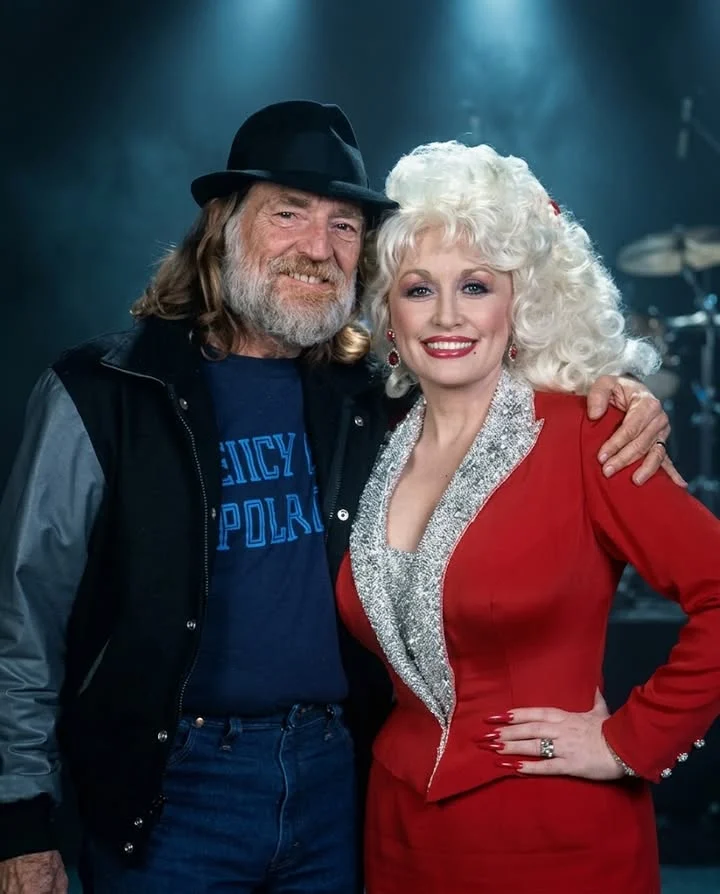
Dolly Parton saw the same honesty and called him the most wonderful, honest man in the business. She was not alone. Nashville and the world beyond recognized that Willie did not carry himself like a traditional superstar.
The most wonderful, honest man in the business
His greatness was never only in his behind the beat phrasing, a sound that felt like a comforting conversation rather than a rehearsed performance. It was in how he saw himself beside everyone else.
The door of his Honeysuckle Rose tour bus stayed open. Hall of Famers, struggling songwriters and fans who waited in the rain by venue gates all met the same unpretentious smile. He built an empire by pulling up a chair and sitting with the crowd, not by lifting himself above it.
That grounding shaped what he did with his platform. He did not just sing about the American working class. He stood in the trenches with them. In 1985 he co-founded Farm Aid with Neil Young and John Mellencamp. What began as one concert became a lifeline that raised millions and helped save thousands of family farms from foreclosure. When the heartland hurt, Willie turned fame into a shield for people who had none.
That same humility reached into his art. In 1975, after signing a major contract with Columbia Records that finally gave him total creative control, the industry expected a lush and expensive masterpiece. Willie went the other way. He took his band to a small studio in Garland, Texas, and recorded the concept album Red Headed Stranger for a few thousand dollars.
He kept the arrangements spare. A guitar. A piano. A drum. His voice. When executives heard the tape, they thought he had turned in an unfinished demo. They begged him to add sweeping strings and polish the tracks for commercial radio. Willie quietly refused. He knew the songs needed room to breathe. He was humble enough to step out of the way of the music, and that bare bones session changed the course of the genre.
He carried that ego free spirit through the decades. He formed The Highwaymen with Johnny Cash, Waylon Jennings and Kris Kristofferson. He shared a microphone with Ray Charles and Snoop Dogg. He never fought for the center spotlight. He was happy to play the song.
Today Willie Nelson is still here. He is still on stage. He is still singing those familiar melodies. He is still holding the battered guitar that has traveled millions of miles by his side.
The music industry spent decades trying to make him fit its mold. He simply waited them out. His life proves that the longest legacy belongs to the man who never tries to be anyone but himself.