
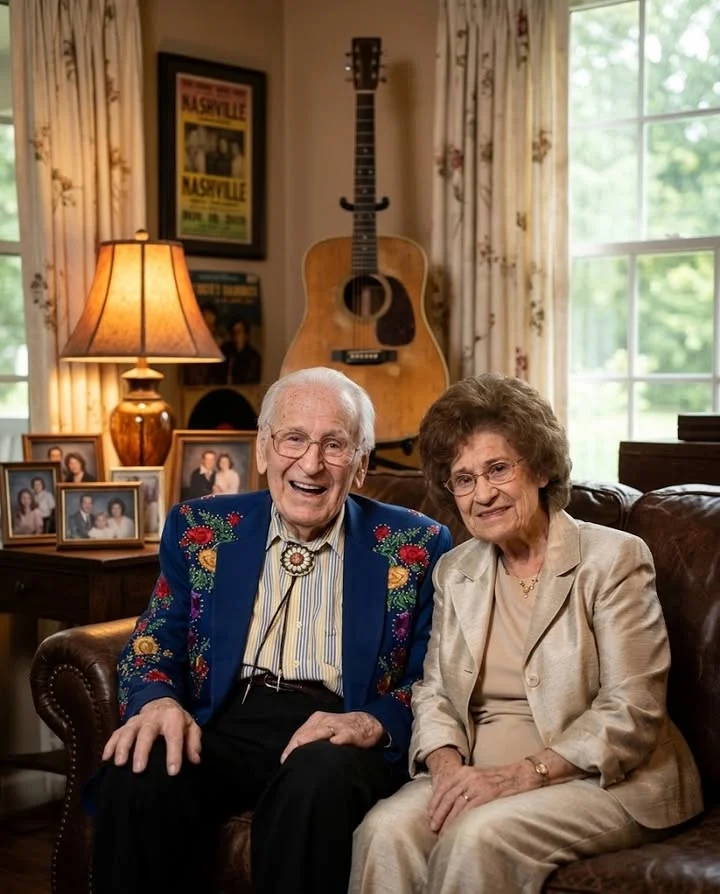
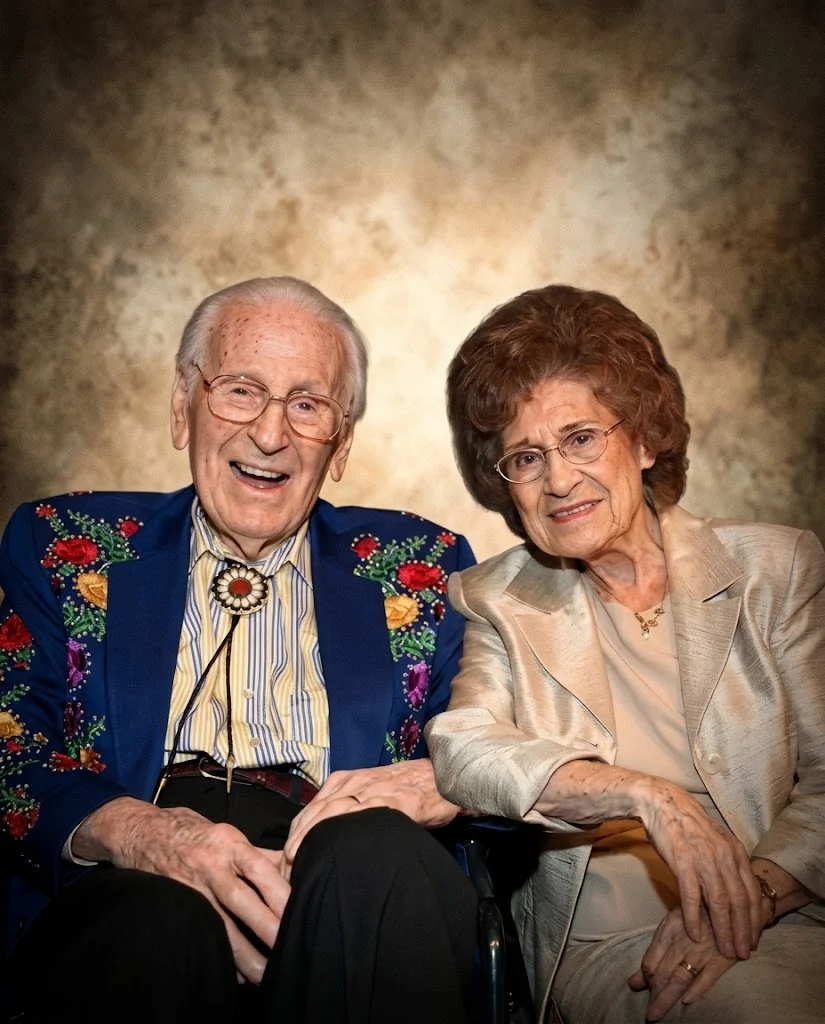
On a hushed July morning in 2012, the woman who had once filled cavernous auditoriums with her voice slipped away without applause. Kitty Wells died peacefully at 92 on July 16, 2012, not in a sterile hospital room or amid the roar of Nashville’s Music Row, but inside the familiar walls of her long-time family home in Madison, Tennessee. The cause was complications from a stroke.
For decades she had commanded glaring stage lights, heavy tour buses, and grueling cross-country schedules. Yet when her historic life drew to a close, she retreated from the industry machinery and spent her final hours in absolute stillness, wrapped in the comfort of her own personal sanctuary.
The timing carried a heavy emotional weight. Wells passed away less than ten months after losing her husband, country music pioneer Johnnie Wright, who died in September 2011. The couple had been married for an astonishing 74 years, building a life and a career side by side since 1937. For nearly three-quarters of a century they shared stages, tour buses, and a deeply rooted household. Those final ten months were quiet and away from the cameras as she moved from public legend to grieving widow.
That quiet ending stood in profound contrast to the loud revolutionary nature of her career. Born Ellen Muriel Deason, she never set out to start a cultural rebellion. In the spring of 1952 she was a 32-year-old mother genuinely considering stepping away from the music business to focus on her family. She agreed to record “It Wasn’t God Who Made Honky Tonk Angels” only because Wright convinced her it would be an easy way to collect a standard $125 union recording fee.
Instead the track made history. By boldly shifting the blame for broken romances onto the shoulders of straying men, the song directly challenged the male-dominated Nashville establishment. Network radio stations initially refused to play the unapologetic lyrics, and the Grand Ole Opry temporarily banned the record from its live broadcasts. The institutional pushback failed. The song rapidly sold over 800,000 copies, dominated the Billboard country charts for six weeks, and proved for the first time that a female solo artist could headline tours entirely on her own merit.
She single-handedly paved the road for Patsy Cline, Loretta Lynn, Dolly Parton, and every female artist who followed. The industry eventually recognized her foundational impact, inducting her into the Country Music Hall of Fame in 1976 and awarding her a Grammy Lifetime Achievement Award in 1991.
Despite her towering cultural status, she never let the demanding industry consume her personal life. When she officially retired from performing in 2000, she willingly traded deafening applause for her living room. When the lights finally dimmed in July 2012, she did not need to hold onto the heavy crown. Stripped of her stage persona, the trailblazer returned to simply being Muriel.
She spent her entire adult life kicking down the hardest doors for future generations of women. But when her own work was finally done, her only remaining destination was home.
Her passing in the summer sunlight felt less like a tragic conclusion and more like a quiet departure to catch up with the man who had been waiting for her.