
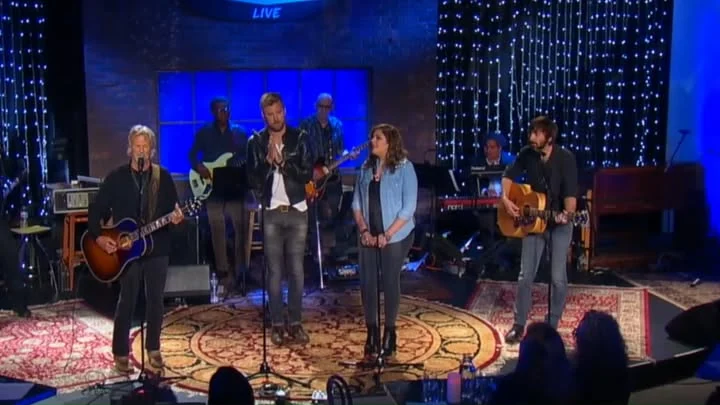
There is a moment, about thirty seconds into the track, when the world outside seems to fall away. The gentle brush of an acoustic guitar gives way to a voice—weathered, honest, and aching with a sincerity that feels almost intrusive. It is the sound of someone laying their cards on the table, asking for nothing more than a brief respite from the crushing weight of solitude. This is the magic of Kris Kristofferson’s most enduring ballad, a song that has become a touchstone for anyone who has ever sought comfort in the dark.
The song, of course, is Help Me Make It Through the Night. It is a track that transcends the boundaries of its country music origins to speak a universal language of longing. More than just a hit, it is an intimate confession set to music, a masterclass in lyrical economy that has only grown more powerful with the passage of time.
The Genesis of a Confession
To understand the song’s profound impact, one must look at the moment it was born. In 1970, Kris Kristofferson was a former Rhodes Scholar and Army captain who had traded a promising academic career for the gritty struggle of Nashville. He was a songwriter first, having already penned classics like Me and Bobby McGee for Janis Joplin. But with his self-titled debut album, he stepped out of the shadows. The album is a landmark, not just for its sound, but for its unflinching honesty.
The inspiration for the track itself was unexpectedly cosmopolitan. Kristofferson was inspired by an interview with Frank Sinatra, who spoke about living his life “one day at a time.” The phrase stuck, but Kristofferson gave it a desperate, romantic twist. He transformed it from a philosophy of resilience into a plea for human connection. The result was a ballad that felt less like a commercial product and more like a whispered secret shared between two people in a dimly lit room.
Simplicity as a Virtue
Musically, Help Me Make It Through the Night is a study in restraint. In an era where country music was often heavily orchestrated, producer Fred Foster made a bold choice: he let the silence and the space speak. The arrangement is sparse—a gentle acoustic guitar provides the steady heartbeat, while a soft piano adds dashes of color and melancholy.
Foster understood that the power of Kristofferson’s writing required a delicate touch. The instrumentation never overwhelms the narrative. Instead, it creates a warm, intimate soundscape that invites the listener in. It is the musical equivalent of a close embrace, safe and vulnerable at the same time.
The Weight of a Single Line
Lyrically, Kristofferson achieves what many writers spend entire careers chasing: the feeling of a complete story told in a breath. He avoids narrative specifics, opting instead for impressionistic imagery that allows the listener to fill in the gaps with their own life. The iconic line,
Take the ribbon from my hair, shake it loose and let it fall,
is a stunning piece of poetry. It suggests trust, intimacy, and the shedding of defenses all at once.
This is not a song about a grand romance. It is a song about the raw, unpolished need for another person to stave off the existential cold. When Kristofferson growls,
I don’t care what’s right or wrong, I don’t try to understand,
he captures the very essence of human desperation. It is a surrender to emotion, a moment where logic fails and only touch can provide comfort.
A Voice That Carries History
Kristofferson’s vocal performance is the secret ingredient that elevates the song from great to iconic. His voice is not conventionally pretty. It is rough, slightly gravelly, and carries the weight of late nights, hard roads, and too many cigarettes. Yet this imperfection is its greatest strength. It sounds authentic. It sounds like truth.
There is a palpable fragility in his delivery, a sense that he is barely holding himself together. This vulnerability became his trademark. It allows the listener to trust him, to believe that he has felt every word of this loneliness. He is not performing the song; he is living it in real-time.
A Legacy Woven into American Music
The cultural reach of Help Me Make It Through the Night extends far beyond Kristofferson’s original recording. While his version remains the definitive statement for many, it was Sammi Smith who took the song to the top of the charts, earning a Grammy and cementing the song as a standard. Her version was slower, even more aching, and proved the universality of the material.
Since then, the song has been reinterpreted by an astonishingly wide array of artists, from Elvis Presley and Gladys Knight to Willie Nelson and Joan Baez. Each artist brings their own biography to the song, but the core message remains the same. It is a testament to the strength of Kristofferson’s writing that the song can be a country lament, a soulful plea, or a folk prayer, all without losing its identity.
Where to Go Next
If the raw emotional gravity of this song resonates with you, there is a rich catalog of music waiting to be explored. Kristofferson’s own For the Good Times and Sunday Mornin’ Comin’ Down share the same poetic DNA. For those who appreciate the heartbreak and resilience of the ballad, George Jones’ He Stopped Loving Her Today offers a devastating narrative arc. And for a more modern take on that introspective, late-night mood, Keith Urban’s Blue Ain’t Your Color carries a similar spirit of tender observation.
Help me make it through the night.
It is a simple request, but it contains multitudes. Decades after its release, the song still offers that comfort. It reminds us that vulnerability is not weakness, but the very foundation of connection. Kris Kristofferson took the loneliness of the human condition and turned it into a timeless work of art, a quiet anthem for anyone who has ever needed someone to lean on until the dawn breaks.