
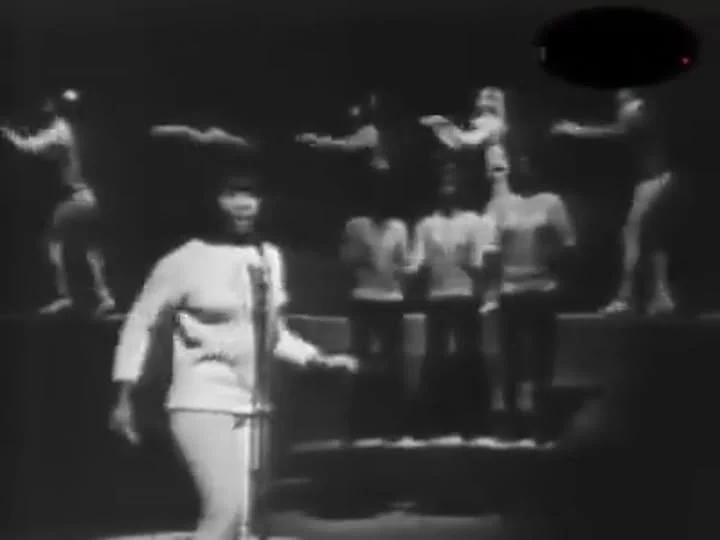
Some songs arrive in the world fully formed. They feel less like a composition and more like a natural force. Little Eva 1962 smash hit The Loco Motion is one of those songs. It is pure unadulterated exuberance set to a four on the floor beat. To hear it is to feel an immediate non negotiable pull toward movement. The early 1960s were a moment suspended between the raw grit of late period rock and roll and the gleaming sophisticated architectural pop of the Brill Building. The songwriter was rapidly becoming as famous as the singer. The Loco Motion sits right at the center of this thrilling ecosystem. It is a perfect instruction manual for an instant dance craze. It needed only to be heard to be understood.
The story of this recording is the stuff of genuine music industry legend. The powerhouse husband and wife duo Gerry Goffin and Carole King wrote the track. They were dominating the charts from their base at Aldon Music. Eva Narcissus Boyd was just a teenager at the time. She worked for the couple as their babysitter. The standard narrative suggests that King watched Boyd doing an impromptu dance. She found her inspiration in that moment. The more grounded fact is that Goffin and King wrote the track with Dee Dee Sharp in mind. She had just scored big with the dance themed hit Mashed Potato Time. Boyd recorded the initial version as a demo. It was a scratch track intended to showcase the song bones to Sharp. This demo was heard by Don Kirshner. He was the head of the newly formed Dimension Records. Kirshner recognized the unvarnished magic in Boyd vocal performance and the track irresistible energy. He decided it was ready for release. He ditched the idea of finding another singer. He rebranded Eva Boyd as the now iconic Little Eva. This context is crucial. The raw immediate feel of the single is largely due to its origins as a demo. It was captured quickly but perfectly.
The resulting sound is a masterclass in clean driving early 60s pop production. There is a dazzling clarity to the arrangement. The first thing that hits the listener is the relentless rhythmic core. It is a perfect chugging engine. A crisp almost military snare drum sets the pace. A bassline walks with an enviable bounce. The drumming is busy without being cluttered. Over this a clean trebly guitar riff locks in with the rhythm section. The song is not built on a sweeping guitar solo. It is built on the relentless shared groove of the ensemble. The horn section is bright and sassy. The brass stabs are short sharp shocks of energy. Swirling bursts of woodwinds add a cartoonish gaiety. A prominent piano anchors the entire harmonic structure. The whole texture is thin but punchy.
Little Eva vocal performance is the irreplaceable core of this piece of music. She sings with an unbridled youthful enthusiasm. It never sounds forced or over rehearsed. Her delivery is conversational and completely charming. The song is structured as a dance instruction. This was a trend in the early 60s designed to move singles directly from the radio to the dance floor. The lyrics are pure commands. Little Eva delivers them with authority and a playful wink. The backing vocals are an essential component. They deliver the iconic interjections. The call and response elements transform the track from a solo performance into a communal event. There is a fascinating breathless quality in her voice. It perfectly matches the pace of the dance.
The Loco Motion is a record built not on a singer technical range but on her infectious enthusiasm and perfect phrasing.
The song impact was immediate and widespread. It defined the summer of 1962. It cemented Goffin and King as hit making royalty. The track enduring nature is proved by its journey back up the charts. Grand Funk Railroad took it there in the 1970s. Kylie Minogue took it there in the late 1980s. Yet the Little Eva original remains the definitive statement. The energy of the original is difficult to recreate. The later slicker cover versions always lose a certain amount of the raw youthful spark. It is a snapshot of a moment in time when the American pop landscape was at its most exciting. It was a moment when a demo recorded by a babysitter could become a global phenomenon. Today when we consider the sheer volume of sheet music generated by the Brill Building hit factory it is easy to overlook the human element. In Little Eva take on The Loco Motion you hear the joy of creation. You hear the thrill of a young woman unexpected shot at fame. It is a song that is simply impossible to resist.
To understand this record is to understand the ecosystem that created it. The song sits alongside Mashed Potato Time by Dee Dee Sharp and The Twist by Chubby Checker as a foundational dance craze anthem. It shares the crisp Goffin and King production with tracks like Chains by The Cookies. For listeners exploring the era the vocal debut of Carole King herself provides a more restrained counterpart. The lush harmonies of The Crystals and The Shirelles bookend this remarkable moment in pop history. The Loco Motion remains the brightest blueprint of that entire era. It is a record that invites re listening on a sunny afternoon drive reminding us that sometimes the simplest songs are the most deeply felt.