
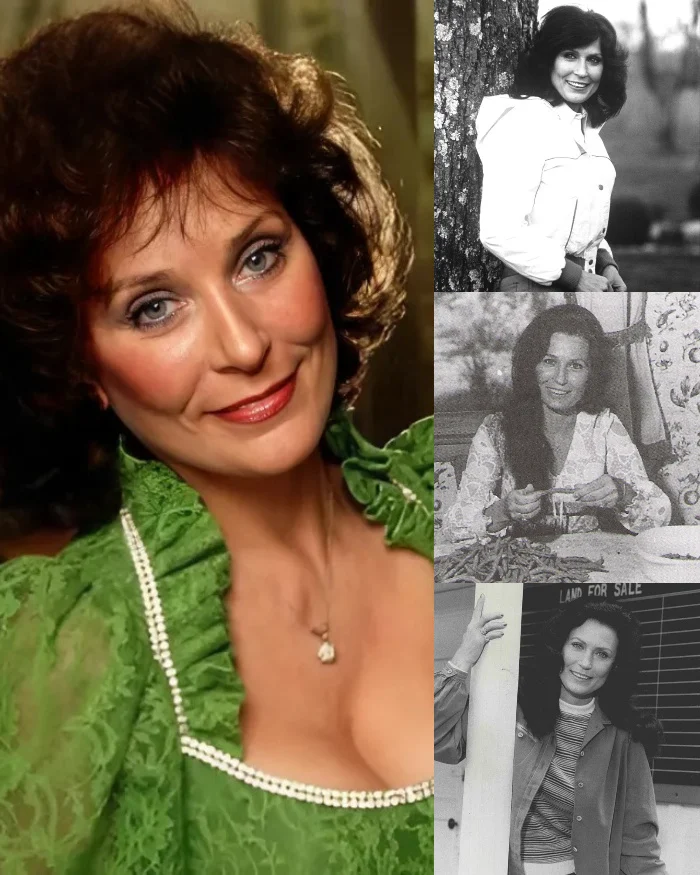
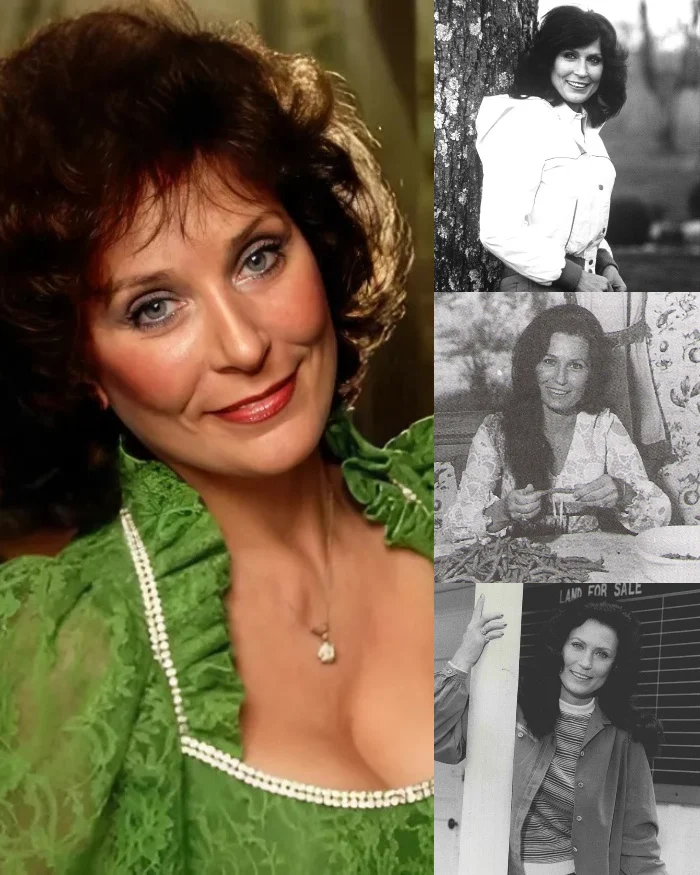
Long before Loretta Lynn became a fearless voice in country music, a Jeep engine roared through the silence of Butcher Hollow and terrified the barefoot girl who tried to hide her younger brothers and sisters.
During the 1930s and 1940s, her corner of Van Lear, Kentucky, sat far from paved roads, electricity, and modern comforts. The path to the Webb family cabin ran through a dry creek bed. Neighbors moved on foot or by mule, and the Appalachian hills kept their world small and quiet.
That peace ended when Oliver Doolittle Lynn, a returning veteran, drove a military Jeep up the hollow. The machine screamed against the hills, and young Loretta believed a metal monster had come to tear through her mountain home.
She pulled her younger siblings close, trying to shield them from the grinding wheels and thundering engine. That moment became her first hard encounter with the 20th century, and it pushed the outside world straight onto her porch.
The driver would become her husband when she was barely out of childhood. The same vehicle that frightened her helped carry her away from Butcher Hollow and into a logging community in Washington state.
Her marriage brought music and pain in equal measure. Doolittle bought her a seventeen-dollar Harmony guitar and encouraged her to sing, yet his drinking, infidelity, and fierce arguments filled their home with strain.
Instead of smoothing those wounds for a polished public image, Loretta wrote them into plain and powerful songs. She learned chords while washing clothes and raising four young children, turning private heartache into a public diary.
She refused to hide the realities of working-class marriage, double standards, and standing her ground.
Songs such as Don’t Come Home A-Drinkin’ (With Lovin’ on Your Mind) and Fist City carried warnings and truths drawn from her own living room, not from Nashville executives.
Many radio stations first rejected her pointed tracks as too controversial, but listeners flooded record stores and pushed her to the top of the charts because they heard their own unspoken struggles.
The girl who once fled from the sound of a Jeep engine later commanded the biggest stages in America. She kept the grit of the coal camp in her voice and wrote her own rules in a male-dominated industry.
The machine took Loretta Lynn out of Butcher Hollow, and she made the world remember where she came from.