
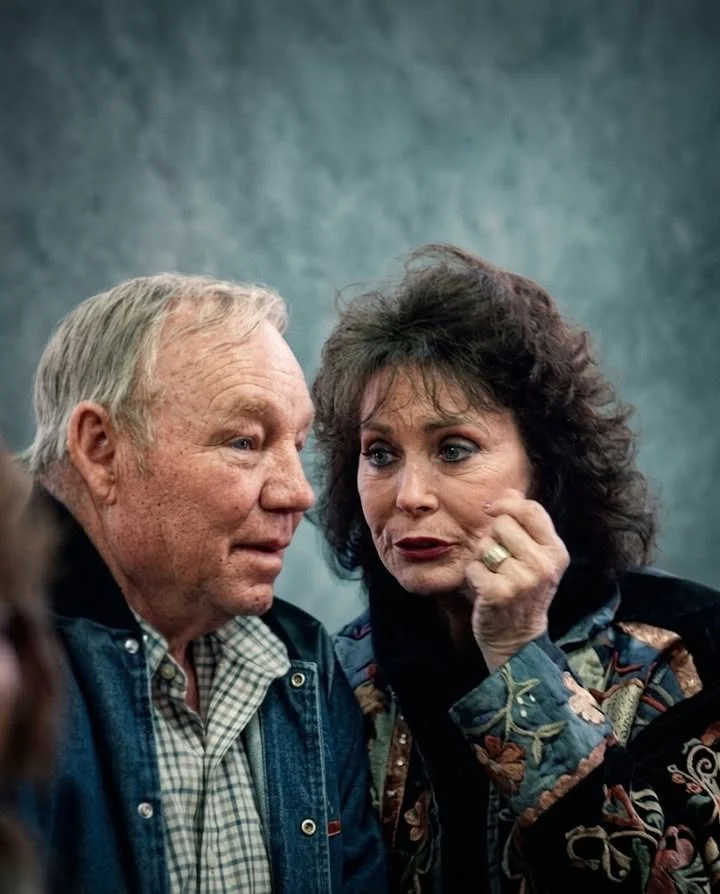
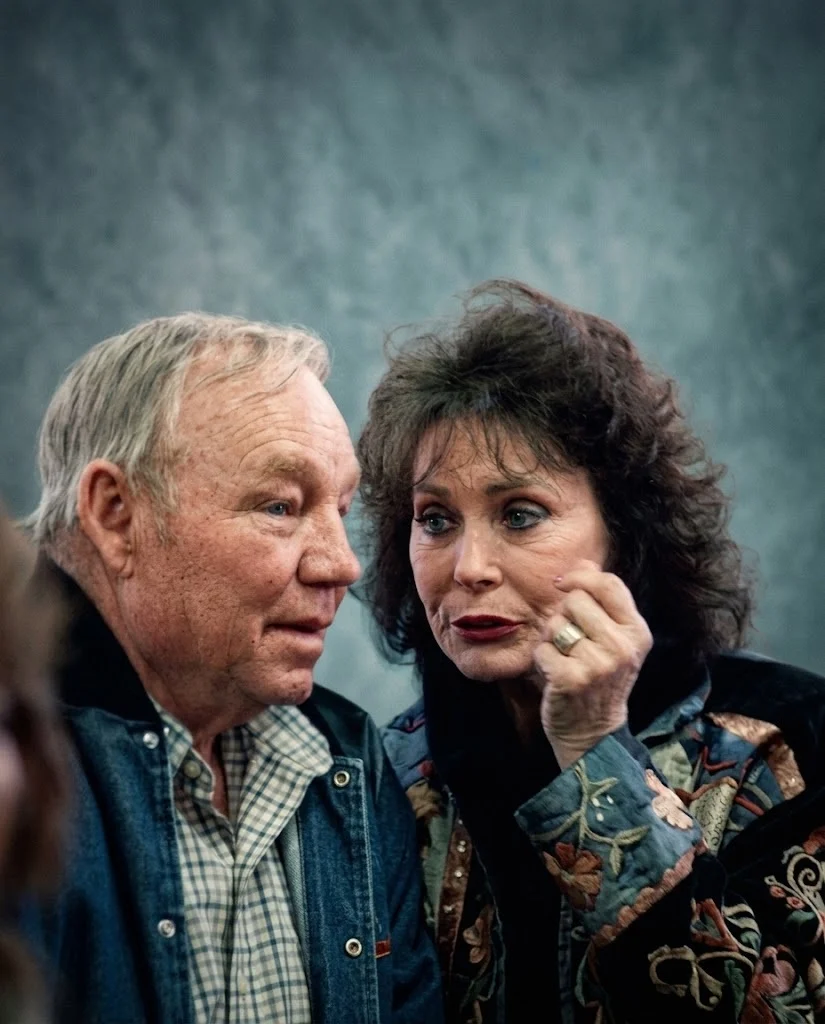
A skillet of hot creamed corn became the moment Loretta Lynn refused to vanish into a quiet and wounded rural wife. In a cramped kitchen far from Butcher Holler, she lifted boiling food and poured it over the head of the man who had pushed her past endurance. That single act of defiance helped forge the voice that later spoke for millions of women who had learned to swallow their pride.
Loretta Webb married Doolittle “Doo” Lynn while still a teenager. She traded the coal camp hollows of Kentucky for the hard life of a Washington logging camp, then found herself a mother of four before her twenties ended. Their marriage carried financial fear, heavy drinking, betrayal, and the expectation that a wife would hide her pain to protect a respectable home.
In the nineteen fifties, many rural women faced humiliation behind closed doors and were told to remain silent. Loretta came from a coal miner family with a fierce sense of dignity. She drew a line in her home. If Doo brought his storm through the door, she would answer with a storm of her own. The kitchen became the front line.
During one bitter argument, Doo provoked her until she reached a breaking point. She grabbed a cast iron skillet of boiling creamed corn and poured it over him. The clash was chaotic and raw, yet it announced a truth that would shape her career. She would not endure betrayal as a silent victim.
Later, Doo saw the songwriting fire inside his wife and bought her a seventeen dollar Harmony guitar. That inexpensive instrument became the tool that turned private fury into public art. Loretta began writing down the exact words from late night fights on scrap paper while she kept the household running.
She carried those arguments into Nashville recording studios and worked with producer Owen Bradley. She did not soften her story to fit polite country music. She weaponized her husband’s excuses and her own sharp replies. Her songs became living transcripts of a marriage that was wounded, combative, and strangely enduring.
She turned kitchen fury into a microphone and gave silenced women a chorus.
That uncompromising craft led to her 1966 breakthrough Don’t Come Home A’Drinkin’ With Lovin’ on Your Mind. The song landed like a direct confrontation and opened the door to anthems that named the shame many women had carried alone. Her records cut through the male controlled landscape of country music because they told the truth without apology.
Listeners recognized their own struggles in her plain and forceful delivery. Women from small towns and rural communities heard a survivor speaking, not a fictional heroine. Loretta made private humiliation into shared strength and gave country music a new emotional honesty.
The paradox of their marriage remained powerful. Doo caused deep pain, yet he also drove her across the country to promote her early records. He stood near the stage while she sang his failures to crowds. He did not ask her to rewrite the lyrics because he understood that her honesty was the force making her a legend.
They fought fiercely and stayed bound for nearly fifty years until Doo died in 1996. Loretta found forgiveness, but she never erased the record of betrayal. The anger that boiled in a kitchen became a voice that changed country music forever.
Her legacy stands as a reminder that dignity can be forged in messy homes and that a woman’s refusal to stay silent can become a revolution.