
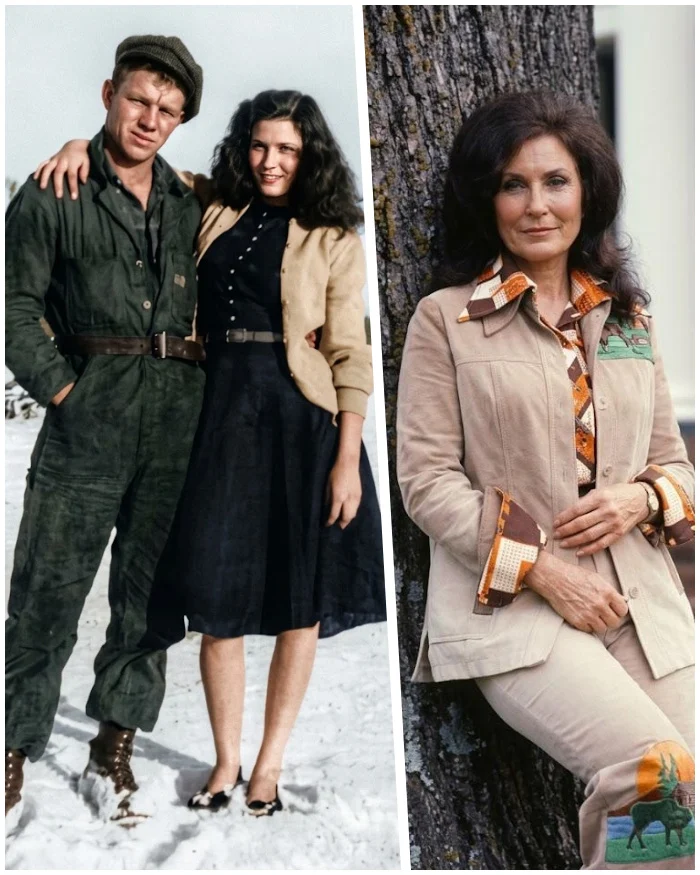
A cast iron skillet of boiling creamed corn became the most explosive line Loretta Lynn ever drew.
Long before she became the fearless queen of country music, she lived in a Washington logging camp where rage, loyalty, and survival collided every day.
Loretta Webb married Doolittle “Doo” Lynn as a teenager and left the familiar hollows of Butcher Holler, Kentucky, for a hard life in the Pacific Northwest.
Before her twenties, she already had four children and a marriage that offered little romance.
Money was scarce, Doo drank heavily, and his wandering eye tested her patience again and again.
In the 1950s, many rural wives were expected to swallow humiliation and keep a quiet home.
Loretta refused that silence.
She had the fierce pride of a coal miner’s daughter, and she made a rule that if Doo brought his storm inside, she would fight back twice as hard.
One kitchen argument pushed her to the edge, and she lifted a skillet of hot creamed corn from the stove and poured it over his head.
That was not just anger. It was a boundary, a public declaration to her husband that she would not live as a silent victim.
The skillet did not end her marriage, but it changed the terms of her dignity.
Yet the couple remained bound, and Doo recognized her raw musical gift.
He bought her a seventeen dollar Harmony guitar, and that small instrument became the tool that would turn private pain into public truth.
Loretta did not invent vague heartbreak songs. She copied the sharp words from late night fights onto scrap paper while running her household.
She carried those real arguments into Nashville’s Music Row recording booths.
Working with legendary producer Owen Bradley, she refused to soften her domestic reality to fit polite radio expectations.
Her voice became a courtroom.
Her songs used Doo’s excuses and her own comebacks, making records that felt like transcripts of a marriage.
That honesty powered her 1966 breakthrough, “Don’t Come Home A-Drinkin’ (With Lovin’ on Your Mind),” and a wave of confrontational anthems.
Women from small towns heard themselves in her straightforward delivery.
She was not playing a character. She was broadcasting survival.
Her catalog gave thousands of women a way to speak when their own homes had taught them to stay quiet.
The paradox ran deep.
The same man who wounded her drove her across the country to promote her early records.
He stood in studios and backstage while she sang his worst mistakes to huge audiences.
He did not ask her to change the lyrics, because the truth that condemned him also made her a legend.
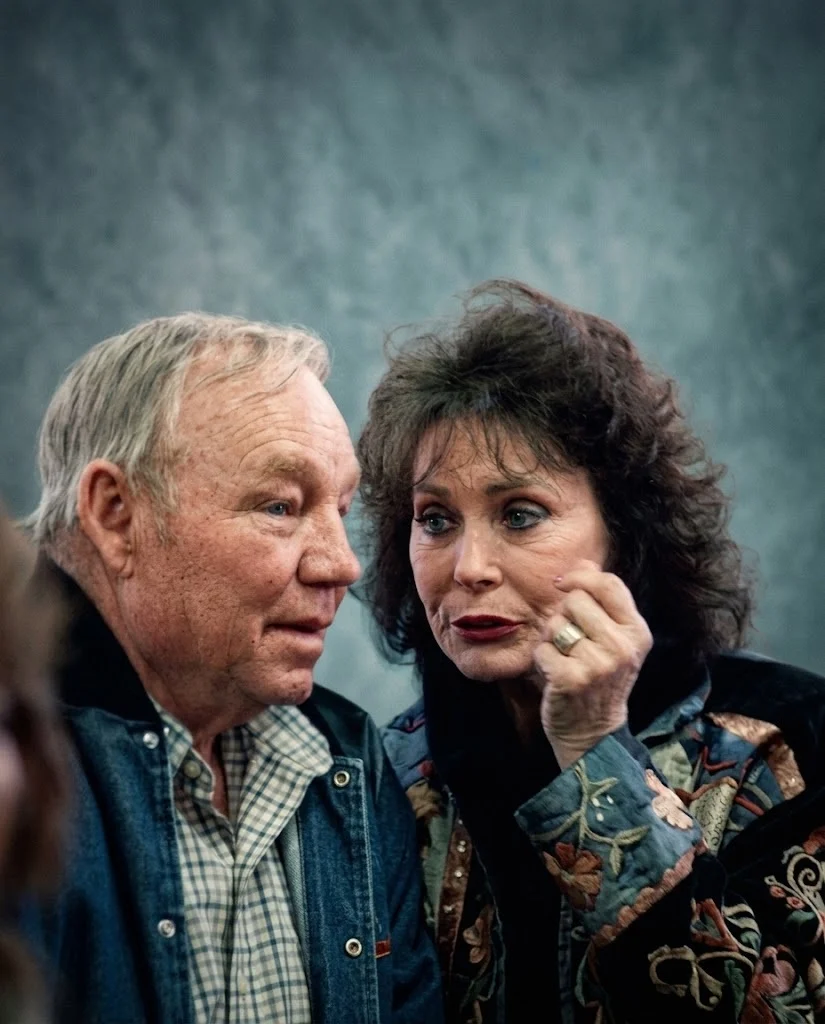
They fought bitterly, stayed together for nearly fifty years, and remained tied until Doo died in 1996.
Loretta learned forgiveness, but she never erased the record.
The boiling anger from that kitchen eventually cooled, yet the voice it produced changed country music forever.