
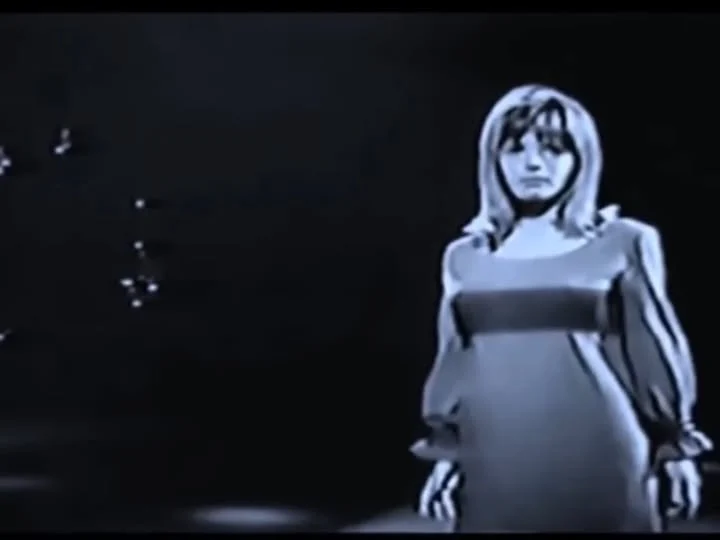
There is a moment in every life when the weight of growing up becomes unbearably beautiful. For a seventeen-year-old Marianne Faithfull, that moment arrived in the form of a song given to her by The Rolling Stones’ manager, Andrew Loog Oldham. As Tears Go By was not just a debut—it was a revelation. Released in 1964, the track captured the tender ache of youthful sorrow with such delicate force that it has never quite left the collective memory. While many music lovers associate the melody with The Rolling Stones, it was Faithfull’s trembling, breathy voice that first told this story of innocence and longing.
Marianne Faithfull’s self-titled debut album arrived in 1965, a quiet masterpiece that blended folk, pop, and baroque influences into a sonic tapestry of wistfulness. Though the record featured gems like Come and Stay with Me and a cover of Blowin’ in the Wind, it was the opening track, As Tears Go By, that would become a defining artifact of an era. The album’s air of innocence—tinged with sadness—set Faithfull apart from her peers. Hers was not the bright, bubbly pop of the time; it was music that whispered of things lost, of times slipping away.
The arrangement of As Tears Go By remains its most striking feature. In an era of loud guitars and driving drums, Faithfull’s song turned inward. An acoustic guitar provided the gentle, rhythmic backbone while a string section swelled with melancholic grace, painting the melody in shades of deep blue. Subtle piano notes slipped through the arrangement like quiet tears, underscoring the fragile beauty of Faithfull’s vocals. The production was intentionally sparse, allowing her voice—so young, so full of emotion—to carry the entire emotional weight of the song.
It is the evening of the day, I sit and watch the children play…
The origins of the song are just as compelling as its sound. Written by Mick Jagger, Keith Richards, and Andrew Loog Oldham, As Tears Go By was initially rejected by The Rolling Stones as too soft for their raw, rebellious image. But Oldham saw something else in the song. He gave it to Faithfull, and she transformed it into something deeply personal. Her version became a hit, a haunting ballad that resonated with listeners who recognized the bittersweet truth of growing up. Years later, The Rolling Stones recorded their own version, but Faithfull’s remains the definitive one—a snapshot of a moment that could never be recaptured.
Why does this song endure? Perhaps because it speaks to a universal experience. The nostalgia for a simplicity that fades, the ache of watching children play from a distance, the quiet acceptance of time’s passage. Over fifty years later, As Tears Go By continues to feel intimate and personal, a quiet confession shared between artist and listener. Its ability to evoke such emotion without grand theatricality is why it remains a cornerstone of classic ballads.
For those drawn to this mood, there are other songs that inhabit a similar emotional landscape.
- The Rolling Stones – Angie, with its acoustic ache and heartfelt delivery, echoes the same wistful essence.
- Dusty Springfield – You Don’t Have to Say You Love Me offers a soulful, orchestral depth that fans of Faithfull’s work will adore.
- Joan Baez – Diamonds & Rust is a poetic folk ballad that reflects on past love with the same haunting precision.
- Simon & Garfunkel – Scarborough Fair/Canticle blends delicate instrumentation with ethereal vocals, resonating with the same baroque sensibility.
- Judy Collins – Both Sides, Now captures the beauty and sadness of life’s shifting perspectives, a perfect companion piece to Faithfull’s timeless song.
In the end, As Tears Go By is more than a song. It is a memory, a feeling, a quiet moment preserved in vinyl. Marianne Faithfull’s youthful voice, the gentle guitar, the melancholic strings—they all come together to remind us of the beauty in sorrow. For anyone who has ever felt the ache of time passing, this ballad remains a masterclass in musical storytelling. Whether you are discovering it for the first time or returning to it after years away, it never fails to meet you where you are.