
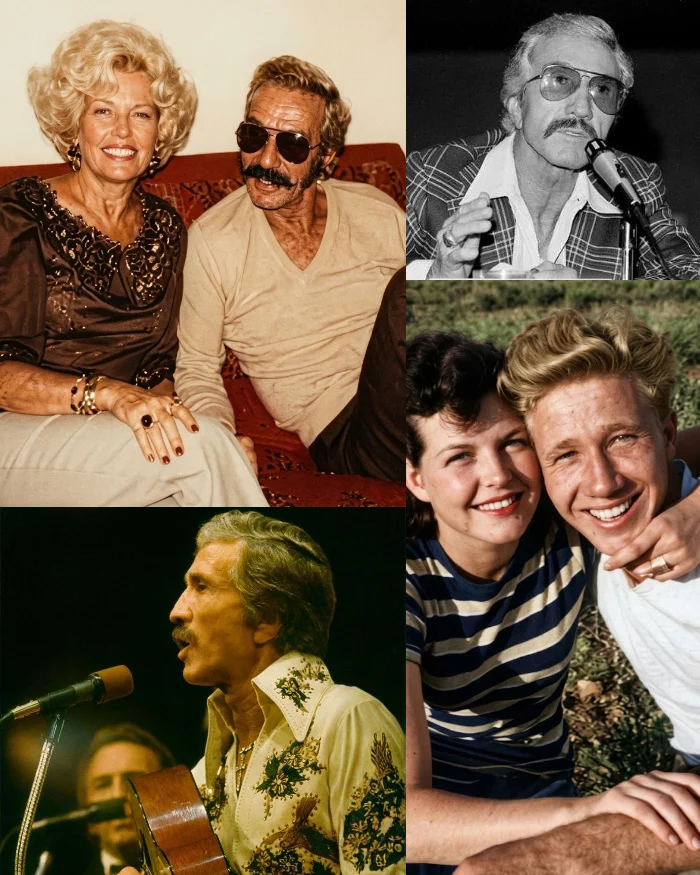
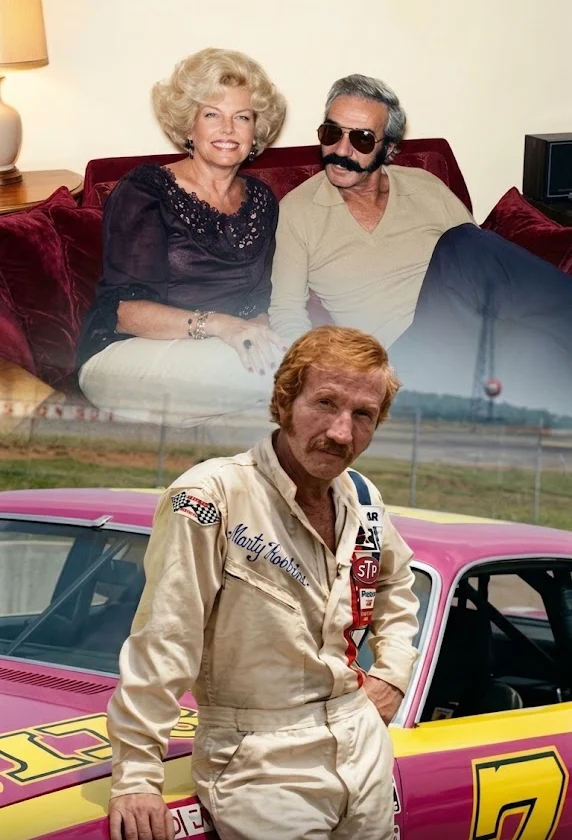
On a sunlit pit lane at Charlotte Motor Speedway in 1974, Marizona Robbins watched her husband cross the starting line with a feeling no audience in Nashville could understand.
The man known for velvet country ballads was about to chase glory against hardened NASCAR Winston Cup drivers at more than 150 miles per hour.
He was not a guest star doing a lap for applause. Marty Robbins raced his bright number 42 cars with real courage and real consequences.
That afternoon, another driver, Richard Childress, lost control and spun across the track.
Marty had only a breath to choose. To spare Childress a devastating side impact, he wrenched his wheel and drove into the concrete wall.
The crash crushed his car and battered his body. Safety crews pulled him from broken metal. He needed heavy facial stitches and bone repairs, then endured a long recovery.
Behind the curtain, Marizona became his caregiver. She nursed him through concussions, fractures, and lacerations while keeping the painful details away from the press.
Her endurance was not a single weekend. Throughout the 1960s and 1970s, Marty survived at least three severe wrecks. Each impact added strain to a heart already weakened by a 1969 heart attack and a 1970 bypass surgery.
Those hidden injuries helped shape the fragile health that led to his fatal heart attack in 1982 at 57.
Yet Marizona never demanded that he choose between family, fame, and speed. She saw that racing fed a part of his spirit as deeply as music.
To take away his racing would have been to take away a piece of the man she loved.
Fans and drivers respected Marty for putting another man’s life ahead of his own. The quieter truth belonged to Marizona.
She stood in the roar and the smell of burning rubber, carrying the weight of his bravery while he chased the finish line.