
There’s a moment when the needle touches the groove, and the room holds its breath. That’s the magic of a 1959 Columbia single that still haunts the collective memory of American pop culture. Percy Faith’s orchestral masterpiece, “Theme from A Summer Place,” isn’t just a song—it’s a time capsule of pure romantic yearning, a sonic photograph of an era that believed in perfect sunsets and tidal waves of string-laden emotion. Tonight, as the vinyl spins in a dimly lit room, the scent of mahogany and the soft hiss before the music begins set the stage for an experience that transcends mere listening.
What makes this instrumental an enduring icon is not just its melody—though that, written by Max Steiner, is deceptively simple—but the way Faith wove it into a tapestry of sound that feels both massive and intimate. Recorded at the legendary Columbia 30th Street Studio in New York, a converted Armenian church famed for its cathedral-like acoustics, the track captures a natural reverb that gives every note a spacious, almost heavenly depth. Released in September 1959 as a standalone single, it would go on to dominate the Billboard Hot 100 for nine consecutive weeks in 1960, a record for an instrumental that remains unbroken to this day.
The Canadian-born conductor had already carved a niche as a master of orchestral pop, his career trajectory perfectly aligning with the rise of mood music. But this particular arrangement, based on a secondary love theme from the 1959 film starring Sandra Dee and Troy Donahue, elevated him to a legend. Faith’s hands, famously scarred from an early-life fire, guided a lush apparatus of strings, woodwinds, and a subtle rhythm section with a precision that critics would later dismiss as background filler—yet the integrity of the composition screams otherwise. This is not mere decoration; it is emotional architecture.
The way those strings lift the melody from a simple motif into an unforgettable, panoramic vista is less orchestration and more emotional architecture.
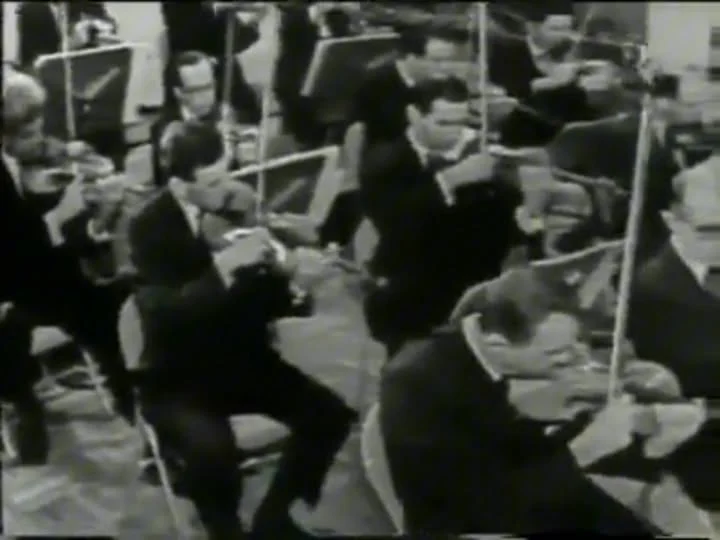
Listen closely to the opening bars: a shy, almost hesitant piano and flute introduce a gentle ostinato, a 12/8 shuffle that hints at a slow, romantic waltz. The rhythm section—bass, drums with brushes, and a nearly inaudible guitar—slips in without urgency, giving the piece a luxurious buoyancy. Then the strings enter, not with a sudden spike but with a tidal swell, dense and multi-layered, drenched in the studio’s natural reverb. Violins soar in unison before peeling off into warm harmonies, while oboes and clarinets trade the melody back and forth, creating an unbroken flow of sound. Dynamics are meticulously sculpted; the middle section builds to a sun-drenched climax before receding gracefully, leaving the listener breathless.
This is the kind of recording that rewards audiophiles—on a quality pair of studio headphones, you can detect the subtle harp glissandos and the low-end brass tucked away in the mix, details that transform the listening experience into a private cinematic event. Faith understood that true emotional catharsis often comes from restraint, not volume. The vibrato on the lead strings is slow and warm, the sonic equivalent of a slow-motion gaze across a crowded dance floor. It’s a masterclass in how to make simplicity feel profound.
But why did this particular piece resonate so deeply with an audience in 1960, a year when rock and roll was screaming for attention? Perhaps because it offered an escape—a polished, idealized world where every heartbreak was beautiful and every sunset promised a new beginning. It became the soundtrack for first slow dances, for late-night drives with the radio glowing softly, for a generation’s collective memory of innocence. Even today, filmmakers searching for the perfect cue to signal a bygone era inevitably return to this very track.
The cultural afterlife of “Theme from A Summer Place” is nothing short of remarkable. It won the 1961 Grammy for Record of the Year, cementing its place in history. For new listeners discovering it through sheet music or streaming, the appeal remains undiminished: a complex emotion rendered with stunning clarity and technical brilliance. As the final strings dissolve into the ambient hum of the studio and the needle reaches the run-out groove, there is no sadness, only completeness—the perfect end to an idealized day that may never have existed, yet lives on, vibrant and golden, within two minutes and twenty-five seconds of sound.
For those who wish to explore similar sonic landscapes, consider these companion pieces:
Mantovani – “Charmaine” (1951) for a British take on cascading string arrangements that define the genre.
Ray Conniff – “Somewhere My Love” (1966) for grand, sweeping cinematic romance built on a memorable theme.
The Tornados – “Telstar” (1962) for a chart-topping instrumental that broke new ground with electronic textures.
Hugo Winterhalter – “Canadian Sunset” (1956) for a lush, romantic pre-rock sound.
Billy Vaughn – “Sailor (Your Home Is The Sea)” (1961) for warm, smooth orchestral pop led by woodwind and string choirs.
Henry Mancini – “Moon River” (1961) for sophisticated, elegant melancholy derived from a classic film theme.