

The answer, my friend, is blowin’ in the wind
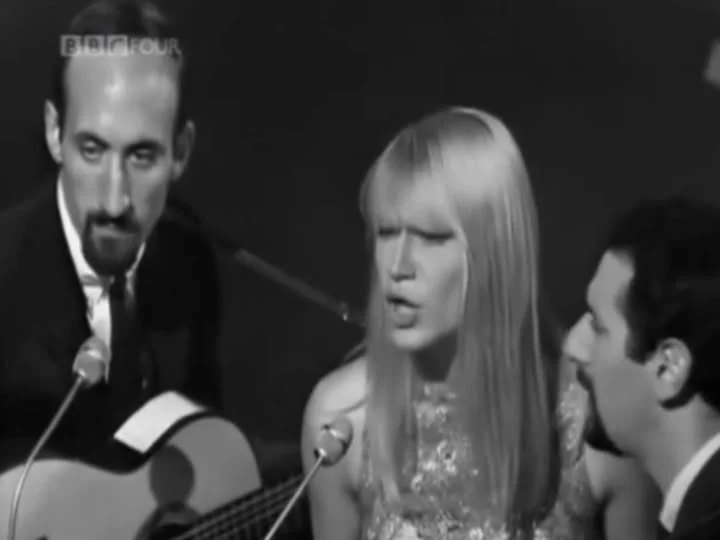
In the summer of 1963, a simple acoustic guitar riff and three voices intertwined to create a moment that would echo through decades. Peter, Paul & Mary captured something timeless in their rendition of “Blowing in the Wind.” The song, featured on their breakthrough album In the Wind, became a rallying cry for the civil rights movement and a beacon for the folk revival generation. More than half a century later, it still carries the weight of unanswered questions and quiet hope.
The trio’s success was no accident. With Albert Grossman and Milt Okun guiding the production, In the Wind offered a polished yet authentic sound that honored the raw emotion of protest music. Alongside other tracks like All My Trials and Tell It on the Mountain, the album captured the spirit of an era. But it was the Bob Dylan composition—originally penned with a stark urgency—that transformed the trio into icons. Their harmonies gave the lyrics a communal voice, making listeners feel part of something larger than themselves.
The instrumental arrangement is deceptively simple. An acoustic guitar carries the melody with a gentle, steady strum, allowing the voices to take center stage. Subtle bass lines ground the track without overwhelming its ethereal quality. No piano or orchestral layers intrude. This minimalism is a hallmark of folk music, letting every word resonate. The guitar work is both soothing and contemplative, a perfect backdrop for the song’s reflective tone.
Dylan’s lyrics ask profound questions about freedom, justice, and human dignity. How many roads must a man walk down before you call him a man? These lines transcend time and culture. Peter, Paul & Mary added a layer of emotional resonance through their vocal interplay. Their harmonies breathe life into each rhetorical question, transforming the song into a collective cry for change. It was often performed at rallies and marches, where its message of peace and equality found a natural home.
The legacy of “Blowing in the Wind” extends far beyond the 1960s. It appears in films, documentaries, and countless cover versions. Its cultural impact grows with each generation, a testament to the power of simplicity. For those captivated by its melodic beauty, similar songs offer a deeper dive into the folk protest tradition:
“The Times They Are A-Changin’” by Bob Dylan shares the same poignant commentary on societal change. “If I Had a Hammer” by Peter, Paul & Mary carries an empowering spirit of activism. “Where Have All the Flowers Gone” by Pete Seeger weaves peace and introspection into haunting melody. “Turn! Turn! Turn!” by The Byrds combines folk and rock for a timeless meditation on life’s seasons. And “Puff, the Magic Dragon” by the same trio showcases their storytelling mastery with a lighter tone.
In a world that often feels divided, “Blowing in the Wind” reminds us that the answers we seek may already be within us—waiting for the courage to act. The song’s power lies in its ability to connect on a deeply human level, whether you are revisiting In the Wind for its historical significance or discovering it for the first time. It is a masterful example of how simplicity can amplify a message, capturing the spirit of an era while inspiring generations to come.
How many roads must a man walk down
Before they call him a man?
How many seas must a white dove sail
Before she sleeps in the sand?
How many times must the cannon balls fly
Before they’re forever banned?The answer, my friend, is blowin’ in the wind
The answer is blowin’ in the wind.How many years must a mountain exist
Before it is washed to the sea?
How many years can some people exist
Before they’re allowed to be free?
How many times can a man turn his head
And pretend that he just doesn’t see?The answer, my friend, is blowin’ in the wind
The answer is blowin’ in the wind.How many times must a man look up
Before he can see the sky?
How many ears must one man have
Before he can hear people cry?
How many deaths will it take ’til he knows
That too many people have died?The answer, my friend, is blowin’ in the wind
The answer is blowin’ in the wind.
The answer is blowin’ in the wind.