
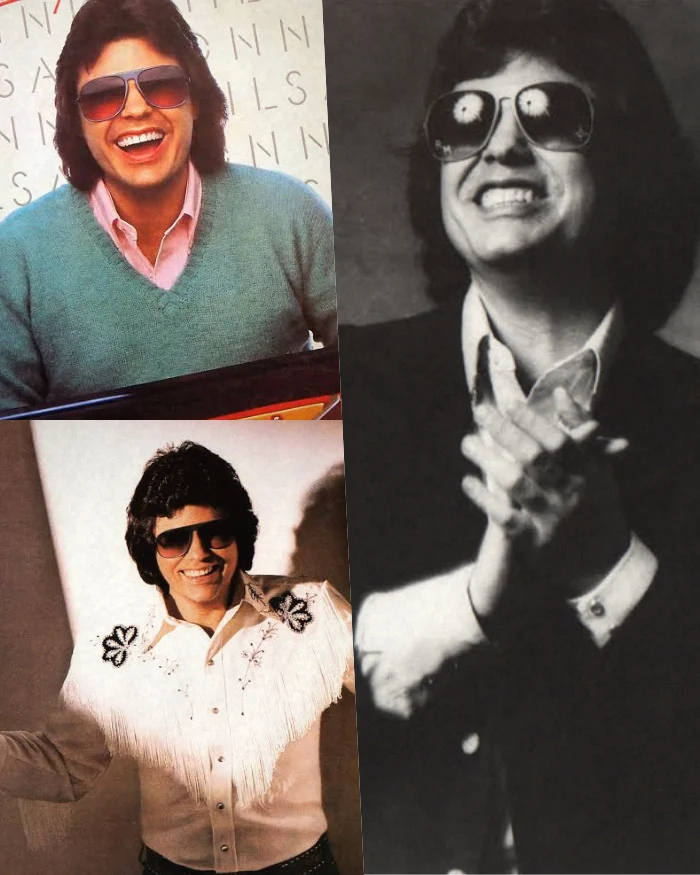
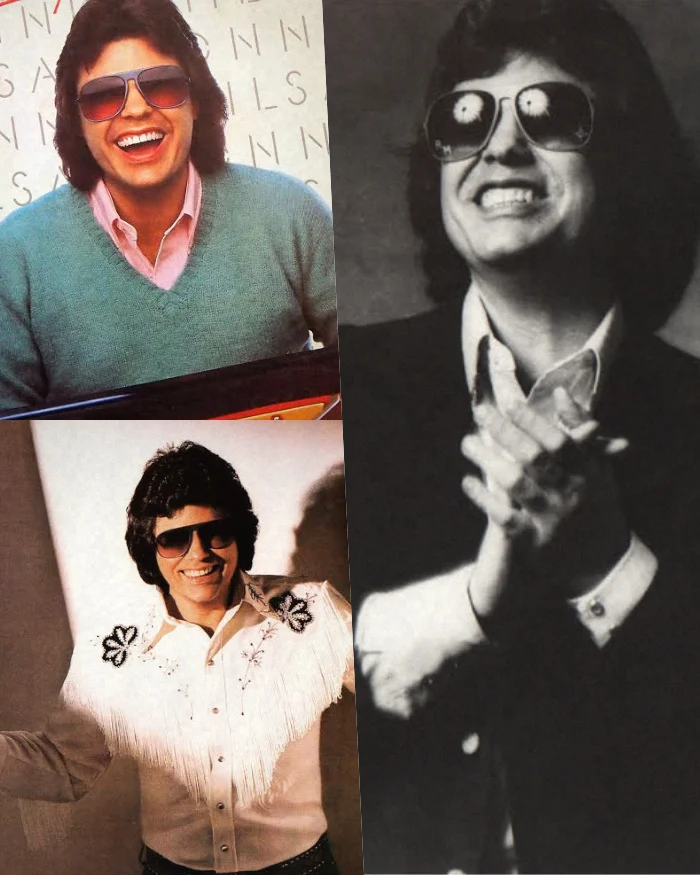
The world heard the number one before Ronnie Milsap ever saw the chart.
On October 8, 1983, “Don’t You Know How Much I Love You” rose to the top of the Billboard country chart and gave him his twenty-fourth number-one country single.
For the music business, it was another gleaming point in a run that defined the 1970s and 1980s. For Milsap, it was proof that a boy born in darkness could make millions feel the light inside a song.
The track served as the lead single from his fifteenth studio album, Keyed Up. Crafted by Michael Stewart and Dan Darst, the recording came together with Milsap and longtime producers Tom Collins and Rob Galbraith. It paired country sensibilities with clean pop phrasing and his unmistakable piano work.
The milestone marked another peak in an extraordinary run that saw Milsap capture thirty-five career Billboard number-one country hits. By the early 1980s, he was redefining the sonic boundaries of modern country.
Just months before releasing the ballad, Keyed Up had introduced listeners to the driving rock edge and heavy guitar solos of “Stranger in My House.” While traditional radio programmers initially hesitated at the genre-bending sound, the gamble paid off, crossing over onto pop airwaves and earning a Grammy Award for its songwriter, Mike Reid.
Rather than repeating that abrasive formula, Milsap shifted direction for the album’s second major single. Stewart and Darst provided a warm, melodic ballad that allowed him to return to his signature foundation of rich vocal phrasing supported by an intricate, sparkling acoustic piano line.
In the studio, Milsap built the arrangement layer by layer, balancing country storytelling with polished pop and Adult Contemporary sheen that expanded Nashville’s reach across the nation.
That command of the instrument stemmed from a childhood spent far from the commercial polish of Music City. Born nearly blind from congenital cataracts in Robbinsville, a mountain community in North Carolina, Milsap was abandoned as an infant and raised in hardship before entering the Governor Morehead School for the Blind.
Classical training gave him technique, but rhythm and blues gave him a pulse. Instructors immersed him in Bach, Mozart, and formal keyboard technique. In the dormitories, he slipped away to late-night radio broadcasts, soaking in the gospel rhythms of Ray Charles, the rock and roll of Jerry Lee Lewis, and the delta blues.
When he moved to Nashville in 1972 after a chance meeting with Charley Pride, purists doubted whether an artist steeped in rhythm and blues and pop piano could thrive in a town built on fiddle and steel guitar.
Milsap answered by establishing one of the most dominant chart streaks in music history. Between 1980 and 1982 alone, he sent seven consecutive singles to number one, including enduring anthems like “Smoky Mountain Rain” and “(There’s) No Gettin’ Over Me.”
He never saw the spotlights, the gold records, or the weekly printouts of the charts. Standing beside him since the lean years of the 1960s was his wife, Joyce Reeves, who met him at a dinner party in 1964 and married him the following year. She acted as his eyes while he navigated studios, roads, and changing musical landscapes.
Throughout the frantic demands of the road and endless studio tracking dates, his personal life remained steady. Joyce was his steadfast companion, and her calm presence gave him the confidence to take creative risks.
When Keyed Up reached number two on the Top Country Albums chart, it demonstrated how completely Milsap had reshaped Nashville’s creative landscape. He had not diluted country music. He had broadened its vocabulary.
The boy who could not see the world found a way to make the entire world listen.
Four decades after that autumn morning when his twenty-fourth single topped the charts, the historical significance remains clear. The musician who navigated every stage in total darkness had permanently dismantled the walls between musical genres, leaving his mark on American music purely through the touch of his fingers on the keys.