
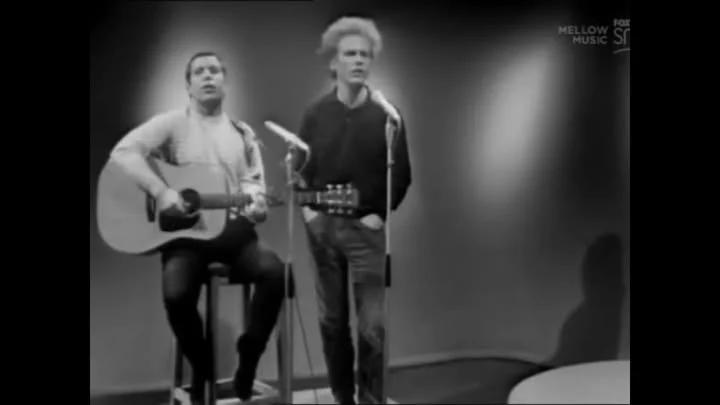
There is a moment in popular music when a single note seems to carry the weight of a generation. It arrives like a secret whispered in the dark, a sound that feels both familiar and newly discovered. For millions, that moment begins with a lone acoustic guitar arpeggio, a simple descending pattern that echoes through the decades. It is the opening of a song that almost never was, a track born from failure and resurrected by a producer’s audacious gamble. This is the story of The Sound of Silence, a folk-rock anthem that traveled from obscurity to ubiquity, leaving an indelible mark on the cultural landscape.
The year was 1964 when Paul Simon and Art Garfunkel released their debut album, Wednesday Morning 3 A.M. The album featured a sparse, acoustic rendition of a song called The Sounds of Silence (the plural Sounds originally). It was a delicate, intimate track, built on Simon’s fingerpicked guitar and the duo’s ethereal harmonies. The commercial reception was devastating. The album flopped, the duo disbanded. Simon retreated to England to pursue a solo career, while Garfunkel returned to the quiet of academic life. The American folk scene, it seemed, had rejected them entirely.
But music has a way of finding its own path. In 1965, producer Tom Wilson, fresh from electrifying Bob Dylan’s sound on Like a Rolling Stone, noticed something peculiar. College radio stations were playing the obscure Simon & Garfunkel track with unexpected frequency. The airwaves were dominated by the jangly, electric sound of The Byrds, signaling a seismic shift toward folk-rock. Wilson saw an opportunity. Without consulting Simon or Garfunkel, he gathered a group of session musicians, reportedly including players who had backed Dylan, and overdubbed an entirely new arrangement onto the original acoustic recording.
The genius of the new arrangement was not in its volume but in its ability to amplify the song’s isolation without losing its intimacy.
The result was a masterful juxtaposition. The fragile beauty of Simon’s close-miked vocal, with its opening line “Hello darkness my old friend”, remained untouched. But now it was supported by a steady, driving bass line, a subtle drum pulse, and two electric guitar parts. One provided a bright, shimmering 12-string countermelody; the other added a simple counter-rhythm. Engineer Roy Halee applied generous reverb, filling the spaces of the original recording with a haunting, atmospheric depth. The song transformed from a quiet confession into a cinematic meditation on communication and alienation.
The lyrics themselves took on new resonance. Lines about people hearing without listening, about neon gods and silent prophets, became a critique of a society drowning in noise yet starving for connection. The electric arrangement did not overpower the message; it amplified it. The dynamic arc builds slowly, the drums entering almost imperceptibly before the electric elements swell in the famous third verse, achieving a sudden catharsis that the acoustic version alone could not touch.
Paul Simon, touring the folk clubs of Europe, discovered the overdubbed version only after its release as a single. He was reportedly horrified at first. But the single climbed the charts with an unstoppable momentum, reaching number one in the United States in 1966. It reunited the duo and prompted the rushed recording of their second album, which Columbia shrewdly retitled Sounds of Silence to capitalize on the hit. The song became an anthem for a generation struggling to break through the silence.
Decades later, its legacy endures. It appears in iconic films like The Graduate, shaping the introspective mood of an era. It remains a staple for aspiring guitarists, its opening lick a foundational exercise. It has been reinterpreted across genres, from folk-rock to the orchestral metal cover by Disturbed half a century later. Each version pays homage to the original acoustic melody, a backbone of simplicity that supports all subsequent transformations.
The story of The Sound of Silence is a testament to the unpredictable alchemy of creative collaboration. It reminds us that sometimes the most powerful music emerges not from deliberate design but from a producer’s instinct, a studio experiment, and the unyielding persistence of a melody that refuses to be forgotten. In the end, the song’s enduring power lies in its accidental rebirth, a perfect anthem for a generation still learning to listen.