
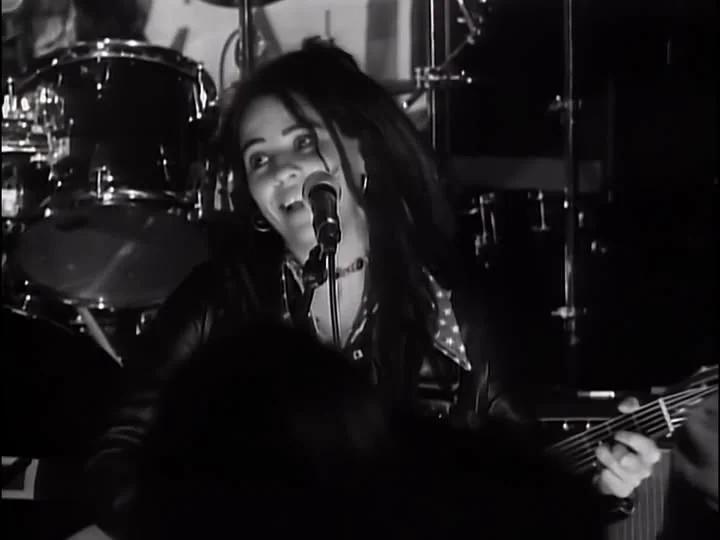
The radio was a sea of static on that late night in 1993. Dense guitars and mumbled anthems filled the airwaves, a soundtrack for the flannel heavy cynicism of the time. You were ready to mute everything and slide a cassette into the deck when something different interrupted the noise. A solitary acoustic guitar, bright and clean, then a voice stained with rust and longing. It sang about twenty-five years of life and the exhausting climb toward hope, and you suddenly knew that being found by a song was still possible.
That voice belonged to Linda Perry and the song was What’s Up. It introduced millions of listeners to 4 Non Blondes, a San Francisco group that briefly burned brighter than almost any other alternative rock act of the era. The song refused easy labels. It was heavier than folk, too melodic for grunge, and emotionally direct in a way that made other hit singles feel like rehearsals.
The performance lives or dies on Perry’s voice. During the verses she sounds like someone confessing to a close friend in a dim kitchen, every breath and slight rasp captured by the microphone. When the chorus arrives she launches into a full bore cry, stretching the word hey into a sustained howl that instantly lodged itself in the collective memory. It is a sound of total release, a vocal eruption carrying years of frustration and a stubborn flicker of belief.
Put on a pair of quality studio headphones and you will hear the real magic in the song. It is not perfect pitch or clean production. It is the human struggle happening in real time.
The tune first appeared on Bigger, Better, Faster, More!, the sole major label album from 4 Non Blondes, released in 1992 through Interscope. Producer David Tickle, whose résumé included Split Enz and Prince, helped the band translate its wild live energy into a record that felt both chaotic and controlled. The single became the centerpiece and carried the album to unexpected global heights. It reached the top twenty in the United States and hit number one in multiple countries across Europe and beyond.
The lyric works as a plain spoken meditation on feeling lost. Perry does not reach for clever imagery. She sings about looking in the mirror without recognizing herself, about dreaming of a true brotherhood of man, and about the lonely grind of adult life. The opening verse captures the sensation of being young but already tired, searching for a destination but unable to see it on the horizon. That directness allows the song to feel like it belongs to every person who listens to it.
The instrumental side of the track is deliberately restrained. A wandering bassline and unpretentious drumbeat lay the groundwork while short piano figures answer the vocal line like quiet reassurances. The guitar solo arrives later as a detonation of melodic feedback and power chords. It is a burst of energy rather than a display of technique, and the song is better for it. New musicians often learn the basic chords in guitar lessons, but capturing the emotional commitment of the original performance is a far more difficult task.
The song’s cultural footprint includes a persistent misunderstanding about its title. Casual listeners often call it What’s Going On because that is the line Perry shouts during the chorus. She has mentioned Bob Marley’s Punky Reggae Party as an inspiration for that phrasing. The confusion has become part of the song’s character, proof that the chorus lingers in the imagination more than the official credits do.
Decades after its release, What’s Up? continues to surface in movies, television series, and subscription music streaming playlists built around nineties nostalgia. A generation raised after 1993 knows it through covers and viral moments. Its honesty still connects, which is the real reason it refuses to fade.
The next time the song appears on your shuffle, resist the urge to skip ahead to the chorus. Listen from the first chord. Feel the weight of Perry’s confession, the slow pull of the rhythm section, and the glorious mess of the final vocal. There is still no easy answer to the question she asks. That is precisely what makes her song so timeless.
For listeners who want to follow the thread, Blind Melon’s No Rain shares that same sunbaked folk rock spirit. Tracy Chapman’s Fast Car offers intimate storytelling over an acoustic foundation. The Cranberries’ Zombie matches the shift from vulnerable verse to explosive chorus with a heavier rock arrangement. Hole’s Doll Parts channels raw honesty from a powerful female voice, and Sophie B. Hawkins’s Damn I Wish I Was Your Lover brings a passionate mid tempo groove with a unique vocal personality.