
No voice in country music has ever quite matched the raw ache of George Jones. When he sang about a man trying to convince the world—and himself—that a lost love no longer mattered, the effect was devastating. His 1962 classic, “She Thinks I Still Care,” still makes listeners feel that fragile lie in their bones.
The song arrived during the peak of Jones’s golden era. Writers Dickey Lee Lipscomb and Steve Duffy crafted a deceptively simple story: a man who says he has moved on, but whose every action proves otherwise. He asks a friend about her, speaks her name without thinking, and even dials her number by accident. The chorus carries a bitter irony—“But if she’s happy thinkin’ I still need her / Then let that silly notion bring her cheer.” Jones delivered those lines with a voice that cracked with wounded pride, turning self-deception into art.
Released as the lead single from his album The New Favorites of George Jones, the track shot to number one on the Billboard Hot Country Singles chart and climbed to number 14 on the Hot 100. It earned a Grammy nomination for Best Country Vocal Performance, Male, and in 1999 was inducted into the Grammy Hall of Fame. The song has been covered by giants like Hank Williams Jr., Merle Haggard, and Willie Nelson, yet no version captures the same heartbroken realism as Jones’s original.
“But if she’s happy thinkin’ I still need her / Then let that silly notion bring her cheer / Oh how could she ever be so foolish / Oh where would she get such an idea”
The beauty of “She Thinks I Still Care” lies in its contradictions. The protagonist insists he does not care, yet his voice trembles with longing every time he denies it. George Jones understood that comedy, though he played it straight, and the result is a song that feels both personal and universal. Decades later, it remains a staple of classic country radio and a touchstone for anyone who has ever pretended to be over someone.
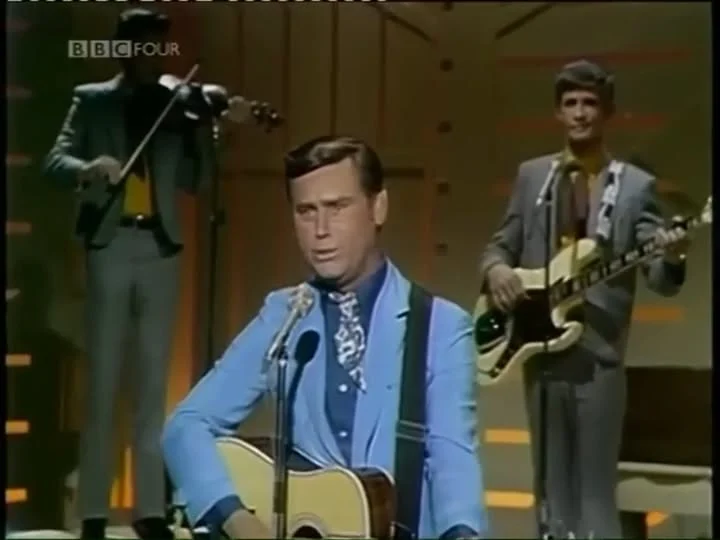
A live performance video often shows Jones with his eyes closed, gripping the microphone as if steadying himself. The camera catches the ghost of a smile—not of happiness, but of rueful recognition. That is the power of the song: it knows the game we play with our own hearts, and it leaves us humming along through the ache.