
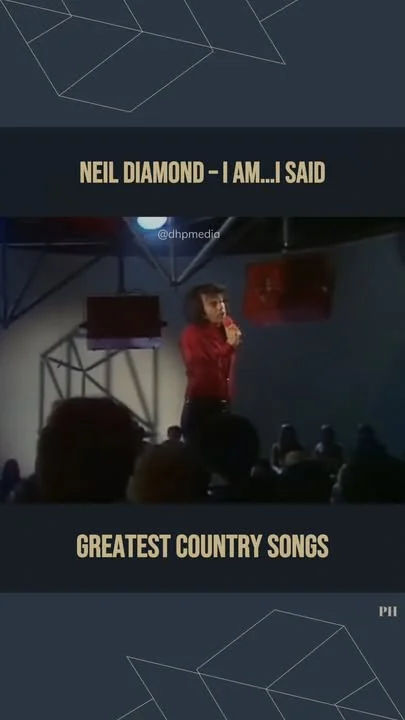

I Am… I Said remains one of Neil Diamond’s most haunting creations. In the hushed stillness of a recording studio, Diamond cried out his own name, and no one heard him. Not even the chair. That single moment captures the raw, aching vulnerability that has made this song a timeless anthem for anyone who has ever felt unseen.
Released in 1971, the track arrived when Diamond was already a star. Yet fame offered no shelter from the loneliness that crept in after he left his native New York City for Los Angeles. The sunshine and palm trees of California could not fill the void. Diamond found himself lost between two worlds, unable to call either one home. This personal dislocation became the foundation of a lyrical masterpiece.
I am… I said, to no one there, and no one heard at all, not even the chair
These lines are more than poetry. They are a confession. Diamond sings not for an audience but for himself, searching for validation when the world remains indifferent. The simple act of declaring identity becomes an act of survival. The song does not offer easy answers. Instead, it holds space for the emptiness that so many carry.
Diamond’s vocal performance heightens the emotional weight. His gravelly voice cracks with genuine anguish, rising in the chorus as if he is fighting to be heard. Every note feels earned. There is no polish here, only truth. Where other pop songs follow predictable structures, I Am… I Said flows like a diary entry, moving from reflection to outburst with poetic grace.
The bridge deepens the narrative. Diamond compares the two shores of his life, New York and Los Angeles, as metaphors for internal conflict. He finds belonging nowhere. The melody swells and falls, mirroring the jagged edges of his thoughts. This unconventional structure gives the song a timeless quality, setting it apart from the hits of its era.
Decades later, the song’s relevance has only grown. In a world of curated social media profiles and constant digital noise, feelings of isolation and lost identity are widespread. Diamond’s words speak directly to those who have moved away from home or struggled to find their place. The message transcends generations, from baby boomers to Gen Z.
Numerous artists have covered the track, including Johnny Cash and Barry Manilow, each finding their own vulnerability in its lines. The song has appeared in films and television, reinforcing its legacy as a cultural touchstone. But its greatest power lies in the quiet moments when someone listens alone and hears their own story in Diamond’s cry.
I Am… I Said is a reminder that self-acceptance often begins with a single declaration. In a music industry that prizes perfection, Diamond offered something rougher and more real. He gave voice to the struggle for identity that never truly ends. Listening today feels like a conversation with an old friend who understands the weight of being lost.
So when you hear those opening chords, let the song hold you. Let it remind you that even when no one else hears, you can still say your own name out loud. That affirmation is enough.