
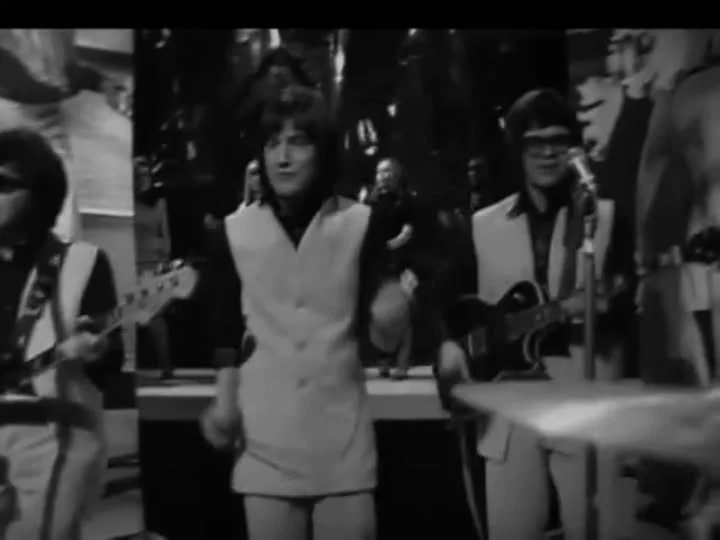
The amber glow of a 1970 car radio cuts through the twilight, and from the static emerges a melody as bright and insistent as a summer sunrise. It conjures a cinematic mood—endless possibility mixed with the slight anxiety of being broke and far from home. This is Hitchin’ A Ride, the unlikely transatlantic million-seller by the English band Vanity Fare. For millions, this three-minute burst of harmony and rhythm is a single, vivid snapshot of an era.
But to understand its unique charm, you must peel back the pop gloss and appreciate the craft. It represents the peak of the group’s brief, glittering career arc—a moment where their breezy, melodic British beat merged with polished production techniques dominating global airwaves. The song was a deliberate A-side choice, penned by the hit-making duo Mitch Murray and Peter Callander. Just before recording, the group added keyboardist Barry Landeman, whose presence is integral to the track’s signature sound. Produced by Des Champ and manager Roger Easterby, the single leaned heavily into clarity and texture, giving it a clean, bright timbre that stood out from the heavier psychedelic rock of the charts.
The introduction is a perfect bait-and-switch. Instead of a soaring guitar riff or heavy drum fill, two recorders play a cheerful, high-pitched counterpoint. This baroque, almost juvenile instrumentation lends a paradoxical light-heartedness to lyrics about being destitute:
Got no money, got no family name.
The core appeal of Hitchin’ A Ride resides in its relentless rhythmic momentum. The drums use a judicious cowbell, an infectious metallic clack that keeps the listener locked into the song’s forward motion. The central instrumental hook is a masterpiece of arrangement simplicity: midway through, the instruments lock into a syncopated, churning loop. An electric piano plays a repeating, low-end bass line that sounds almost funky—a tiny bridge between 1969 pop and the soul grooves of the approaching decade. The bass guitar and a tightly-mic’d electric guitar double this riff, creating a compact, dense wall of rhythm that is utterly irresistible.
Trevor Brice’s lead vocal delivery is smooth and earnest, with a slight English lilt that sells the story of the hopeful traveler. The layered background harmonies, a trademark of the era’s best pop, lift the chorus into full earworm territory. Listening on modern home audio reveals how much detail the producers tucked into the mid-range. As one critic noted,
The track is a masterclass in production economy, proving that maximum joy can be achieved with minimal clutter.
In the UK, the song peaked in the top twenty in early 1970. But in the United States, it became a phenomenon, soaring into the top five of the Billboard Hot 100. This contrast reflects a cultural calibration: while British charts embraced grittier rock, American radio had a vast appetite for optimistic-sounding pop in the British Invasion tradition. The success elevated the band’s standing overnight, cementing them as international pop acts. Their contemporary album, Early in the Morning, released in 1970 to capitalize on the success, included the track, but its real legacy remains rooted in its identity as a powerful standalone single—a perfect snapshot of a moment.
The power of guitar lessons or drum practice is evident here; the track thrives on precise, punchy execution. Hitchin’ A Ride connects deeply with the perennial theme of escape and freedom—the story of the open road for the young and unencumbered. It has outlived many contemporaries because of its blend of sweetness and sophistication. Too well-arranged to be dismissed as mere bubblegum, yet too overtly cheerful to be mistaken for serious rock, it finds a happy, vibrant middle ground.
Next time you hear those twin recorders chirp in the intro, don’t just feel nostalgia. Listen closely to the way the bass, drums, and keyboard lock into that pulsing, hypnotic riff. You’ll hear the sound of a band at their commercial peak, capturing the hopeful spirit of a global generation about to cross over into the tumultuous 1970s.