
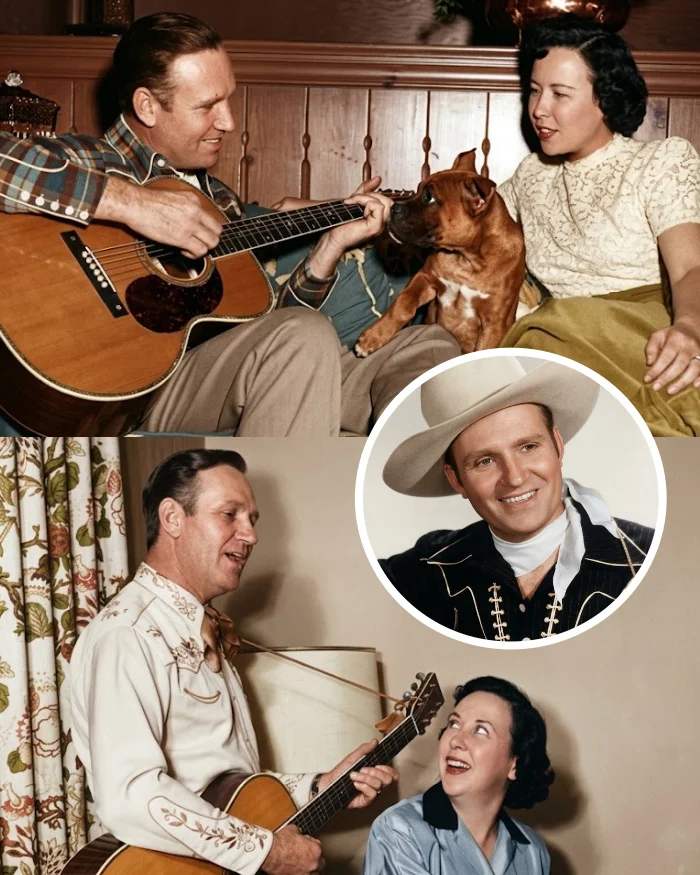
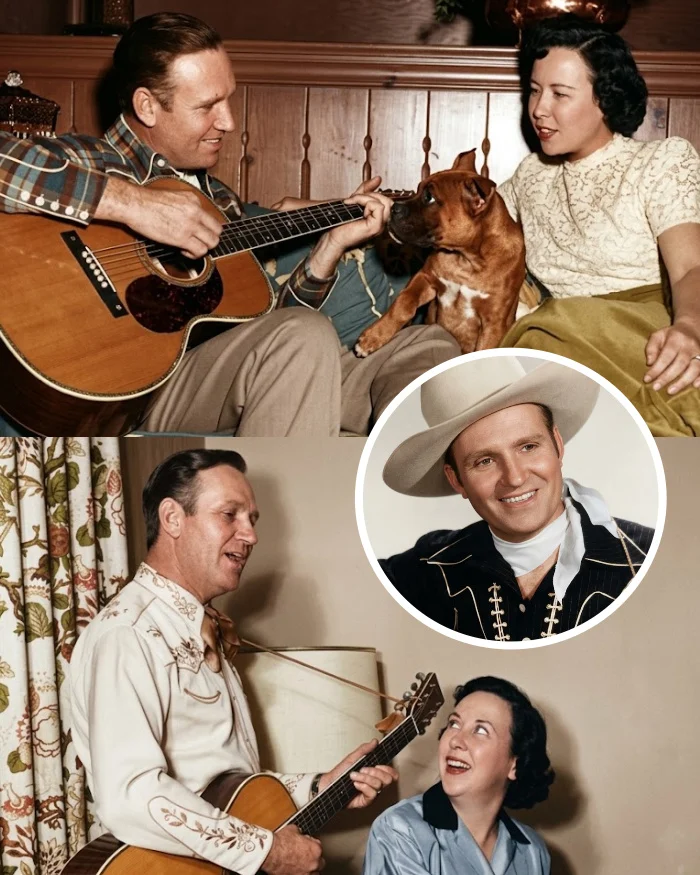
Ina Mae Spivey passed away on May 19, 1980, taking with her the silent foundation of the American icon known as the Singing Cowboy. For forty-eight years, she was the quiet anchor to Gene Autry’s extraordinary journey, grounding a legend long before the white stetson and silver screen arrived.
Long before Hollywood discovered Autry, he was simply a rail worker with calloused fingertips and a stack of train orders. Working the wire for the Frisco Railroad in remote Oklahoma depots, he filled midnight hours practicing yodeling styles between telegraph clicks.
His creative partner, Jimmy Long, invited him home for rehearsals. During one informal parlor session, Long introduced the young musician to his niece, Ina Mae Spivey from Duncan, Oklahoma. She was quiet, practical, and saw the man behind the uniform.
The Great Depression paralyzed the nation. Autry rode freight trains between Oklahoma, Chicago, and Indiana cutting 78-rpm discs for Gennett Records with flat fees and no royalties. Ina Mae stayed steady through every failed audition and lean winter, loyal to a man whose future consisted of uncertain train schedules.
With Jimmy Long cheering them on, the couple married in St. Louis on April 1, 1932. The partnership with Long soon bore fruit when the duo wrote That Silver-Haired Daddy of Mine, catching the ear of producer Nat Levine. Within two years, Autry was in California pioneering the film archetype of the singing cowboy.
As Autry packed arenas and built a media empire, Ina Mae made a conscious decision to stay out of the public eye. She declined interviews, avoided promotional dinners, and refused to let studio publicists manage their home. When Autry left for grueling tours or flew cargo planes during World War II, she maintained a distinctly Oklahoman home with quiet self-reliance.
Friends who visited their Studio City home noted it felt worlds away from the Hollywood circus. Ina Mae cooked simple meals, tended the house, and offered a calm counterbalance to the corporate pressures of radio networks, music publishing, and television productions.
She remained the single person who knew him before the white stetson, the custom pearl-snap shirts, and the studio cameras arrived.
Their partnership endured unbroken through the golden age of western cinema, wartime service, and decades of private enterprise. When Ina Mae passed away, Autry mourned a loss that went far beyond companionship. She was the foundation of an extraordinary American journey, holding tight to the young telegrapher long after the trains had moved down the track.