
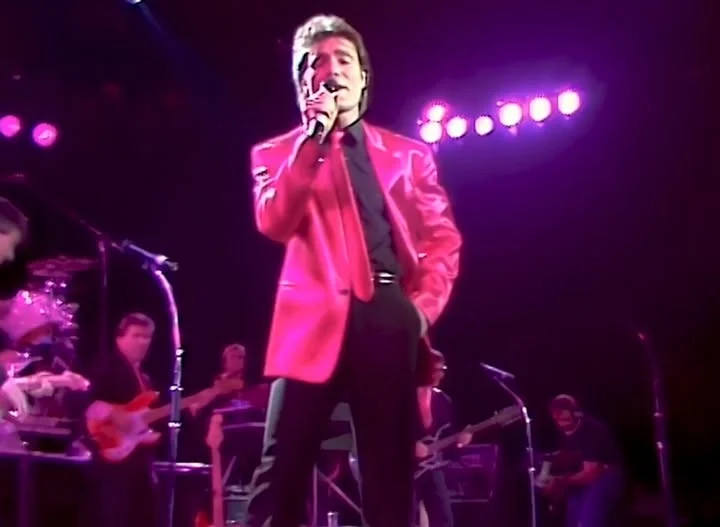
There is a moment in every relationship when fear creeps in, when the quiet certainty of love is shaken by a whisper of doubt. Cliff Richard captured that fragile heartbreak with surgical precision in his 1963 classic Don’t Talk to Him. The track, a masterful blend of rock and roll swagger and pop vulnerability, does not simply tell a story of jealousy it invites the listener into the raw, trembling space of someone afraid of losing everything.
Don’t talk to him and please don’t tell him what you know
That pleading chorus sums up a universal ache. Richard and his longtime collaborators The Shadows turned that ache into a number two hit on the UK Singles Chart, a feat that cemented his place in British music history. Yet the song is far more than a chart entry. It is a window into a creative turning point for the artist himself.
By November 1963, when the single hit shelves, Cliff Richard was already a household name. The string of hits he had released since the late 1950s had made him a defining voice of early British rock and roll. But Don’t Talk to Him marked a departure. For the first time, Richard co-wrote the song, partnering with Bruce Welch, The Shadows rhythm guitarist. This shift from interpreter to lyricist added a new layer of intimacy to the work. It proved that Richard could do more than deliver a catchy tune he could craft a narrative.
The musical composition itself is a study in contrast. A twangy guitar line, crisp drum patterns, and a driving bass create a buoyant, almost danceable backdrop. Underneath that cheerfulness, however, Richard delivers a vocal performance dripping with melancholy. The shadows influence is unmistakable in the melodic guitar work, adding depth without overpowering the vocal narrative. This tension between upbeat instrumentation and downcast lyrics gives the song a complexity rare in early sixties pop.
At a time when the airwaves were filled with innocent love songs, Don’t Talk to Him dared to explore a darker emotional territory. The lyrics address a friend directly, begging them not to speak with the narrator’s romantic interest. It is a plea born of insecurity, a raw confession of possessiveness and fear. That honesty resonated widely. The track climbed to number two on the UK chart and found success internationally, proving that the themes of love and jealousy had no borders.
The release also arrived at a pivotal moment in music history. The British Invasion was about to explode, led by bands like The Beatles. Cliff Richard and The Shadows had already laid the groundwork for that wave, crafting a sound that blended rock energy with pop polish. Don’t Talk to Him stands as a reminder of that pioneering role, a bridge between the simpler rock of the fifties and the more sophisticated pop rock of the mid sixties.
Decades later, the song remains a staple in Richard live performances. Its legacy extends beyond his own catalogue. Other artists have covered the track, each interpretation highlighting the same core emotions of longing and suspicion. That enduring relevance speaks to the power of the songwriting. Cliff Richard has enjoyed a career that spans more than sixty years, and Don’t Talk to Him exemplifies the talent that kept him at the forefront. It showcases his ability to turn personal vulnerability into something universal.
The partnership with The Shadows also deserves recognition. Their instrumental prowess elevated the song, turning a simple pop structure into an iconic recording. Together, they created a piece of music that continues to feel fresh, a snapshot of an era that still speaks to anyone who has ever felt the sharp sting of romantic jealousy.
More than a nostalgic relic, Don’t Talk to Him is a masterclass in emotional storytelling. It captures the moment when love becomes fragile, when silence carries more weight than words. That timeless quality ensures the song will keep resonating, long after the last guitar note fades.