
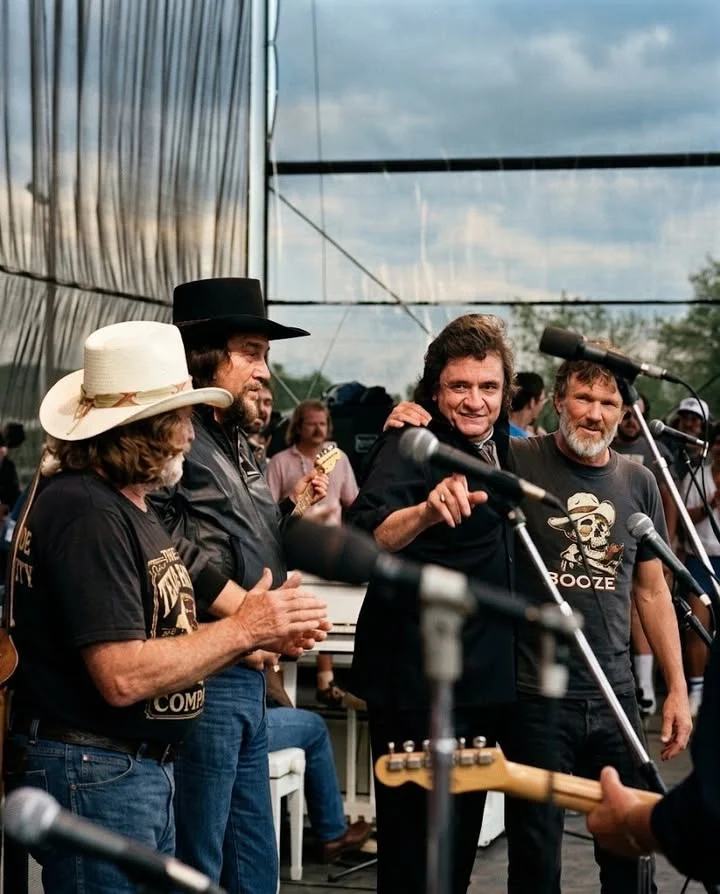
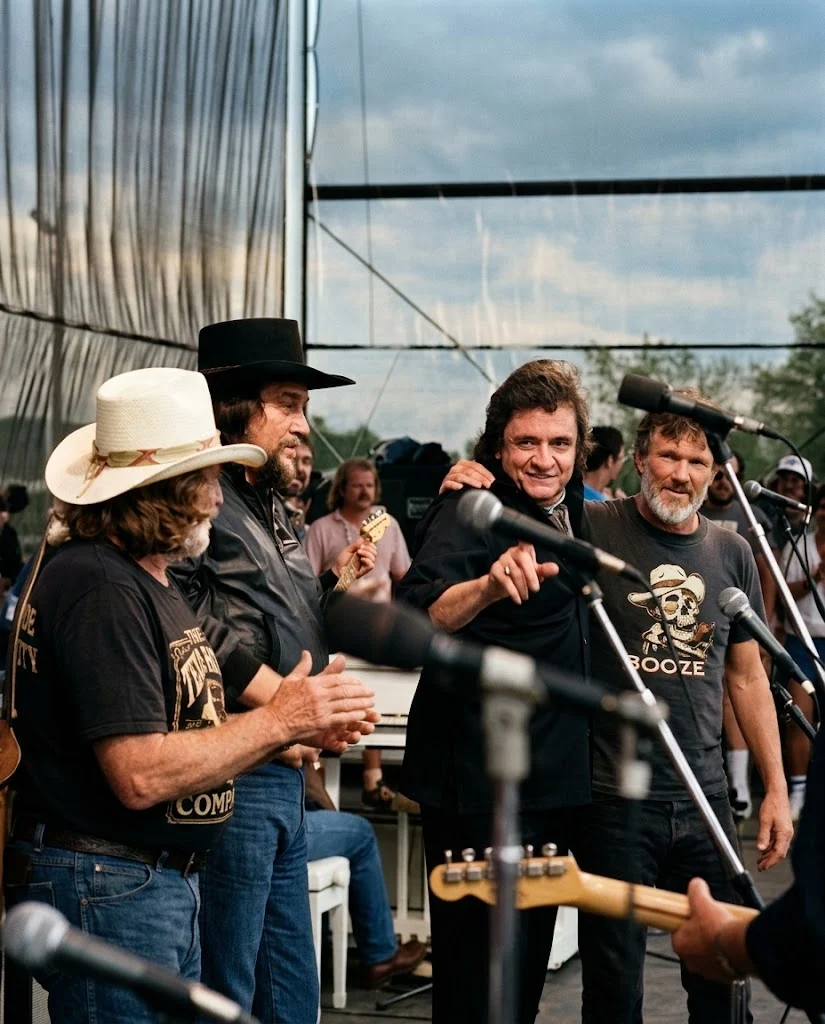
The outlaws did not arrive as legends chasing applause.
They arrived as brothers carrying a cause.
Willie Nelson, Johnny Cash, Waylon Jennings, and Kris Kristofferson walked into Farm Aid V at Texas Stadium in Irving in 1992 and Farm Aid VI at Iowa’s Cyclone Stadium in 1993 to defend American family farmers facing mass foreclosures.
The Highwaymen had already earned the name country music’s greatest outlaws, but their rebellion found its truest meaning when they stood for people losing land and hope.
By then, age and hardship had pressed hard on the four men.
Cash and Jennings had survived double bypass heart surgeries in 1988, and those procedures changed the physical demands of touring.
Jennings faced diabetes, while Cash endured neuropathy and pain that made large stadium shows more difficult.
Still, they answered Nelson’s call without hesitation.
They wore dark clothes, carried weathered faces, and gave their rough voices to songs of survival.
These men knew dirt under fingernails and worry over unpaid bills.
Cash grew up picking Arkansas cotton in the Dyess Colony during the Great Depression.
He understood what it meant when a family’s future depended on rain, soil, and a bank’s patience.
Their music became a lifeline for people who felt forgotten by a changing economy.
The setlists carried intention.
They did not simply chase polished radio hits for a television crowd.
They chose songs that echoed rural struggle and stubborn endurance.
“Desperados Waiting for a Train” and Jennings’ “I’ve Always Been Crazy” rose as anthems for families refusing to break.
The message reached tens of thousands in the stadiums, yet it spoke directly to farm households across the Midwest.
For a few hours, four legendary men set aside fame and stood for a brother’s cause.
Their presence said more than lyrics could.
They were not untouchable celebrities.
They were men who respected the quiet dignity of holding onto family land.
Country music once called them renegades.
At Farm Aid, they proved defiance could be compassion.
The stadiums emptied, and the years moved on.
But the solidarity they built on those stages remains a reminder that their songs were meant to defend the ground they came from.