
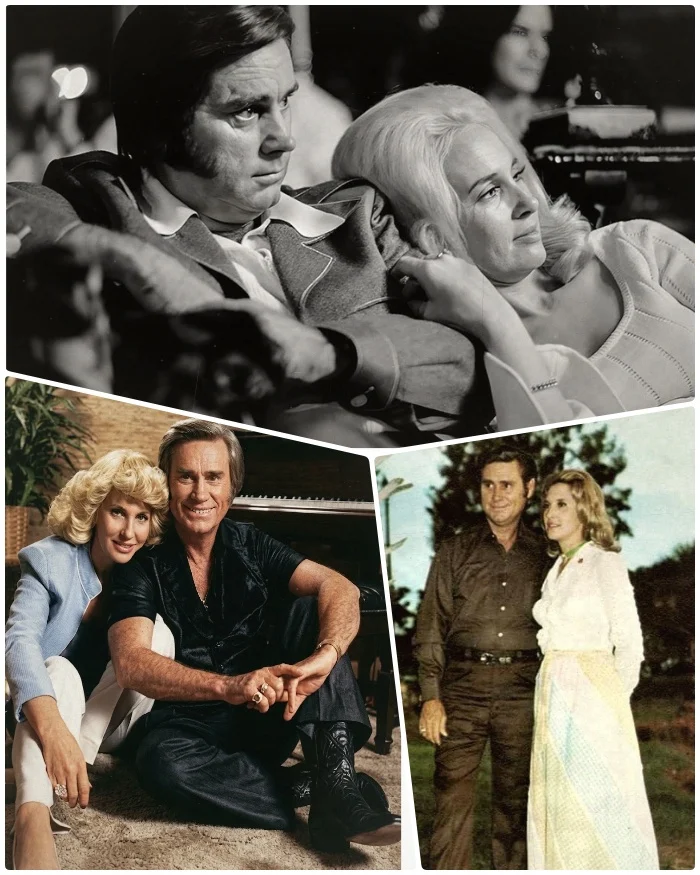

In the darkness outside her Tennessee home, Tammy Wynette held her young daughter Georgette close and kept running. Behind her lay the wreckage of a marriage the world believed was perfect, and ahead of her lay only the night and a choice no mother should ever have to make.
By the early 1970s, George Jones and Tammy Wynette were Nashville’s golden couple. Their harmonies filled arenas, their records topped the charts, and their love songs became the sound of traditional country music itself. Yet fame pressed hard against Jones’s severe personal demons, and heavy and relentless drinking turned his behavior erratic and shadowed by deep and unpredictable paranoia.
The cruel twist haunted everyone who knew their story. In 1968, Jones had flipped a heavy dining room table to rescue Wynette from an abusive husband. Years later, the protector had slowly become the danger she needed to escape, and the chaos inside their home finally reached a terrifying breaking point during one of his most volatile episodes.
Under bright stage lights, the duo still smiled for cameras and sang flawless duets for sold-out crowds. Behind closed doors, Wynette was simply trying to keep her child safe. That night in the dark shattered the final boundary of their relationship.
Love could no longer shield her family from the unpredictability of the man she had married.
That stark realization led Wynette to file for divorce in 1975. It was not a sudden loss of affection or a fading of professional chemistry. It was a mother’s necessary decision to protect her daughter when love alone could no longer keep them safe.
The legal papers dismantled the life they had built away from the stage, but the music industry would not allow a clean break. Both artists remained tightly bound by contracts with Epic Records, and the label and legendary producer Billy Sherrill had no intention of letting their most profitable duo walk away from the microphone. Wynette was contractually obligated to keep recording and touring with the very man she had just fled.
Rather than fighting the requirements or stepping away from her career, Wynette walked back into the vocal booth while the ink on their divorce papers was barely dry. She and Jones channeled the immediate wreckage of their broken household directly into their sessions, and that forced proximity produced their 1976 landmark album Golden Ring. The record chronicled the exact disintegration of a romance, and the raw honesty fans heard was not a manufactured studio performance. It was the unfiltered sound of two people trying to survive the end of their family.
Wynette managed the agonizing dynamic by drawing a strict and unyielding line between personal survival and professional duty. She made sure her daughter was safe at home, then stepped onto the tour bus to fulfill her obligations. Night after night beside Jones, she sang their classic staples about steadfast devotion and bitter heartbreak without missing a note, refusing to let private chaos derail the empire she had built.
The industry still celebrates their historic catalog and often romanticizes the fiery tension that made their duets so compelling. But pristine vinyl cannot show the terrifying nights spent navigating an addiction that could not be controlled. The legal documents formally separated their lives, yet their voices remained permanently bound together on the charts. They left behind a gold standard of country music, forged not by a perfect romance, but by a mother who knew exactly when to walk away from the table and exactly how to stand her ground at the microphone.