
A low, menacing guitar snarl rips through the static of a million transistor radios. Six simple notes, drenched in echo, coil with a tension that feels both ancient and impossibly new. They repeat, a warning signal. A drum fill cracks like a whip, the bass enters with a predatory prowl, and suddenly you are inside a story without a single word. You are inside The Rise and Fall of Flingel Bunt.
It was 1964, and the airwaves belonged to four voices from Liverpool. The British Invasion was in full swing, with lyrics leading the charge and frontmen commanding the spotlight. In this landscape, what space remained for a tale told entirely through instruments? The Shadows provided a thunderous answer. Already musical royalty as Cliff Richard’s backing band and chart-toppers in their own right, they could have been swept aside by Beatlemania. Instead, they released this non-album single in the spring of 1964, a profound statement of identity that proved instrumentals could still captivate a world obsessed with singers.
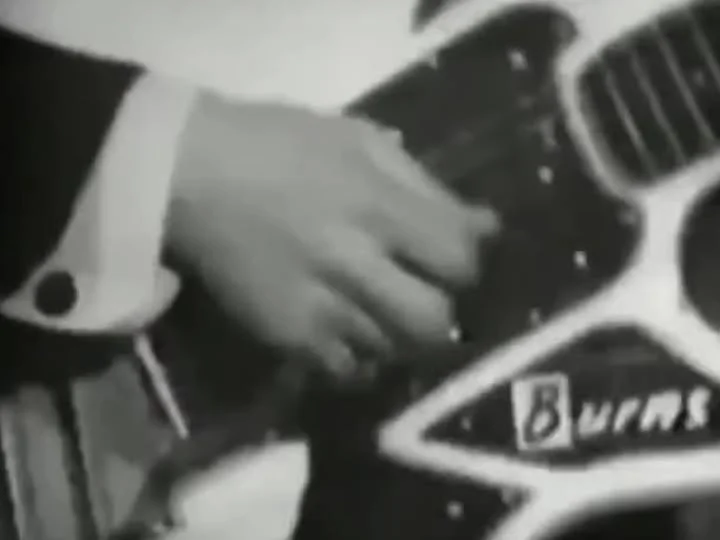
Written by the entire group and produced by their longtime collaborator Norrie Paramor at EMI’s Abbey Road Studios, the track was a muscular piece of rock and roll theatre. It possessed a clarity and depth that stood in stark contrast to the raw energy of Merseybeat contemporaries. This was not a song you merely tapped your foot to. Hank Marvin played the unforgettable riff on his Fiesta Red Fender Stratocaster, his tone pure legend. Each note was given space to breathe through his masterful use of a Meazzi Echomatic delay unit. The echo was not just an effect; it was the atmosphere, the cavernous room in which this drama unfolded. It remains one of the holy grails of guitar tone, launching a generation of players.
This was not a song you merely tapped your foot to; it was a scene you inhabited.
After the tense introduction, the main theme arrived. A bold, confident melody strutted over the driving rhythm laid down by Bruce Welch’s percussive acoustic guitar, John Rostill’s melodic bass, and Brian Bennett’s crisp drumming. Rostill, the newest member, did not simply hold down the low end. His bass lines wove in and out of the lead melody with fluidity, adding rich harmonic complexity. Then came the track’s centerpiece. A fiery exchange between the lead guitars unfolded like a conversation, an argument, a duel. One guitar phrased a sharp question, the other responded with an equally potent retort. They traded blows, each lick escalating the drama. This section sent aspiring musicians rushing to music shops, desperate to decipher those intricate notes. The demand for its sheet music became a testament to its brilliance.
You can imagine a teenager in suburban London, ears pressed to a radio, trying to decode those sounds. In a world saturated with songs about love and dancing, here was a miniature epic about a fictional character’s dramatic life. Flingel Bunt could be anyone or anything. The music provided the emotion—pride, conflict, downfall, quiet resurgence—and the imagination did the rest. While many pop hits were built around a piano, The Shadows constructed entire worlds with six strings and a rhythm section. They understood that an electric guitar could be as expressive as the human voice. It could sneer, weep, swagger, plead. The dynamics in Flingel Bunt moved from ominous quiet to full-throated roar to frantic energy, a masterclass in wordless storytelling.
The masterful production by Paramor is a key to its enduring power. Every element is perfectly placed at Abbey Road. The drums punch without overwhelming. The bass is round and clear. The layers of guitar sit in the mix without crowding, creating a soundscape that feels both expansive and immediate, especially when heard through modern home audio systems. This unique piece of music topped the UK charts, a remarkable achievement for an instrumental during the British Invasion. It proved that craftsmanship, melody, and pure sonic invention could still captivate. It bridged 1950s rock and roll with the more complex structures of the late decade. Its influence echoes in artists from Jeff Beck to Brian May of Queen.
To listen to The Rise and Fall of Flingel Bunt today is to remember the sheer power of instrumental music. It bypasses language to communicate on a purely emotional level. It does not belong to any single album; it exists as its own self-contained universe on a 7-inch single. It is a three-minute movie for the ears, a complete story with a beginning, middle, and end, leaving you with the resonant echo of that final, fading chord. It does not ask you to sing along. It simply invites you to close your eyes and listen to the tale it tells.
Listeners drawn to this wordless storytelling might find similar journeys in The Tornados’ pioneering electronic sound on Telstar, the atmospheric steel guitar melancholy of Santo and Johnny’s Sleep Walk, Duane Eddy’s twangy rebellion in Rebel-Rouser, The Ventures’ tight surf drive in Walk Don’t Run, Jeff Beck Group’s epic multi-part drama in Beck’s Bolero, and Booker T. and the M.G.’s minimalist groove in Green Onions.