
The Engine of Youth
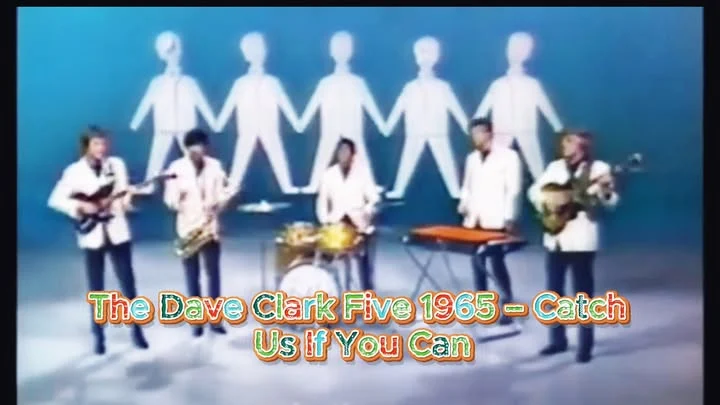
A whisper of finger cymbals and a dry, close-miked guitar riff emerge from the silence. Then the world opens up. For exactly one minute and fifty-four seconds, The Dave Clark Five captures the restless spirit of 1965 and compresses it into a perfect, two-minute shot of adrenaline. The song is “Catch Us If You Can”. It remains one of the most definitive and kinetic anthems of the entire British Invasion.
While the world rightfully celebrates the wit and whimsy of Liverpool’s finest, the DC5 offered something grittier. Hailing from Tottenham, they called it the Tottenham Sound. It was metropolitan, muscular, and deliberately loud. Dave Clark was not simply the drummer. He was the mastermind. He produced the records, managed the group, and owned the master tapes. In an industry built on contracts and debt, Clark was a freeholder who controlled his own destiny and his band’s sonic fingerprint.
By 1965, the group stood at a crucial pivot. Massive hits like “Glad All Over” and “Bits and Pieces” were already behind them. They were hungry for growth. The feature film vehicle Having a Wild Weekend, directed by the esteemed John Boorman, and its title track signaled a band reaching for sophistication without sacrificing their signature punch. The song opens with deceptive quiet. Just the crisp snap of a handclap or cymbal. Then the band explodes. The transition is abrupt, cathartic, and perfectly timed for radio.
Clark’s drumming is less about subtlety and more about percussive architecture. The snare attack is sharp and startling. The entire mix is swathed in a heavy wash of echo, a studio trick that gave the DC5 their trademark massive, hall-filling sound. Mike Smith’s vocal delivery cuts through this density beautifully. He sings with a soulful, slightly raw urgency that demands attention. When the chorus hits chanting a melodic challenge, it sounds like a shout thrown over the shoulder at a pursuer. Lenny Davidson’s guitar work provides a tightly coiled spring of a riff. Denis Payton’s saxophone break is short, gruff, and immediate. It substitutes the smoothness of jazz for a gritty rock edge. Mike Smith’s piano doubles the bass line or fills out the middle register, ensuring the sound is full and deep despite its breathtaking speed.
The song sits right at the apex of the DC5’s commercial success in the United States where it reached the Top 5. It reinforced their record-breaking presence on The Ed Sullivan Show. The theme of restless escape gives the track its enduring appeal. This is not the escapism of psychedelics. It is the more tangible, real-world thrill of speed, freedom, and defiance.
In an era obsessed with the endless party, “Catch Us If You Can” is the sound of the car peeling out of the driveway, headlights blazing.
Its brevity is startling and deliberate. It wastes no time, establishes its hook immediately, and disappears before you can fully catch your breath. For listeners wanting to explore similar high-energy British beat tracks, the recommendations are rich. The Searchers’ “Needles and Pins” shares the quick tempo and tight harmonies. The Who’s “My Generation” offers a pure, defiant declaration of youthful identity. The Animals’ “We Gotta Get Out of This Place” captures the identical hunger for a new horizon. The Kinks’ “All Day and All of the Night” provides a similarly raw and driving guitar riff. Even the early Beatles track “Twist and Shout” exemplifies that raw, high-energy vocal performance.
Today when we stream this track, its conciseness is startling. It proves that a great song does not need four minutes and three movements to make a permanent impact. It just needs momentum and attitude. It is the sound of the moment when you look back over your shoulder and decide not to stop. It is a beautifully constructed shout into the wind.