
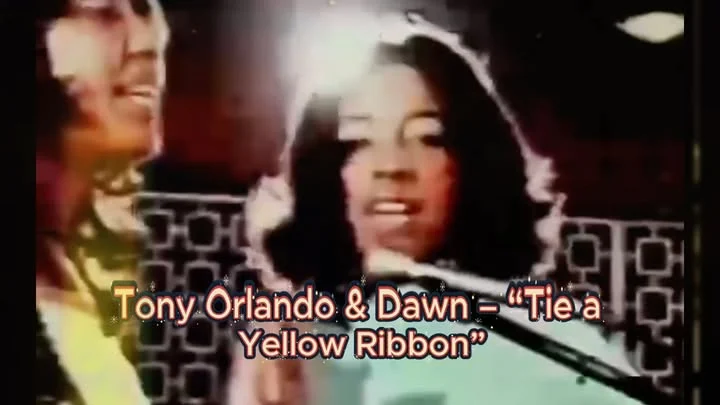
The moment arrives with a single image: a hundred yellow ribbons fluttering against an oak tree. That visual catharsis, so powerfully built over three minutes of pop perfection, remains one of the most unforgettable climaxes in American music. It is the sound of hope finally realized, of relief washing over a weary traveler. Tie a Yellow Ribbon Round the Ole Oak Tree is more than a nostalgic artifact from 1973. It is a masterclass in emotional pacing, a piece of orchestral pop that continues to resonate across generations.
Long before that triumphant release, Tony Orlando was a music industry veteran with minor successes in the early sixties. He met session singers Telma Hopkins and Joyce Vincent Wilson almost by chance, and together they formed Dawn. Their early hits like Knock Three Times and Candida had a bubblegum buoyancy, but the group yearned for something deeper. The song that would define them began as a newspaper column anecdote about an ex-convict signaling his return home. Transformed into a soaring pop theatre piece, it became a multi-million-selling sensation on Bell Records, anchoring the album Tuneweaving. This was no novelty track; it was a deliberate shift toward material with genuine emotional weight, tapping into a universal desire for acceptance and second chances.
The arrangement, credited to the masterful Chuck Kaye, is the true engine of the track’s success. It takes a simple folk narrative and gives it a Hollywood gloss.
The song opens not with a gentle guitar strum but with a cinematic burst of brass and strings. This immediate declaration sets high emotional stakes. The rhythmic core features a propulsive beat that mirrors nervous anticipation, like a train carrying a man toward an uncertain destiny. The bass line walks purposefully beneath the vocal, lending gravity to simple chord changes. A crisp acoustic piano provides harmonic grounding, played with economy that serves the melody. Dawn’s backing vocals function as a Greek chorus, echoing the protagonist’s anxiety and hope through subtle call-and-response. The strings swell and recede, mimicking the emotional tide of the story, culminating in the overpowering relief of the climax. This is sophisticated, big-budget production designed for the emerging world of high-fidelity home audio, yet every element preserves clarity and emotional truth.
The lyrical climax—the sight of a hundred yellow ribbons—works every time because the preceding verses invest the listener completely in the man’s fate. It uses the visual power of storytelling, transforming sound into a mental picture so vivid you can almost feel the rough bark of the oak tree and the breeze catching the fabric. This narrative focus distinguishes the song from many early seventies counterparts. It became an instant cultural touchstone, resonating particularly with the post-Vietnam era, though its application quickly broadened to encompass any separation and reunion. The song is a blueprint for turning a simple concept into a powerful, lasting hit, proving that the most sophisticated production serves the simplest human emotion.
Even today, consumed through personalized music streaming subscriptions, Tie a Yellow Ribbon remains a track that seems to exist everywhere at once. Its melody is undeniable, its sentiment enduring. It stands as a monument to seventies orchestral pop, an era where sentiment was currency and arrangements were as grand as the emotions they conveyed. It invites us not just to listen but to participate in the collective exhale of relief. For those seeking similar sonic journeys, consider Paper Lace’s Billy Don’t Be a Hero, which employs a similar narrative structure and theatrical orchestration. Bread’s Make It With You shares the same clean acoustic-meets-orchestral production. The New Seekers’ I’d Like to Teach the World to Sing taps into that communal optimism. The Hollies’ The Air That I Breathe builds to a cathartic crescendo much like the ribbon reveal. Barry Manilow’s Mandy exemplifies sophisticated pop with dramatic piano-led core. And Glen Campbell’s Wichita Lineman stands as a predecessor in narrative-driven pop, featuring complex yet clear arrangement with prominent bass and strings. Each of these tracks carries the same commitment to storytelling and emotional truth that makes Tie a Yellow Ribbon an enduring classic.