
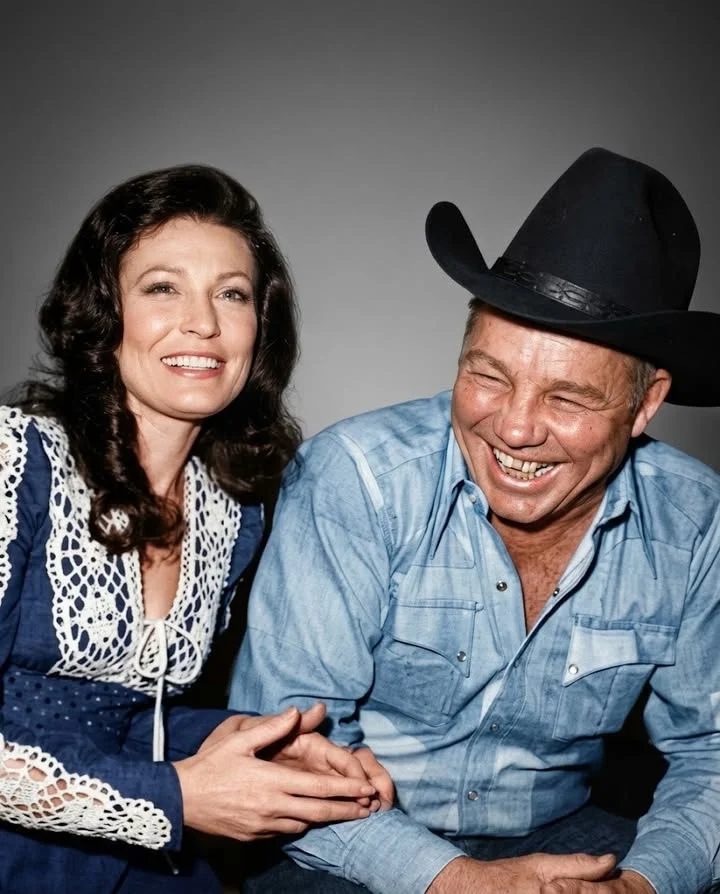
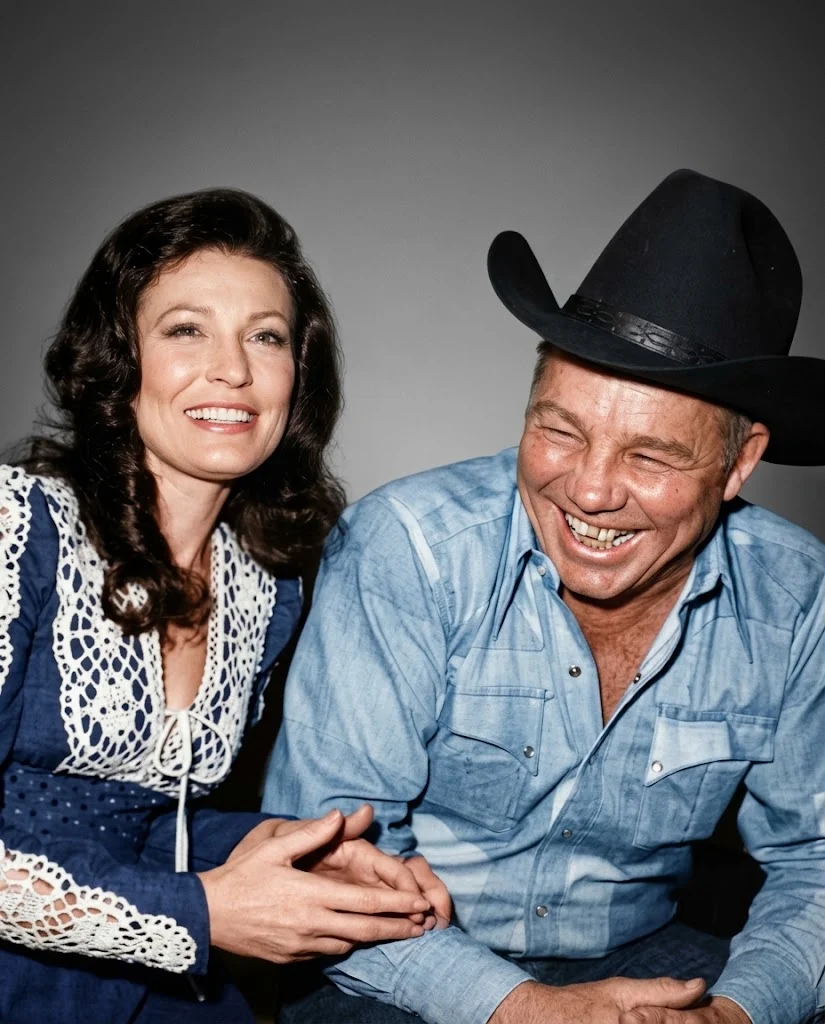
Before Nashville ever learned her name, a stubborn mountain man turned a dusty 1955 Ford into the unlikely engine that pushed Loretta Lynn toward country music immortality.
In the winter of 1960, country radio guarded its airwaves with a cruel custom. Female singers were treated as afterthoughts, and many stations avoided playing one woman after another. A young mother from Butcher Hollow named Loretta Lynn had recorded a fragile debut for Zero Records in Vancouver, Washington, and the music business seemed determined to ignore her.
Her husband Oliver “Doolittle” Lynn refused that verdict. Long before major labels heard the record, he built a homemade campaign from the front seat of their car. He wrapped about 3,500 vinyl singles by hand, glued postage stamps one by one, and mailed them to independent stations across the country.
Sending records alone was not enough. He became driver, promoter, and manager in one. He and Loretta packed a single suitcase, left their children with family, and set out on a grueling cross-country loop that lasted three months. They lived on bread and bologna. They slept in the front seat to save money. They woke stiff and coated in highway dust.
Doo aimed for the small stations that corporate Nashville overlooked. He pushed through the doors of regional broadcasters such as KFOX in Long Beach, California, and KVAN in the Pacific Northwest. A man known for fierce pride and a rough temper, he still swallowed his ego in cramped station lobbies. He would stand there until a disc jockey finally dropped the needle on her record.
He forced the airwaves to hear what he already believed.
The stubborn campaign worked. The single climbed to No. 14 on the Billboard chart. That rare independent triumph drew the attention of the Wilburn Brothers and Decca Records executive Owen Bradley. By proving a woman could create demand without a corporate machine, Doo helped push Nashville to rewrite its rules and open the door to a major-label contract.
The marriage itself was fractured. Doolittle brought heavy drinking, infidelity, and violence into their home. Yet outside that home, his belief in Loretta’s voice was unshakeable. For a young woman shaped by poverty and insecurity, his ferocious advocacy became a strange and complicated lifeline.
The record they carried across America was “I’m a Honky Tonk Girl.” It gave voice to a shattered woman who found refuge in neon lights, jukeboxes, and late-night bars. The song captured working-class heartbreak with raw honesty.
I’m a honky tonk girl, turn the jukebox way up high, fill my glass up while I cry.
The same hands that hurt her privately also wrapped her singles and mailed her dream across the country. Loretta Lynn spent much of her life crediting the man who broke her heart for building her stage. Her empire began not in a polished Nashville boardroom but in the front seat of an old car driven by a stubborn husband determined to make America listen.