
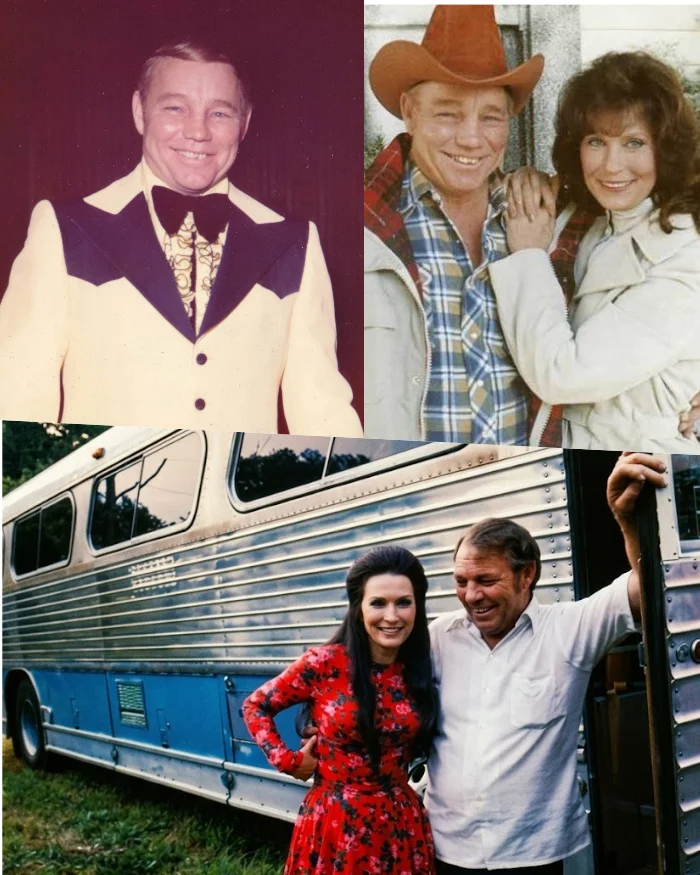
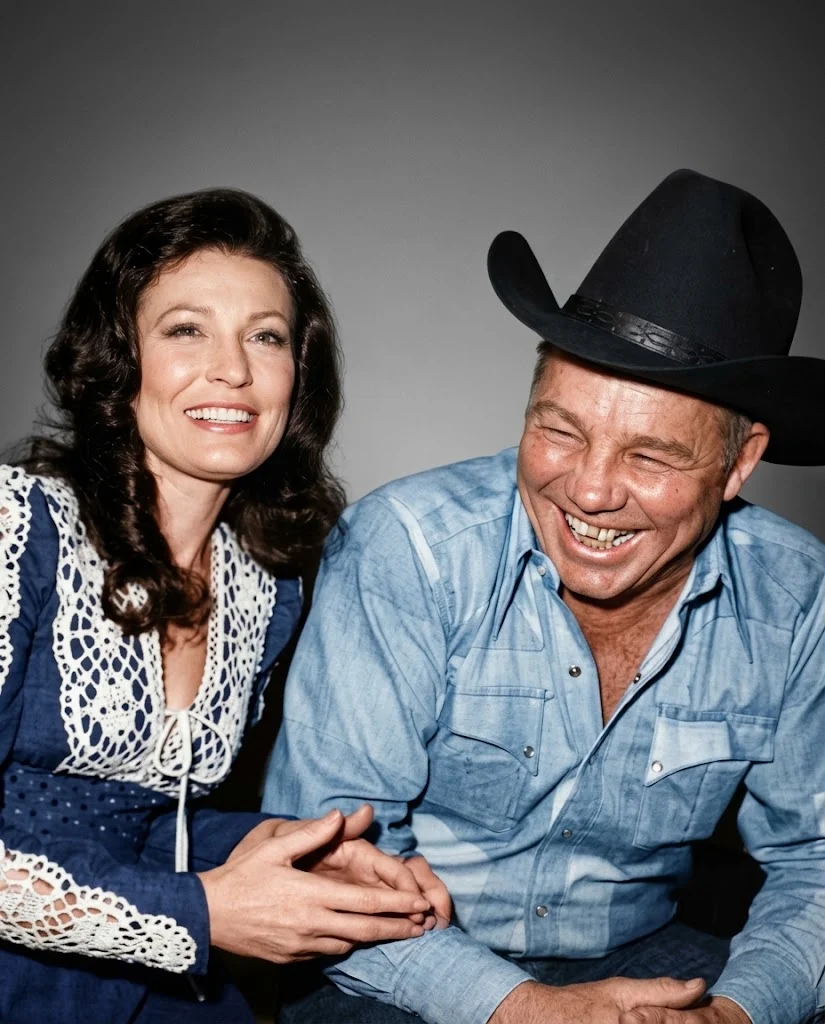
Before Nashville knew her name a dust-covered couple slept in the front seat of an old car and changed country radio by force.
In the winter of 1960 Loretta Lynn was an unknown mother with a small independent record. Radio programmers treated female singers as secondary acts and stations rarely played two women in a row. The airwaves seemed locked behind a wall.
Her husband Oliver “Doolittle” Lynn refused to wait for permission. He wrapped roughly 3,500 vinyl copies of her single by hand. He glued the stamps himself and mailed them to independent stations across the country. Then he did something even more stubborn. He loaded Loretta into their 1955 Ford and chased the records down in person.
They left their children in family care. They packed one suitcase. For three grueling months they ate bread and bologna. They slept in the front seat to save money. They woke covered in highway dust. Their route carried them to small-town radio towers that major labels ignored.
Doo pushed into station lobbies along the West Coast and the Pacific Northwest. He courted independent broadcasters such as KFOX in Long Beach California and KVAN in the Pacific Northwest. A man known for fierce pride and heavy drinking he swallowed his ego in cramped rooms. He stood before strangers and refused to leave until a disc jockey dropped a needle on her record.
That brutal persistence broke an unwritten rule. The self-promoted single climbed to No. 14 on the Billboard chart. Its independent success caught the attention of the Wilburn Brothers and Owen Bradley of Decca Records. Nashville had to rewrite its gatekeeping after a female artist generated demand without a corporate machine.
Their marriage was not a simple fairy tale. Doolittle brought volatility and heartbreak into the home. Yet outside their front door he believed in her voice with an unshakeable certainty that Loretta did not yet have in herself. For a young woman shaped by poverty in Butcher Hollow his aggressive support became a lifeline.
The record they drove across America was “I’m a Honky Tonk Girl”. It captured working-class heartbreak and survival through neon lights and nightlife. As Loretta sang
“I’m a honky tonk girl So turn the jukebox way up high And fill my glass up while I cry”
The hands that caused her private pain were also the hands that wrapped her singles and pulled their family toward a stage. Loretta Lynn later credited the man who broke her heart for building her empire. Her fearless voice changed country music but the journey began in a dusty front seat driven by stubborn love and desperate hope.