
The moment Dolly Parton knelt down and placed a stranger’s hands on her face, the glittering armor she wore for decades fell away.
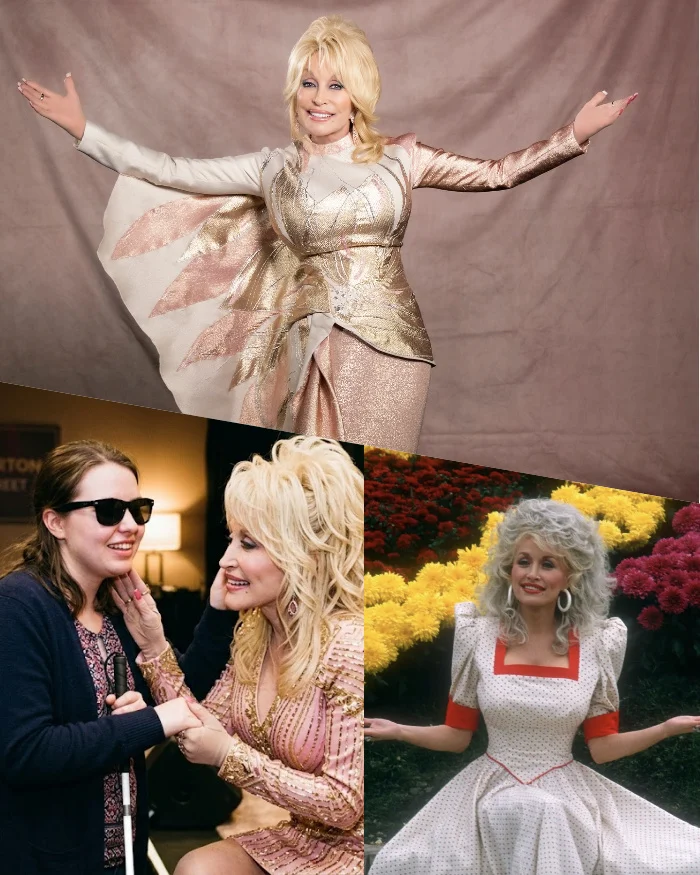
For years, the country legend guarded herself with towering wigs, bright makeup, and rhinestones that could flash under any stage light. That image gave her power, privacy, and a way to survive extreme fame.
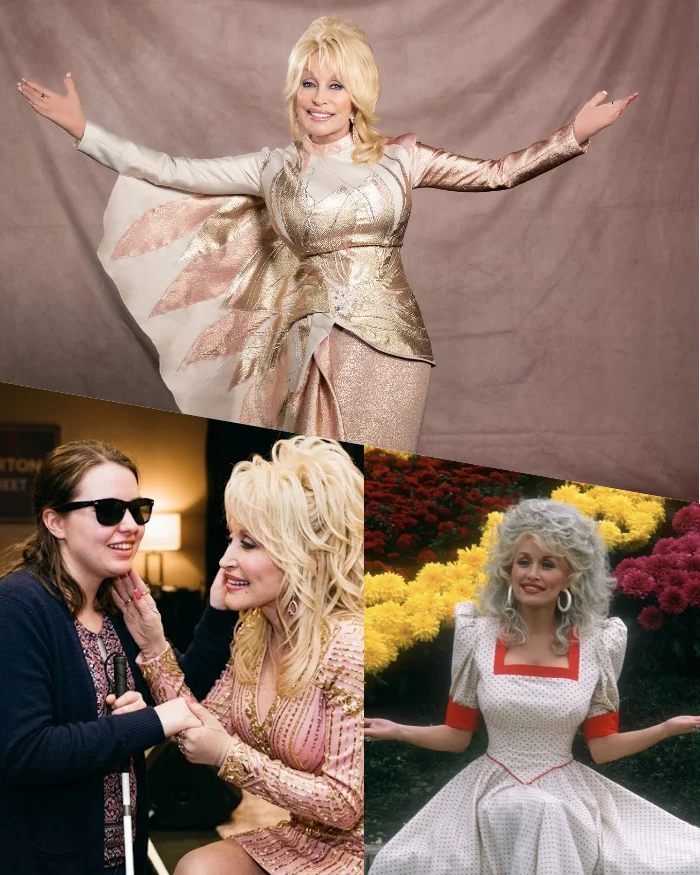
Yet during a routine meet-and-greet, a blind fan stepped forward with a request that would have been unthinkable to many stars. They did not ask for an autograph. They did not pose for a photograph. They simply wanted to touch Parton’s face and hair so they could finally understand what she looked like.
Parton did not wait for security. She did not hide behind protocol. She lowered herself to meet the fan, took their hands, and guided their fingers across her cheeks and into the famous wig that had shaped her public silhouette.
While the fan traced her features and built a mental picture, Parton leaned close. She cut through the crowded noise and sang softly into the listener’s ear.
That brief touch turned a global icon into a person standing beside one fan.
The encounter revealed a deeper pattern. Parton’s business empire and visual persona were carefully controlled, but her private choices showed the heart beneath the spectacle.
Her compassion for visually impaired fans did not stop with one backstage moment. Through her Imagination Library initiative, she helped bring Braille and audio books to children with vision loss, ensuring early literacy could reach readers who needed it most.
In late 2022, that quiet commitment became visible when Parton met a young blind girl named Rosie. Rosie’s mother explained that the child had learned to read through the singer’s specialized book program. Parton held the girl’s hand and sang Amazing Grace beside her.
That was Dolly Parton at her most human. The wigs, makeup, and fame remained, but the boundary between star and listener disappeared the moment she chose kindness over control.