
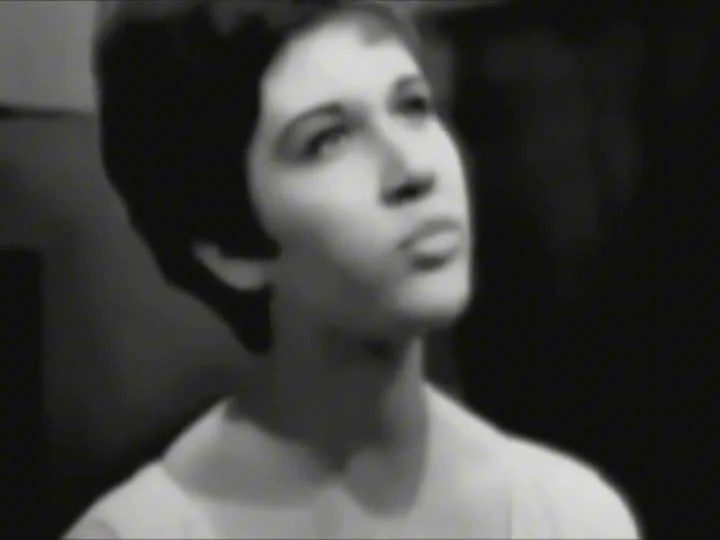
The winter of 1961 found British pop in a strange twilight. Rock and roll had lost its first teeth, and the charts were a waiting room for something new. Into that pause stepped a fourteen-year-old girl in a school uniform. Her name was Helen Shapiro, and when the microphone went live, she opened her mouth and produced a sound that belonged to a woman who had seen too much of love and loss. It was a voice of smoky depth, seasoned by heartbreaks she had not yet lived. Decades later, I heard that voice through the crackle of a transistor radio late one night. The station had drifted into forgotten 45s, and then came the first piano chord of You Don’t Know. It was slow, solemn, almost funereal. This was not the bounce of Walkin’ Back to Happiness. This was something darker, a torch song sung by a child who had forgotten she was young.
The single was Shapiro’s second release on the Columbia (EMI) label. Written by John Schroeder and Mike Hawker, it existed only as a 7-inch piece of shellac, never part of an album. It climbed to number one on the UK Singles Chart, not just a commercial victory but a cultural statement. The sound of a teenage girl carrying the full weight of orchestral pop was not supposed to happen. Yet it did, and the charts reflected the shift.
To feel the emotional weight of You Don’t Know, you must listen to the arrangement. Produced by the legendary Norrie Paramor and orchestrated by Martin Slavin, the track is a meticulously crafted scene. The opening piano chord strikes and decays, pulling the listener into a vast, lonely space. Low strings, cellos and double basses, create a cavern of sound. Shapiro enters not with force but with a controlled, whispered intensity. Her vibrato is rich, her phrasing astonishing. The way she holds the word know is a lesson in restraint, a teenager channeling a heartbreak she should not yet understand, delivering it with absolute conviction.
The genius of the arrangement lies in its dynamic range. The verses are intimate and low-lit, supported by rhythm and strings. Deep in the mix, an acoustic guitar weaves a delicate counter-rhythm, a detail only revealed on quality audio. When the chorus arrives, the sound opens into full orchestra. Violins soar, brass adds majesty, drums strike with declarative force. It is a moment of catharsis, but Shapiro quickly pulls the energy back, mastering the control of dynamics that many adult singers still fail to achieve. In the middle section, where she sings directly of the rival, the instrumentation thins to expose her voice raw and exposed. It is the sound of pain made audible.
The girl’s voice was the velvet hammer of the British Invasion’s opening salvo.
You Don’t Know was a crucial waypoint in Shapiro’s career. It proved she was not a novelty act but a singer capable of handling complex adult emotions. It demonstrated versatility just before the release of Walkin’ Back to Happiness, allowing her to dominate 1961 with two radically different million-selling songs. The song resonates today because the feeling of being unseen in love is timeless. It is the universal ache of shouting your truth into a void. It is a lesson in restraint, a performance that came from the most unexpected source, a schoolgirl with the voice of a seasoned diva.
For anyone seeking to understand this moment in British pop history, listen to Brenda Lee’s I’m Sorry from 1960, Petula Clark’s Sailor from 1961, and Dusty Springfield’s I Just Don’t Know What To Do With Myself from 1964. Connie Francis captured the same cinematic scale with Where the Boys Are, and Gene Pitney’s Twenty Four Hours From Tulsa took dramatic narrative pop to its logical conclusion. Cilla Black’s Anyone Who Had a Heart from 1964 carried the torch forward with power and emotion. Together, these songs form a lineage of youthful voices singing old souls, and at the center of it all stands a fourteen-year-old girl who knew exactly how to break a heart.
The beauty of You Don’t Know is that it has not aged. The arrangement still feels fresh, the vocal still sends chills. It stands as a reminder that greatness does not wait for permission. It arrives, in a school uniform, and sings.