
The night was hot and wet, the kind of oppressive humidity that makes a needle stick a little harder in the groove. I was driving down a forgotten stretch of highway, the kind where the radio signal drifts into static like a ghost, when a blast of brass and a voice full of pure, unadulterated street swagger cut through the haze.
That moment of discovery, that crackling burst of energy from a seventy year old recording, is how most people first meet The Cadillacs and their enduring anthem Speedoo. But the song is far more than a vintage relic. It is a declaration of style, a blueprint for charisma, and a sonic time capsule that still pulses with the raw vitality of mid fifties Harlem. There is a reason this track refuses to fade into nostalgia. It keeps finding new listeners, new feet to move, new smiles to provoke.
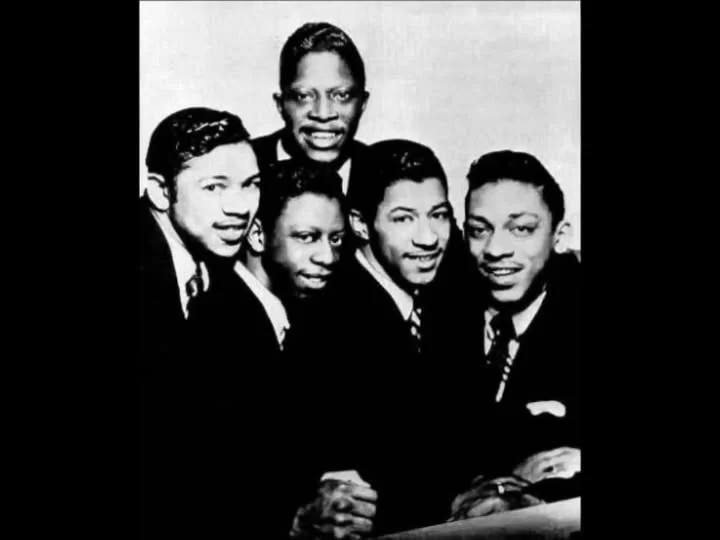
The year was 1955 and rock and roll was less a genre than a fever. The world was spinning faster than anyone realized. In the heart of Harlem, a quintet originally known as The Carnations was already redefining what a vocal group could be. Under the shrewd management of Esther Navarro, they learned intricate choreography while most doo wop groups stood rooted to the microphone. The Cadillacs were aiming for the stage, not just the stoop. They wanted to move, and that movement became the difference that launched them into history.
The joy of Speedoo is how it takes the complexity of its vocal arrangement and wields it with the blunt force and infectious simplicity of a pure rock and roll hit.
Speedoo arrived at a pivotal moment. Released on Josie Records, it became the group’s biggest hit, climbing into the top twenty on the US Pop chart and landing high on the R&B listings. It was no album track, no A side filler. It was a standalone single that defined not only the Cadillacs but also a crucial slice of early rock and roll. The song’s protagonist, Mr. Earl—lead singer Earl Carroll—adopts the irresistible nickname Speedoo, which was actually Carroll’s real nickname given ironically because of his slow gait. That contradiction is the core genius of the track. The vocal arrangement explodes with barely contained confidence.
From the first declarative drum hit, a snare snap that clears the room, the song announces itself. The rhythm section locks in tight, propelling the track forward with an urgency that separates it from the languid ballads typical of doo wop. The arrangement, reportedly conducted by Jesse Powell, uses a horn section not for smooth padding but for sharp percussive jabs. Those brass stabs answer the lead vocal’s boast, creating a dialogue of pure kinetic energy. Behind Carroll’s dazzling lead, the group’s harmonizing is a masterclass in controlled chaos. Robert Phillips’ bass line is thick and prominent, anchoring everything, while the mid range tenors and baritones move with thrilling precision. Their signature refrain of “Umm hmm hmm” is not filler. It is punctuation, a sonic nod of confirmation to the legend being spun by Mr. Earl. It makes the song feel intimate, as if you are eavesdropping on a conversation between friends.
The instrumental break is brief but revelatory. The guitar takes a short stinging solo, all bent notes and quick rhythmic phrases that lean into the uptempo drive. It is concise and fiery, immediately returning the spotlight to the voices. This is not a track built on sprawling virtuosity but on the disciplined economy of the era’s best session players. And always, there is the piano, not leading but acting as crucial rhythmic glue, a gentle boogie woogie foundation that keeps the syncopation honest. The interplay between that subtle piano figure and the sharp snapping drums gives the whole arrangement its forward thrust.
You might be listening to this song through a pair of modern studio headphones today, but its essential quality lies in how it was consumed then: on a grainy 45 RPM single, blasting from a jukebox or a radio speaker, demanding movement. This is party music, pure and simple. It was instrumental in bringing Black rock and roll to wider racially mixed audiences who could not resist the beat and the charisma. There is a scratchy clip of the Cadillacs performing on an early television show that captures the magic: tailored suits, precise synchronization, sheer kinetic force. That visual element added a layer of spectacle many contemporary groups lacked, transforming the song from sonic delight into a cultural moment.
The lyrics are wonderfully lighthearted, full of confident braggadocio. “They often call me Speedoo but my real name is Mister Earl… All for meetin’ brand new fellas and for takin’ other folk’s girl.” This is a song about being fast, not in a literal race but in the social sense, a man who does not believe in wasting time. It taps into a universal fantasy of effortless smooth charm, delivered with such convincing musicality that you have no choice but to believe him.
Revisiting Speedoo today, it is not just a relic of the past. It is an instruction manual for charisma. It is a sonic anchor to the decade when music first learned to cross the tracks and speak a new shared language. It is a testament to the fact that sometimes the most sophisticated art is the one that simply makes you want to get up and shout.
Ultimately, the Cadillacs offered a blueprint: precision, style, and an infectious sense of fun. They took the nascent structure of doo wop, the vocal layering, the bass grounding, and infused it with the energy of the coming rock and roll tsunami. They created an indelible anthem that still sounds fresh, vital, and impossibly cool. Put it on, feel the snap of the rhythm, and remember that sometimes the greatest thing you can be is simply fast.
Listening Recommendations
The Coasters – Yakety Yak: For an adjacent sound of rock and roll infused doo wop featuring similar lyrical wit and tight comical arrangements.
The Flamingos – I Only Have Eyes For You: Contrast the manic energy of Speedoo with the celestial floating harmonies of one of the era’s most beautiful ballads.
Little Richard – Slippin’ and Slidin’ (Peepin’ and Hidin’): Shares the same essential rhythmic drive and unbridled charismatic lead vocal energy from the same time period.
Frankie Lymon & The Teenagers – Why Do Fools Fall in Love: Another foundational doo wop hit featuring an astonishingly dynamic young lead vocal and complex group harmony.
The Moonglows – Sincerely: A slower more romantic doo wop number that demonstrates the emotional depth and complexity the genre could achieve prior to the rock and roll boom.
Chuck Berry – Maybellene: Connects Speedoo’s lyrical swagger and driving rhythm to the foundational guitar work and narrative focus of early rock and roll.