
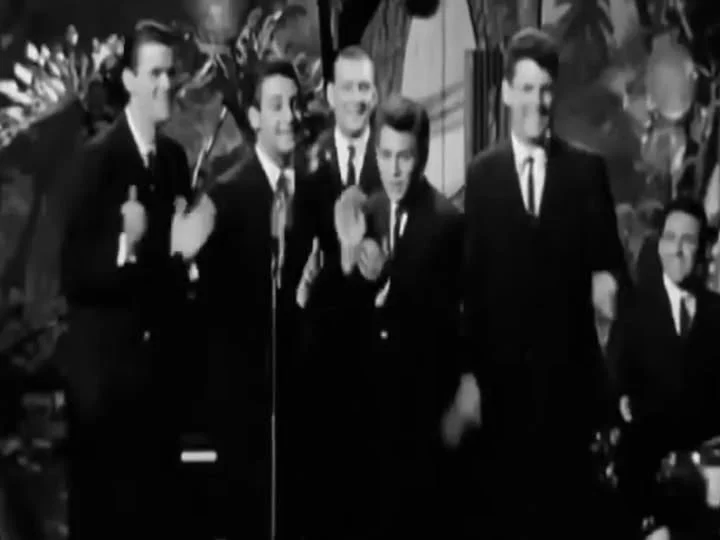
Hey, you cats, get ready to go One Two Three Four
Those eight words, barked with the urgency of a fire alarm, detonate a three‑minute riot. Before the syllables fade, a saxophone wails like a wounded animal, drums pound a relentless heartbeat, and a bass guitar locks into a groove so deep it feels like gravity itself. This is not a song. This is a command. And in 1963, America’s youth had no choice but to obey.
The Dovells had already proven their dance‑floor dominance with Bristol Stomp two years earlier. But with You Can’t Sit Down, they unleashed something rawer, something that felt less like a studio creation and more like a recording of the best party never captured on tape. Produced by the legendary team of Kal Mann and Dave Appell at Philadelphia’s Cameo‑Parkway Records, the track is a masterclass in controlled demolition.
Yet the secret lies in its DNA. The foundation, that impossibly dense groove, was lifted directly from a 1961 instrumental by the Phil Upchurch Combo. Mann and Appell took that smoldering R&B jam and poured gasoline onto it. They layered the Dovells’ frenetic, chanted vocals over the top, turning a cool instrumental into a full‑blown rock and roll firestorm.
The arrangement is propulsive simplicity itself. The drums are mixed loud and dry, a constant, driving pulse that feels more like a physical force than a beat. The bass guitar locks in perfectly, a simple, thumping pattern that is the song’s unwavering heartbeat. No fancy fills, no intricate solos. The mission is singular: to drive forward. Atop this foundation, the saxophone becomes the lead voice. It doesn’t play melodies; it honks, squeals, pleads, and commands. It is the sound of pure abandon, the voice of the dance floor itself.
It is the sound of joyful defiance, a three‑minute command to abandon all pretense and simply move.
The Dovells don’t sing in the traditional sense. They are MCs, cheerleaders, drill sergeants for a good time. They bark instructions not as suggestions but as decrees: You gotta do the Watusi And then you do The Fly. It is a roll call of the era’s pop‑culture currency, a checklist of moves every teenager knew. This call‑and‑response structure turns the listener from a passive audience member into an active participant. You are not hearing about a party. You are in it.
Somewhere in that glorious noise, other instruments fight for air. A pounding piano hammers out chords, adding rhythmic density and a touch of classic rock and roll feel. The electric guitar is more of a textural element, chopping away at the rhythm, its presence felt more than heard. Everything occupies the same sonic space in a thick, mono wall of sound designed to cut through the tinny speaker of a car radio. The production feels hot, pushed to its limits, with a satisfying layer of analog grit.
Picture a high school gymnasium in suburban America. The lights are low, the air smells of floor polish and youthful anticipation. The DJ drops the needle on the 45. That countdown hits the room, and the floor becomes a sea of flailing limbs and joyous energy. This piece of music was not made for quiet, analytical listening. It was a functional object, a tool designed to ignite a room. It was the atomic particle of the sock hop.
The song gave its name to The Dovells’ 1963 album, further cementing their status as dance‑craze kings. But the landscape was shifting. Within months, the Beatles would appear on Ed Sullivan, and the raw, simple exuberance of records like You Can’t Sit Down would start to feel like artifacts from a more innocent time. The focus shifted from the dance floor to the singer‑songwriter, from the body to the mind.
Yet the track’s power has not diminished. It remains a perfect time capsule, a three‑minute document of unpretentious, unadulterated joy. It serves as a reminder that before rock became art, it was pure, physical release. Listening to it now is not an act of nostalgia but an injection of pure energy. It is a challenge issued from the past directly to you. Go on. Just try to sit down.