
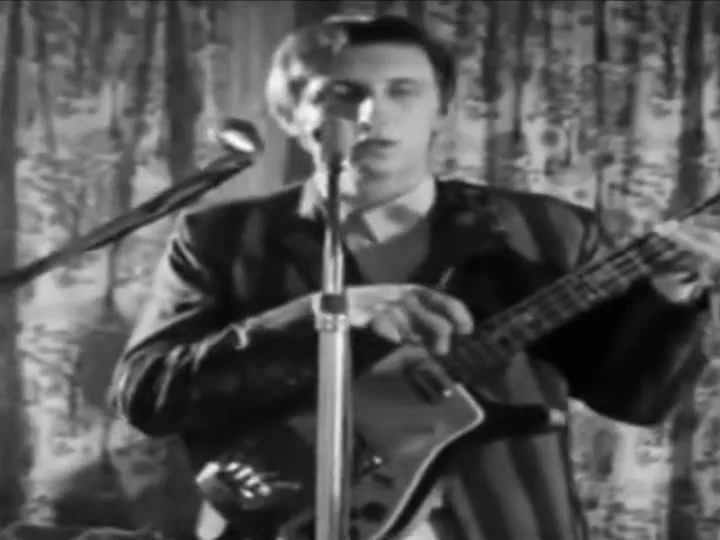
The Who we know today—the legendary force behind Tommy and Quadrophenia—did not begin with a scream. It began with a desperate, joy-fueled shuffle on the sticky floor of a West London pub in 1964. To examine their cover of The Miracles’ Motown classic “Gotta Dance To Keep From Crying” is to unearth a moment of cultural fission, preserved under the brief, fiery name of The High Numbers. This is not a polished studio artifact. It is a field recording of a band on the verge of becoming something explosive.
Forget the sleek debut single “I Can’t Explain.” Forget the swagger of “My Generation.” The version of “Gotta Dance To Keep From Crying” that survives today—often pulled from raw live recordings, like the imperfect but essential footage captured by future managers Kit Lambert and Chris Stamp at the Railway Hotel in Wealdstone—is the sound of a band discovering its identity by violently reshaping someone else’s work. This track never appeared on an official album. It was a cornerstone of their early live set, a bridge between their roots as R&B purists (The Detours) and the destructive, kinetic force of The Who. At this moment, the band was fully immersed in the Mod subculture, which demanded high-energy, soul-infused dance tracks. This Holland–Dozier–Holland tune was pure fuel.
The Sound of the Club: Sweat, Noise, and Catharsis
The original 1963 version by The Miracles, penned by the legendary Motown trio, is a layered masterpiece: Smokey Robinson’s vulnerable, aching voice contrasts with the vibrant production and the Funk Brothers’ smooth rhythm. It captures the beautiful Motown paradox—heartbreak disguised as dance music. The High Numbers stripped away that sophistication. They replaced it with raw, visceral aggression. The sonic texture is flat and compressed, exactly what you would hear from a live recording with microphones too close to a cheap PA in a cramped room. There is no subtlety. Only kinetic transference.
Roger Daltrey’s vocal delivery is less a plea and more a frenzied command. He pushes the melody with raw, bluesy urgency, lacking the clarity of his later voice but possessing a terrifying, youthful conviction. The core emotion of the lyric—“I lost the only girl I’ve ever loved / And I gotta dance to keep from crying”—is filtered through the adrenalized panic of a youth culture convinced that the only way to escape despair is to physically shake it off until dawn.
The Instruments of Destruction: Townshend, Entwistle, and Moon
The real story of this track lies in the rhythm section. John Entwistle’s bass is a terrifyingly muscular presence. It does not simply mark time. His lines are rapid, melodic counterpoints to the main riff, played with a low, trebly clatter that cuts through the surrounding noise. Keith Moon is, predictably, a monster. This early recording captures his signature anti-rhythm drumming—a barrage of cymbal crashes, snare rolls, and unexpected tom fills that sound less like accompaniment and more like a furious, joyous solo played on top of the song. He is not keeping time. He is igniting the room, his fills acting as tiny, percussive explosions that constantly push the already-fast tempo toward collapse. Listening on modern headphones today, you can hear the manic desperation in every hit.
Pete Townshend’s guitar work is pure, aggressive early Mod minimalism. This is before the windmill theatrics defined him, but the core sound is here: jagged, overdriven, and loud. His rhythm guitar is a blunt, percussive instrument, driving the chord changes with almost violent enthusiasm. The absence of a piano or other melodic counterpoint (as in the original Motown arrangement) places all harmonic responsibility on Townshend and Entwistle. There are no formal guitar lessons in this performance. It is all instinct and volume. Townshend plays with pure attack, using rudimentary equipment to create a sound distinct from the clean, jangling guitars of many British Invasion peers. This raw sound would be essential to their subsequent breakthrough.
The Context of the Change
The name The High Numbers was a brief, managed experiment under Mod enthusiast Peter Meaden, designed to target the band’s core audience directly—a “High Number” being Mod slang for a popular figure. When the Meaden-penned single “Zoot Suit” / “I’m the Face” flopped, the band reverted to The Who and found new management in Kit Lambert and Chris Stamp. “Gotta Dance To Keep From Crying” belongs to that liminal phase, the final moments before Townshend began writing the era-defining originals that would put the band permanently on the map. It shows a band on the edge of a breakthrough, capable of generating an astonishing amount of noise and energy from a simple R&B framework. It proves that the iconic volume and chaos of the later Who were not studio inventions. They were already perfected in the smoky intensity of their club residency.
This frantic energy, this refusal to play the source material with respect, makes the cover so electric. The song mirrors the Mod movement itself: a stylish, frenetic cover-up for underlying social and personal anxieties. The dance floor was the only safe space for the explosion.
The early Who didn’t just cover R&B. They violently colonized it, forging a sound that was both a homage and an act of pure, destructive rebellion.
Hearing this unearthed track today is to witness rock history being written in real time, one furious bass note and drum smash at a time. It connects the frantic, dancing kids of 1964 with the conceptual ambitions of the late 1960s. The anger of My Generation was already there, hiding beneath the dance steps. A deep listen confirms that the elements were always present. They just needed Townshend’s original songs to detonate the charge.
Listening Recommendations: R&B Fire and Early Garage Power
- The Miracles – “I Gotta Dance to Keep from Crying” (1963): The slick, sophisticated Motown original; essential for appreciating The Who’s primal transformation.
- The Kinks – “You Really Got Me” (1964): Shares the raw, abrasive, distorted guitar attack and mid-sixties UK R&B intensity.
- The Rolling Stones – “Little Red Rooster” (1964): A faithful but energized blues cover showcasing the British bands’ early debt to American R&B.
- The Yardbirds – “For Your Love” (1965): Another British group evolving from R&B, incorporating pop structure and dramatic vocal phrasing.
- The Small Faces – “Whatcha Gonna Do About It” (1965): Quintessential Mod anthem with an aggressive, soulful groove and similar frantic energy.
- Them – “Gloria” (1964): Features the raw, driving rhythm and sense of barely-contained youthful chaos found in early Who live tracks.